
This article's table of contents introduction:
- Introduction: The Intersection of Material Science and Mechanical Drive
- Material Profile: Why 16Mn Steel is Non-Negotiable for Cement Fans
- The V-Belt Drive System: Efficiency, Torque, and Maintenance Reality
- Abrasion Resistance in Cement Environments: Coatings, Surface Hardening, and Design
- Building Ventilation Demands: Dust Extraction, Positive Pressure, and Air Quality
- Comparative Analysis: 16Mn vs. Standard Steel Fan Systems
- Common Questions & Technical Answers (Q&A)
- Conclusion: The Future of Heavy-Duty Ventilation Fan Technology
*The Engineering Mastery of 16Mn V-Belt Driven Cement Fan: Abrasion Resistance & Building Ventilation Optimization*
Table of Contents
- Introduction: The Intersection of Material Science and Mechanical Drive
- Material Profile: Why 16Mn Steel is Non-Negotiable for Cement Fans
- The V-Belt Drive System: Efficiency, Torque, and Maintenance Reality
- Abrasion Resistance in Cement Environments: Coatings, Surface Hardening, and Design
- Building Ventilation Demands: Dust Extraction, Positive Pressure, and Air Quality
- Comparative Analysis: 16Mn vs. Standard Steel Fan Systems
- Common Questions & Technical Answers (Q&A)
- Conclusion: The Future of Heavy-Duty Ventilation Fan Technology
Introduction: The Intersection of Material Science and Mechanical Drive
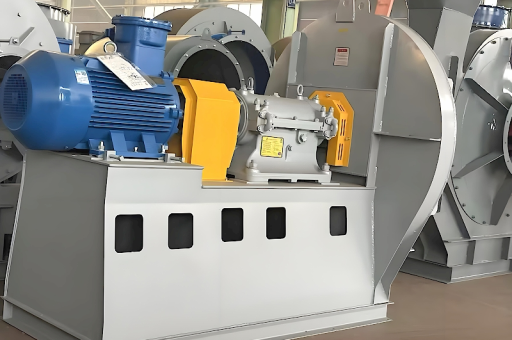
In the heart of every cement production facility and heavy industrial building, there exists a critical yet often overlooked component: the fan. Not just any fan—a 16Mn V-Belt Driven Cement Fan engineered specifically for abrasion resistant operation and building ventilation. This article dissects the mechanical and material synergy that gives this fan its durability, energy efficiency, and long operational life.
Unlike generic ventilation fans, a cement fan must survive a constant barrage of particulate erosion, high temperatures, and mechanical stress from belt drive systems. By combining 16Mn low-alloy high-strength steel with a precision-engineered V-belt drive, engineers have created a solution that meets both the aggressive wear demands of cement production and the static pressure requirements of large-scale building ventilation.
Material Profile: Why 16Mn Steel is Non-Negotiable for Cement Fans
The selection of 16Mn steel (often standardized as Q345B or similar low-alloy structural steel) is not arbitrary. In fan blade and housing construction, the material must resist impact from solid particles, maintain dimensional stability under vibration, and resist fatigue cracking.
Key Properties of 16Mn:
- Yield Strength: Approximately 345 MPa (50,000 psi) – significantly higher than standard A36 carbon steel.
- Weldability & Formability: Maintains structural integrity after rolling and welding into complex fan scroll geometries.
- Abrasion Resistance: When properly heat-treated or coated with ceramic epoxy, 16Mn exhibits 3–5x longer service life compared to mild steel in cement dust environments.
- Cost-Effectiveness: Offers a balance between performance and price, unlike stainless steel or exotic alloys.
Real-World Application:
A cement plant in the Middle East replaced standard carbon steel fan impellers with 16Mn variants and recorded a 40% reduction in premature blade failure during clinker cooling operations.
The V-Belt Drive System: Efficiency, Torque, and Maintenance Reality
A V-belt driven configuration is preferred over direct drive or chain drive for cement fans due to:
| Drive Type | Advantages for Cement Fan | Disadvantages |
|---|---|---|
| V-Belt | Absorbs shock loads; allows speed adjustment; protects motor from fan lock-up | Requires periodic tensioning; belt wear over time |
| Direct Drive | Zero belt slip; compact design | Motor exposed to dust; no speed flexibility |
| Chain Drive | High torque transfer | Requires lubrication; noise; chain stretch |
Optimization Parameters:
- Belt Profile Selection: B, C, or D-section belts depending on fan power (typically 30–150 kW).
- Sheave Ratio: Determines fan RPM; critical for balancing airflow (CFM) against static pressure (in. w.g.).
- Tensioning: Proper tension prevents belt slippage, which can cause rapid wear and unnecessary heat generation.
Tip: Use a belt tension gauge (e.g., Gates Sonic Tension Meter) to ensure deflection matches manufacturer specification (±10%).
Abrasion Resistance in Cement Environments: Coatings, Surface Hardening, and Design
Cement dust is not just dirty; it is highly abrasive due to silica, lime, and calcium carbonate content. The fan’s impeller and housing must withstand millions of particle impacts per hour.
Abrasion Resistance Strategies:
- Hardfacing: Welding chromium carbide overlay on leading edges of blades.
- Ceramic Tiling: Applying high-alumina tiles to housing inlet and cut-off areas where erosion is most severe.
- Thermal Spray Coating: Tungsten carbide or chrome oxide applied via HVOF (High Velocity Oxy-Fuel) process.
- Modular Blade Design: Replaceable wear plates that can be swapped without replacing entire impeller.
Case Example:
A building ventilation fan handling cement dust from baghouse filters installed a 16Mn impeller with 2mm thick ceramic epoxy lining. After 18 months of 24/7 operation, the housing showed less than 1mm wear, compared to 8mm wear on a previous standard fan.
Building Ventilation Demands: Dust Extraction, Positive Pressure, and Air Quality
In cement plant buildings—such as grinding mills, kiln enclosures, and storage silos—ventilation fans must maintain:
- Negative or positive pressure depending on dust control strategy.
- Air changes per hour (ACH): Typically 6–12 ACH for worker safety.
- Filter loading capability: Fan must compensate for increasing pressure drop across bag filters or cyclones.
Performance Metrics for a 16Mn V-Belt Fan:
| Parameter | Typical Value |
|---|---|
| Airflow (CFM) | 50,000 – 200,000 |
| Static Pressure | 6 – 20 in. w.g. |
| Impeller Diameter | 60 – 120 inches |
| Belt Drive Ratio | 5:1 to 3:1 |
| Motor Power | 75 – 300 HP |
Design for Sound & Safety:
V-belt drives inherently reduce noise compared to direct-drive high-speed motors. Additionally, belt guards with mesh panels allow visual inspection while protecting operators.
Comparative Analysis: 16Mn vs. Standard Steel Fan Systems
| Factor | 16Mn V-Belt Fan | Standard Carbon Steel Fan |
|---|---|---|
| Blade Lifespan (cement dust) | 2–3 years | 6–12 months |
| Maintenance Interval | Every 5000 hours | Every 2000 hours |
| Belt Replacement Cost | Moderate | High (due to misalignment) |
| Vibration Tolerance | Excellent (high fatigue strength) | Fair |
| Upfront Cost | 15–25% higher | Lower |
| Total Cost of Ownership | Lower over 5 years | Higher |
Conclusion: Despite a higher initial investment, the 16Mn V-belt fan reduces downtime and replacement frequency, making it the superior choice for continuous-duty cement ventilation.
Common Questions & Technical Answers (Q&A)
Q1: Can a 16Mn V-belt fan be used for general building ventilation (non-cement)?
Yes. The same robust construction is ideal for mines, steel plants, and heavy manufacturing. The V-belt provides speed flexibility to adjust airflow without VFDs.
Q2: How often should the V-belts be replaced in a cement environment?
Typical belt life is 4,000–6,000 hours in clean conditions. In abrasive dust, reduce to 2,500–3,500 hours. Always use static-conductive belts to prevent sparking.
Q3: What is the maximum static pressure a 16Mn fan can handle?
Up to 30 in. w.g. for specially reinforced single-stage designs. For higher pressure, consider a two-stage centrifugal fan with 16Mn impellers.
Q4: Is welding on 16Mn fan blades recommended for field repair?
Yes, but only with low-hydrogen electrodes (e.g., E7018). Preheating to 150°C is required to avoid hydrogen cracking. Avoid excessive grinding of base material.
Q5: Can this fan handle corrosive gases like SO₂ or H₂S?
16Mn has limited corrosion resistance. Use with protective coating (epoxy or vinyl ester) if corrosive gases are present. Otherwise, consider 304L stainless steel.
Q6: How do you balance a 16Mn impeller after repair?
Follow ISO 1940 G6.3 balance grade for industrial fans. Use a dynamic balancing machine with a sensitivity of 1 gram at the blade tip radius.
Q7: What type of motor is best paired with this fan?
IE3 or IE4 efficiency motors (TEFC or ODP). For V-belt drives, B3 foot-mounted motors with slide rails for belt tension adjustment.
Conclusion: The Future of Heavy-Duty Ventilation Fan Technology
The 16Mn V-Belt Driven Cement Fan represents a mature, field-proven solution that marries abrasion resistance with building ventilation requirements. Its material robustness, combined with the mechanical forgiveness of V-belt drives, ensures that cement plants and industrial facilities maintain air quality without sacrificing equipment longevity.
From thermal spray coatings to precision sheave alignment, every detail matters. Engineers specifying these fans should prioritize 16Mn steel, proper tensioning systems, and replaceable wear surfaces for maximum return on investment.
As environmental regulations tighten and energy costs rise, the industry will continue to refine fan efficiency—but for now, the 16Mn V-belt fan remains the gold standard in one of the harshest operating environments in mechanical engineering.
For more technical specifications, fan selection tools, or custom engineering assistance, consult a qualified industrial fan manufacturer.





