
This article's table of contents introduction:
- Table of Contents
- 1. Introduction
- 2. What Is a Stainless Steel V-Belt Driven Furnace High Temperature Centrifugal Fan?
- 3. Key Components and Design Features
- 4. Why Stainless Steel? Material Advantages for High-Temperature Environments
- 5. V-Belt Drive System: Efficiency, Flexibility, and Maintenance
- 6. Application Areas: Where These Fans Excel
- 7. Performance Metrics: Airflow, Static Pressure, and Thermal Tolerance
- 8. Common Challenges and How to Overcome Them
- 9. Frequently Asked Questions (FAQ)
- 10. Conclusion
Article Title:
The Ultimate Guide to Stainless Steel V-Belt Driven Furnace High Temperature Centrifugal Fans: Design, Applications, and Performance Optimization
Table of Contents
- Introduction
- What Is a Stainless Steel V-Belt Driven Furnace High Temperature Centrifugal Fan?
- Key Components and Design Features
- Why Stainless Steel? Material Advantages for High-Temperature Environments
- V-Belt Drive System: Efficiency, Flexibility, and Maintenance
- Application Areas: Where These Fans Excel
- Performance Metrics: Airflow, Static Pressure, and Thermal Tolerance
- Common Challenges and How to Overcome Them
- Frequently Asked Questions (FAQ)
- Conclusion
Introduction
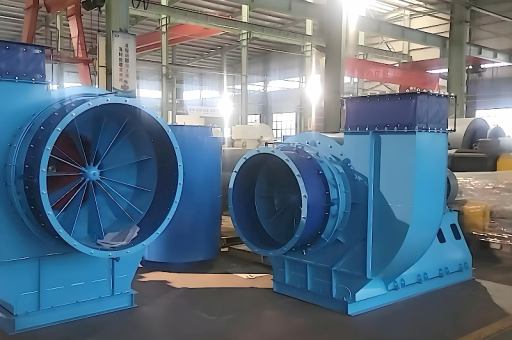
In industrial thermal processing environments, the ability to move large volumes of hot gases reliably is a non-negotiable requirement. Fans used in these conditions must tolerate extreme heat, corrosive combustion byproducts, and continuous mechanical stress. Among the most robust solutions is the Stainless Steel V-Belt Driven Furnace High Temperature Centrifugal Fan.
This article explores the engineering, applications, and maintenance of these specialized fans. By combining a centrifugal impeller with a v-belt drive system and a stainless steel housing, manufacturers deliver a product that meets the demands of furnaces, kilns, boilers, and dryers. Whether you are a plant engineer, a maintenance supervisor, or a procurement specialist, understanding this fan’s design will help you optimize your thermal process equipment.
What Is a Stainless Steel V-Belt Driven Furnace High Temperature Centrifugal Fan?
At its core, this is a fan designed to move high-temperature air or gas streams—often exceeding 600°C (1112°F)—from combustion zones, furnaces, or exhaust systems. It combines three critical features:
- Stainless steel construction: Corrosion resistance and structural integrity at high temperatures.
- V-belt drive: Mechanical power transmission that allows speed adjustments and protects the motor.
- Centrifugal design: Radial airflow generation that produces high static pressure.
Unlike axial fans, centrifugal fans draw air into the center and discharge it radially, building pressure that overcomes system resistance such as ductwork, filters, or heat exchangers.
Key Components and Design Features
A typical v-belt driven furnace centrifugal fan consists of the following:
| Component | Function | Material Consideration |
|---|---|---|
| Impeller | Rotating element that accelerates gas | Stainless steel (304, 310S, or 316L) for thermal and corrosion resistance |
| Housing/Volute | Encases the impeller; directs gas flow | Stainless steel with welded reinforcements; optional internal insulation |
| Shaft | Transfers rotational power from pulley to impeller | High-strength alloy steel or stainless steel, heat-treated |
| Bearings & Pillow Blocks | Support the shaft; housed outside the hot zone | Self-aligning bearings with high-temperature grease |
| V-Belt Drive (Pulleys & Belts) | Transmits motor power to fan | Adjustable motor pulley for speed control |
| Motor Base with Slide Rails | Tension adjustment for belts | Cast iron or steel, corrosion-protected |
| Insulation & Cooling Wheel (optional) | Reduces heat transfer to bearings | Stainless steel cooling disc between housing and bearing |
Design variations include direct-drive options, but the v-belt configuration offers distinct tuning flexibility—especially when process conditions change.
Why Stainless Steel? Material Advantages for High-Temperature Environments
Stainless steel is not merely a “premium” choice; it is a functional requirement in many furnace applications. Below is a comparison to carbon steel:
| Property | Carbon Steel (mild) | Stainless Steel (304/310S) |
|---|---|---|
| Max continuous operating temp | ~400°C (752°F) | 800–900°C (1472–1652°F) |
| Oxidation resistance | Poor – scales rapidly | Excellent – forms passive Cr₂O₃ layer |
| Corrosion from acidic flue gases | High degradation | Very low (especially 316L) |
| Creep strength at high temp | Low | High |
| Weldability for repairs | Good | Good with proper filler metals |
When to choose stainless steel:
- Furnace exhaust with sulfur, chlorine, or other corrosive compounds.
- Peak intermittent temperatures exceeding 500°C.
- Systems requiring long service intervals without internal inspection.
Key stainless grades used:
- 304/304L: General-purpose, cost-effective, good up to 800°C.
- 310S: Higher chromium (25%) and nickel (20%) – superior scaling resistance up to 1050°C.
- 316L: Better against chlorides and acidic condensate in waste gas.
V-Belt Drive System: Efficiency, Flexibility, and Maintenance
The v-belt drive is a deliberate design choice for furnace centrifugal fans for several reasons:
A. Speed Control Without VFD By adjusting the motor pulley diameter (via a variable-pitch sheave), operators can modulate fan speed—and therefore airflow—without needing a variable frequency drive (VFD). This saves capital cost in installations where conditions are relatively stable.
B. Motor Protection Belts slip slightly under overload, protecting the motor from sudden mechanical shock or jamming of the impeller due to debris accumulation.
C. Maintenance Access The motor and fan are separate units; the belt provides a mechanical disconnect. Maintenance can replace bearings, belts, or the motor without removing the fan from the duct.
D. Drawbacks and Mitigation
- Belt wear: Check alignment monthly; replace belts in matched sets.
- Tension loss: Use a belt tension gauge; retension after first 24 hours of operation.
- Heat transfer: Ensure motor is on the cool side; use long center distances if necessary.
Typical belt types used:
- Classical V-belts (A/4L, B/5L, C/6L)
- Narrow wedge belts (SPZ, SPB) for higher power density
- Cogged or raw-edge belts for reduced flex fatigue
Application Areas: Where These Fans Excel
These specialized centrifugal fans are indispensable in:
- Industrial furnaces (heat treatment, melting, annealing)
- Boilers (power plant, recovery, package boilers)
- Cement kilns and preheaters
- Dryers (food, lumber, minerals)
- Incinerators and waste-to-energy plants
- Chemical reactors with hot off-gas
- Glass manufacturing (tank furnaces)
- Steel reheat and forging furnaces
In each case, the fan must maintain a stable pressure differential to ensure proper combustion, gas recirculation, or exhaust removal.
Performance Metrics: Airflow, Static Pressure, and Thermal Tolerance
When specifying a v-belt driven high-temperature fan, consider these parameters:
| Parameter | Typical Range | Notes |
|---|---|---|
| Airflow (CFM / m³/h) | 500 – 200,000 CFM | Depends on housing size and impeller width |
| Static Pressure (in. wg / Pa) | 5–50 in. wg (1200–12,000 Pa) | Higher resistance = heavier duty impeller |
| Operating Temperature | 200°C to 900°C | Use cooling wheel or insulated shaft for >700°C |
| Impeller Tip Speed | 60–120 m/s | Higher speeds improve pressure but reduce bearing life |
| Noise Level (dBA) | 80–95 dBA @ 1m | Often needs silencer downstream |
| Belt Power (HP / kW) | 1–500 HP | Depends on gas density and flow |
Thermal expansion is a critical factor. The impeller and housing expand differently; design clearance must account for this to avoid rubbing.
Common Challenges and How to Overcome Them
Bearing Failure from Heat Soak
Solution: Install a cooling wheel on the shaft between housing and bearing. Use external grease relief and high-temperature grease (e.g., polyurea or PTFE-based).
Impeller Imbalance from Erosion or Deposits
Solution: Schedule periodic cleaning via access doors. Use wear pads or hardfacing on leading edges.
Belt Fatigue from Misalignment
Solution: Laser align pulleys; use tapered bushings for accurate bore fit. Check with a straightedge monthly.
Corrosion in Condensing Environments
Solution: Ensure drain ports are open; if dew point is reached, upgrade to 316L or 310S. Consider internal coating (though risky at high temp).
High Noise Levels
Solution: Add acoustic enclosure around motor/belt area; use a discharge silencer; balance the impeller to ISO 1940 G2.5.
Frequently Asked Questions (FAQ)
Q1: What is the maximum ambient temperature around the motor for a v-belt driven fan?
A1: Typically 40°C (104°F) for standard TEFC motors. If ambient exceeds this, use separately ventilated or inverter-duty motors with higher temperature ratings. The motor should be placed away from the furnace wall.
Q2: Can I use a stainless steel v-belt driven fan for ambient air?
A2: Yes, but it’s not cost-effective. Use carbon steel for temperatures below 300°C unless corrosion is a concern.
Q3: How do I select the correct v-belt for a high-temperature application?
A3: Use notched or cogged belts for flexibility. Avoid belts with rubber covers that degrade. For belt ratings, choose a minimum service factor of 1.4 for fans operating above 400°C.
Q4: What is the difference between a scroll housing and a radial tip housing?
A4: Scroll housing (volute) is standard for general pressure. Radial tip housing is used for dirty gases because it reduces buildup.
Q5: Can these fans run continuously at 800°C?
A5: With proper material (310S), cooling wheel, and insulated shaft, continuous operation at 800°C is possible. However, check creep fatigue data from the manufacturer for the specific grade.
Q6: Are these fans available with explosion-proof motors?
A6: Yes—specify an explosion-proof motor (e.g., Class I, Div 2) for flammable gas environments. Ensure the impeller is spark-resistant (non-ferrous insert or stainless steel).
Q7: How often should I replace the v-belt?
A7: V-belts on heavy-duty fans typically last 6–12 months. Replace them annually or after 2,000–3,000 hours, whichever comes first.
Q8: Do I need a VFD if I already have a v-belt drive?
A8: Not necessarily. If process flow is stable, a fixed-pitch pulley works. Use VFD only if you need frequent speed changes, soft start, or energy savings.
Conclusion
The Stainless Steel V-Belt Driven Furnace High Temperature Centrifugal Fan represents a critical balance between material science, mechanical design, and process engineering. Its stainless steel construction enables operation in corrosive, high-temperature environments where carbon steel would fail rapidly. The v-belt drive system provides cost-effective speed adjustment, motor protection, and simplified maintenance—features that plant engineers value in real-world installations.
When selecting such a fan, consider thermal expansion, cooling strategies, belt service factor, and the specific stainless steel grade appropriate for your gas chemistry. Routine inspection of belts, bearings, and impeller balance will ensure a service life of many years—even in the most demanding furnace applications.
By understanding these fundamentals, you can improve the reliability of your thermal process, reduce unplanned downtime, and optimize energy consumption in your industrial exhaust system.
For specifications, datasheets, or custom configuration, consult with a fan OEM engineer who specializes in high-temperature industrial fan systems.





