
This article's table of contents introduction:
- Core Components of the System
- Why Pulley Drive?
- Voltage & Electrical Considerations (380V)
- Technical Specifications (Typical Example)
- Common Applications
- Installation & Safety Tips
- Troubleshooting Common Issues
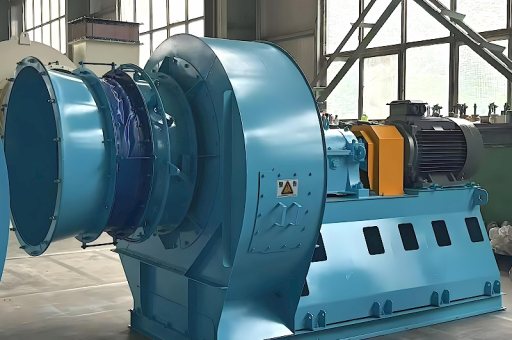
This is a detailed breakdown of a 380V High Pressure Centrifugal Fan with Pulley Drive (Belt Drive) for ventilation systems.
This combination is standard in industrial HVAC, dust collection, fume extraction, and pneumatic conveying where high static pressure is needed.
Core Components of the System
- Motor: 380V (3-Phase, typically 50Hz or 60Hz depending on region). Provides the rotational power.
- Centrifugal Fan / Impeller: The wheel inside the fan housing that creates airflow. "High Pressure" implies a Backward Curved, Radial, or Airfoil blade design (forward curved is better for high volume, low pressure).
- Belt Drive System (Pulley Drive):
- Motor Pulley (Drive Sheave): Small pulley mounted on the motor shaft.
- Fan Pulley (Driven Sheave): Large pulley mounted on the fan shaft.
- V-Belts: Connect the two pulleys (A, B, C, D, or SPZ/SPA sections depending on power).
- Belt Guard: Mandatory safety component.
Why Pulley Drive?
- Speed Control (Variable): By changing the ratio of the motor pulley to the fan pulley, you can change the fan speed (RPM). This adjusts pressure and flow without expensive VFDs.
- Motor Protection: Belts slip slightly under a jam, protecting the motor from shock loads.
- High Pressure: A smaller motor pulley driving a larger fan pulley creates a speed reduction (Torque multiplication). This allows a standard motor to spin a heavy high-pressure impeller with high torque.
- Customization: You can swap pulleys to match specific ductwork requirements.
Voltage & Electrical Considerations (380V)
- Current (Amps): High Pressure fans consume significant power. Formula: (P (kW) = \sqrt{3} \times V \times I \times PF).
- Wiring: 3-Phase + Ground. Must be a breaker sized correctly (1.25x FLA of motor).
- Direction Check: 3-phase motors can spin in either direction. The fan housing and impeller are designed for one specific rotation (usually Clockwise or Counterclockwise when viewed from the drive side). Incorrect rotation drastically reduces pressure and airflow.
Technical Specifications (Typical Example)
| Parameter | Value |
|---|---|
| Voltage | 380V / 3-Phase / 50Hz |
| Motor Power | 5 kW (7.5 HP) |
| Fan Type | Backward Curved Centrifugal |
| Max Static Pressure | 2000 - 4000 Pa (8 - 16 in.wg) |
| Max Airflow | 5,000 - 15,000 m³/h |
| Pulley Ratio | 1:2 (Motor 140mm / Fan 280mm) |
| Fan Speed (RPM) | ~1,450 RPM (Motor runs at 2,900 RPM) |
Common Applications
- Dust Collection: Moving heavy, dirty air through filters.
- Boiler Draft (ID Fans): Pulling combustion gases out of boilers.
- Industrial Process: Drying, cooling, pneumatic conveying.
- Tunnel & Garage Ventilation: Moving large volumes against duct friction.
Installation & Safety Tips
- Belt Tension: Too loose = slippage (loss of pressure). Too tight = bearing and belt wear. Use a belt tension gauge.
- Alignment: Motor pulley and fan pulley must be perfectly parallel. Use a straight edge or laser alignment tool.
- Guard: The belt and pulleys must be fully enclosed in a heavy-duty metal guard.
- Foundation: High pressure fans vibrate. Use a heavy concrete base with vibration dampeners (spring isolators).
- Amp Draw Check: After startup, measure motor current (Amps). It must be below the motor's nameplate FLA (Full Load Amps).
Troubleshooting Common Issues
| Symptom | Likely Cause (Pulley Drive Related) |
|---|---|
| Low Airflow / Pressure | Wrong rotation; Loose or worn belts; Incorrect pulley ratio (fan too slow). |
| Motor Overheating | Fan pulley too large (fan too slow, operating in surge zone); or Motor pulley too large (fan too fast, overloading motor). |
| Belt Squealing | Belt tension too low; Oil/grease on belts; Pulley grooves worn. |
| Vibration | Pulley misalignment; Worn belt causing imbalance; Defective impeller. |
Summary for a Builder/Engineer:
"A 380V high pressure centrifugal fan with pulley drive is ideal for high resistance systems. Use a backward curved impeller, size the pulleys for a speed reduction (roughly 1.5:1 to 3:1 ratio), ensure perfect alignment, and always check amp draw after changing pulley size."
If you have a specific model number, size (wheel diameter), or power rating (kW/HP) , I can give you exact pulley sizing and air performance data.





