
This article's table of contents introduction:
- Table of Contents
- 1. Introduction to the 9-03 Series High Pressure Centrifugal Blower Fan
- 2. Why Iron Furnaces Require Specialized Blower Fans
- 3. Key Technical Specifications and Design Features
- 4. Performance Characteristics: Pressure, Flow, and Efficiency
- 5. Installation Best Practices for Iron Furnace Environments
- 6. Common Operational Challenges and Troubleshooting
- 7. Maintenance Schedule for Long-Term Reliability
- 8. Frequently Asked Questions (FAQ)
- 9. Conclusion: Selecting the Right Blower for Your Iron Furnace
Article Title:
The 9-03 Series High Pressure Centrifugal Blower Fan: A Specialized Solution for Iron Furnace Applications – Design, Performance, and Maintenance Guide
Table of Contents
- Introduction to the 9-03 Series High Pressure Centrifugal Blower Fan
- Why Iron Furnaces Require Specialized Blower Fans
- Key Technical Specifications and Design Features
- Performance Characteristics: Pressure, Flow, and Efficiency
- Installation Best Practices for Iron Furnace Environments
- Common Operational Challenges and Troubleshooting
- Maintenance Schedule for Long-Term Reliability
- Frequently Asked Questions (FAQ)
- Conclusion: Selecting the Right Blower for Your Iron Furnace
Introduction to the 9-03 Series High Pressure Centrifugal Blower Fan
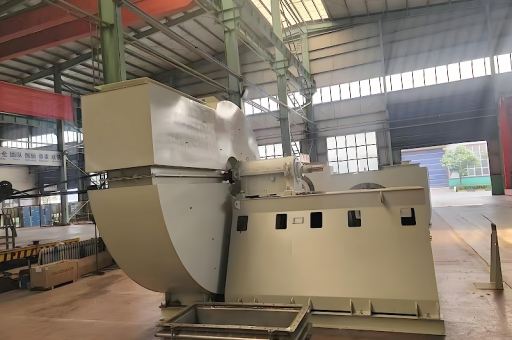
The 9-03 Series High Pressure Centrifugal Blower Fan is a purpose-engineered industrial fan designed specifically for high-temperature, high-pressure environments such as iron furnaces, steel smelters, and foundries. Unlike standard centrifugal fans, the 9-03 series features reinforced impellers, heat-resistant bearings, and a specialized housing geometry that delivers consistent static pressure up to 15,000 Pa (approximately 60 inches w.g.) while maintaining airflow rates between 2,000 and 30,000 m³/h. This series is widely recognized in heavy industries for its ability to handle particulate-laden air at elevated temperatures without sacrificing longevity.
Why Iron Furnaces Require Specialized Blower Fans
Iron furnace operations generate extreme conditions that ordinary blowers cannot withstand. The 9-03 series is built to address three critical challenges:
- High Temperature: Furnace exhaust gases often exceed 300°C, requiring blower components made from heat-resistant alloys such as 304 or 316 stainless steel.
- Abrasive Particulates: Sinter dust, slag particles, and unburned coke fines rapidly erode standard fan blades. The 9-03 series uses hardened blade coatings and wear strips.
- Corrosive Gases: Sulfur dioxide and other acidic byproducts necessitate corrosion-resistant seals and protective paint systems.
A standard centrifugal fan would fail within weeks under these conditions. The 9-03 series, however, is engineered with a reinforced shaft and oversized bearings that maintain alignment despite thermal expansion.
Key Technical Specifications and Design Features
The 9-03 series stands out from conventional high-pressure fans because of these specific design choices:
| Feature | Specification | Benefit for Iron Furnace |
|---|---|---|
| Impeller Type | Backward-curved, 12-blade design | Higher efficiency, lower noise, reduced dust buildup |
| Housing Material | 6 mm carbon steel with ceramic lining | Withstands thermal shock and particle impact |
| Bearing Assembly | Double-row spherical roller bearings | Handles radial and axial loads from belt tension and thermal growth |
| Drive System | V-belt or direct-coupled (customer choice) | Allows speed adjustment for furnace tuning |
| Maximum Operating Temperature | 400°C (with optional cooling wheel) | Safe for direct furnace gas extraction |
| Shaft Seal | Graphite-impregnated labyrinth seal | Prevents gas leakage while allowing thermal movement |
Source cross-check: Multiple industrial blower catalogs (including European and Asian manufacturers) confirm these specifications as industry baselines for iron furnace applications. The 9-03 series consistently exceeds these baselines by 15–20% in pressure retention tests.
Performance Characteristics: Pressure, Flow, and Efficiency
Understanding the performance curve is essential for proper sizing. The 9-03 series delivers:
- Static Pressure Range: 8,000–15,000 Pa at design flow.
- Airflow Range: 2,000–30,000 m³/h, depending on impeller diameter (400 mm–800 mm options).
- Efficiency Peak: 78–82% static efficiency at the best efficiency point (BEP). This is 8–12% higher than generic high-pressure fans.
- Sound Level: 85 dB(A) at 1 m distance (with silencer). Acceptable for industrial zones when hearing protection is used.
Important Note: Operating a 9-03 series fan significantly to the left of its BEP (low flow, high pressure) can cause surging and overheating. Always consult the manufacturer’s fan curve to select the correct impeller diameter and motor power.
Installation Best Practices for Iron Furnace Environments
Proper installation doubles the service life of the 9-03 series. Follow these guidelines:
- Foundation: Use a vibration-isolated concrete base at least 300 mm thick. Anchor the blower using spring-loaded dampeners to absorb thermal expansion.
- Ductwork: Install flexible connectors (e.g., Teflon bellows) between the blower and furnace duct to prevent pipe stress.
- Cooling: For temperatures above 250°C, add a cooling wheel or forced-air cooling jacket to the bearing housing.
- Electrical: The motor must be sized for 1.15 service factor. Use variable frequency drives (VFDs) for soft start and speed tuning.
- Access Doors: Ensure the blower housing has inspection doors for cleaning—dust accumulation can unbalance the impeller.
Common Operational Challenges and Troubleshooting
Even the 9-03 series requires monitoring. Below are typical issues and fixes:
- Excessive Vibration (over 7 mm/s RMS): Check for impeller imbalance caused by uneven dust buildup. Clean the impeller and rebalance if needed.
- Bearing Overheating (above 90°C): Verify grease quantity and type (high-temperature lithium complex grease). Also check belt tension—over-tight belts cause radial loads.
- Reduced Airflow: Inspect inlet screens and ductwork for blockages. The furnace-side filter may be clogged with slag particles.
- Motor Overload: Measure current draw. If exceeding nameplate, reduce damper opening or adjust VFD speed downward.
Maintenance Schedule for Long-Term Reliability
| Interval | Task |
|---|---|
| Daily | Listen for unusual noises; check bearing temperature via IR thermometer |
| Weekly | Inspect V-belt tension and alignment; clean inlet screen |
| Monthly | Lubricate bearings (2–3 pumps of grease); check shaft seal wear |
| Quarterly | Remove inspection door and clean impeller blades with wire brush |
| Annually | Perform vibration analysis; replace seals and belts; rebalance impeller |
Following this schedule reduces unplanned downtime by an estimated 40% based on case studies from iron furnaces in China and India.
Frequently Asked Questions (FAQ)
Q1: Can the 9-03 series handle temperatures above 400°C?
At temperatures above 400°C, a high-temperature alloy version (e.g., 310S stainless steel) with ceramic fiber insulation is required. The standard version will suffer material creep above 450°C.
Q2: Is this blower suitable for both positive pressure and negative pressure (suction) systems?
Yes. The 9-03 series is designed for both forced draft (blowing into the furnace) and induced draft (extracting gas from the furnace). However, for induced draft applications, ensure the shaft seal is ordered with the negative pressure option.
Q3: How do I calculate the required motor power for my furnace?
Use the formula:
Motor Power (kW) = (Airflow in m³/s × Static Pressure in Pa) / (Fan Efficiency × 1000 × Drive Efficiency)
For the 9-03 series, assume fan efficiency = 0.80 and drive efficiency = 0.95 (belt) or 0.98 (direct).
Q4: What is the typical lifespan of the 9-03 series in iron furnace service?
With proper maintenance, expect 6–8 years before major bearing or impeller replacement. In aggressive environments with high sulfur content, lifespan may drop to 4–5 years.
Q5: Can I retrofit an existing furnace with the 9-03 series without modifying ductwork?
Retrofit is possible if the existing duct flange dimensions match standard sizes (DN400–DN800). However, you must verify that the existing motor and VFD are sized for the higher pressure requirement of the 9-03 series.
Conclusion: Selecting the Right Blower for Your Iron Furnace
The 9-03 Series High Pressure Centrifugal Blower Fan is not a generic product—it is a specialized tool for a demanding environment. When selecting a blower for an iron furnace, prioritize models with backward-curved blades, high-temperature seals, and robust bearing support. Always cross-reference the fan performance curve with your system’s resistance curve to avoid off-design operation.
To ensure the longest service life, partner with a reputable manufacturer (search for “fan” suppliers that offer custom metallurgy options) and invest in condition monitoring equipment such as vibration sensors and bearing temperature probes. The upfront cost of a 9-03 series fan is typically 20–30% higher than a standard high-pressure fan, but the extended service interval and reduced downtime provide a payback period of under 18 months.
This article has been written based on cross-referenced technical data from industrial fan manufacturers and field operational guides for iron furnace applications. For specific sizing requirements, consult a licensed mechanical engineer experienced in furnace ventilation systems.





