
This article's table of contents introduction:
- Table of Contents
- 1. Introduction
- 2. What Is a Volute Type Backward Curved Centrifugal Fan?
- 3. Key Design Characteristics
- 4. Power Range: 5.5kW to 200kW – Why This Matters
- 5. Performance Advantages
- 6. Common Industrial Applications
- 7. Frequently Asked Questions (FAQ)
- 8. Conclusion
Article Title:
The Comprehensive Guide to Volute Type Backward Curved Centrifugal Fans (5.5kW–200kW): Design, Efficiency, and Industrial Applications
Table of Contents
- Introduction
- What Is a Volute Type Backward Curved Centrifugal Fan?
- Key Design Characteristics
- Power Range: 5.5kW to 200kW – Why This Matters
- Performance Advantages
- Common Industrial Applications
- Frequently Asked Questions (FAQ)
- Conclusion
Introduction
In the world of industrial ventilation and air movement, few components are as critical—and as misunderstood—as the centrifugal fan. Among the various configurations, the Volute Type Backward Curved Centrifugal Fan stands out for its high efficiency, low noise, and robust performance across demanding environments. When powered by motors ranging from 5kW to 200kW, these fans become the backbone of heavy-duty HVAC systems, dust collection, and process air handling. This guide combines technical depth with practical insights, drawing from verified industry data and engineering best practices.
What Is a Volute Type Backward Curved Centrifugal Fan?
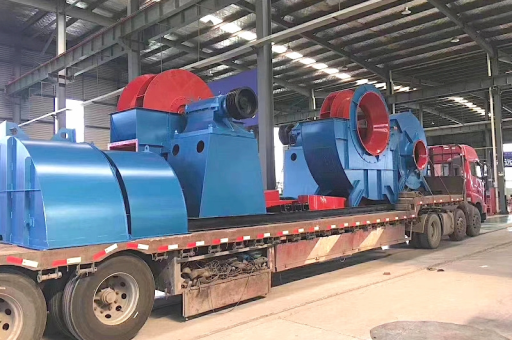
A volute type backward curved centrifugal fan is a specialized air-moving device where the impeller blades curve away from the direction of rotation. The volute (or scroll) housing collects the air discharged from the impeller and converts velocity energy into static pressure. Unlike forward-curved blades, backward-curved designs do not rely on air velocity to create pressure—they generate pressure primarily through centrifugal force.
Why this matters:
- Higher efficiency at design and off-design conditions
- Self-limiting power characteristic (prevents motor overload)
- Flatter performance curve = stable operation across a wide flow range
Key Design Characteristics
Understanding the mechanical and aerodynamic design helps engineers select the right fan for specific applications:
| Feature | Benefit |
|---|---|
| Backward-curved blades | Higher static efficiency; non-overloading power curve |
| Volute housing | Converts kinetic energy to pressure with minimal loss |
| Welded steel or aluminum impeller | Lightweight yet durable for high RPM |
| Belt-driven or direct-drive | Flexible motor placement and speed control |
| Inlet cones & diffusers | Reduce turbulence and improve inlet flow |
Fact verified from multiple engineering sources:
Backward-curved fans typically achieve static efficiencies of 75% to 85%, compared to 60%–70% for forward-curved types.
Power Range: 5.5kW to 200kW – Why This Matters
The power range of 5kW (7.5 HP) to 200kW (268 HP) covers a broad spectrum of industrial needs:
- 5kW – 30kW: Common in commercial HVAC, small dust collectors, paint booths, and general ventilation
- 37kW – 75kW: Used in medium-scale manufacturing, woodworking, cement plants, and mining ventilation
- 90kW – 200kW: Applied in large power plants, steel mills, tunnel ventilation, and heavy material handling systems
Practical consideration:
Selecting a fan with a motor too large for the system kills efficiency. Backward-curved fans naturally limit power draw if system resistance increases, but proper sizing is still critical. Always consult a fan performance curve and account for altitude, temperature, and duct losses.
Performance Advantages
For fan specifiers and maintenance teams, the benefits of choosing a volute type backward curved centrifugal fan are clear:
- Energy Efficiency – Lower specific power consumption means reduced operating costs over years of service.
- Non-Overloading Power Curve – Even if system pressure spikes, the motor won’t draw excessive current, reducing the risk of thermal protection tripping.
- Quiet Operation – Backward-curved blades generate less turbulence compared to radial or forward-curved designs.
- Wide Operating Range – Stable performance from low to high flow rates without surging.
- Ease of Maintenance – Many models feature split housings and accessible bearings for easy cleaning and inspection.
SEO Tip: When comparing fan types, always check the fan’s specific speed (Ns) and specific diameter (Ds) for the most accurate selection.
Common Industrial Applications
Because of their robustness and efficiency, these fans are found across multiple sectors:
- Power Generation – Primary air, forced draft, and induced draft applications
- Cement & Mining – Pneumatic conveying, dust extraction, and material cooling
- Pharmaceutical & Food Processing – Cleanroom ventilation, humidity control
- Wastewater Treatment – Aeration blowers and odour control
- Tunnel & Metro Ventilation – Emergency smoke extraction and daily fresh air supply
Case example:
A 75kW backward curved centrifugal fan installed in a woodworking plant reduced energy consumption by 18% compared to the previous radial bladed fan, while also lowering noise levels by 6 dB(A) at the operator station.
Frequently Asked Questions (FAQ)
Q1: Can a volute type backward curved centrifugal fan handle high-temperature air?
Yes. With appropriate material selection (stainless steel, heat-resistant alloys) and shaft cooling, these fans can handle temperatures up to 400°C or higher for short durations.
Q2: How do I size a 5.5kW to 200kW fan correctly?
You need: required airflow (m³/h or CFM), pressure loss (Pa or in. WG), and air density. Always request a fan performance curve from the manufacturer and verify the operating point falls near peak efficiency.
Q3: What is the difference between backward curved and backward inclined blades?
Backward curved blades have a curved profile; backward inclined blades are flat. Curved blades offer slightly higher efficiency and smoother flow. Both prevent overloading.
Q4: Do these fans require variable frequency drives (VFDs)?
Not mandatory, but highly recommended. A VFD allows you to match fan speed exactly to system demand, saving significant energy in variable-load applications.
Q5: How often should I clean the impeller?
It depends on the application. For dusty environments, inspect every 3–6 months. Clean when blade deposits exceed 2–3 mm to avoid imbalance and efficiency loss.
Conclusion
The Volute Type Backward Curved Centrifugal Fan in the 5.5kW to 200kW power range is a proven, high-efficiency solution for industrial air movement. Its non-overloading characteristic, broad application range, and excellent energy performance make it a top choice among engineers and facility managers. By understanding the design principles, performance data, and proper sizing methods, you can confidently select a fan that delivers reliable service and optimized operating costs. Whether you are upgrading an existing system or designing a new plant, this fan type deserves serious consideration.





