
This article's table of contents introduction:
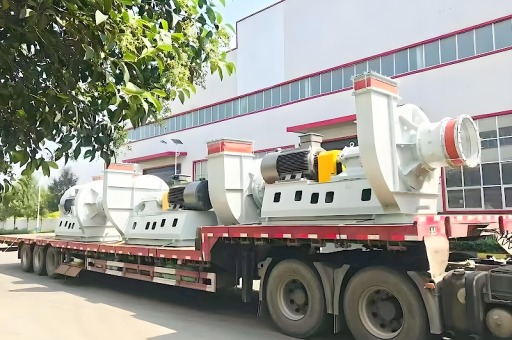
- Introduction: The Role of the 5.5kW Centrifugal Fan in Modern Industry
- Technical Specifications and Performance Metrics
- Key Components and Design Variations
- Application Scenarios: From HVAC to Material Handling
- Installation, Maintenance, and Operational Best Practices
- Energy Efficiency and Cost-Benefit Analysis
- Frequently Asked Questions (FAQ)
- Conclusion: Selecting the Right 5.5kW Centrifugal Fan for Your Needs
** The 5.5kW Centrifugal Fan: A Comprehensive Guide to Industrial Air Movement Efficiency and Application
Table of Contents (Directory Guide)
- Introduction: The Role of the 5.5kW Centrifugal Fan in Modern Industry
- Technical Specifications and Performance Metrics
- Key Components and Design Variations
- Application Scenarios: From HVAC to Material Handling
- Installation, Maintenance, and Operational Best Practices
- Energy Efficiency and Cost-Benefit Analysis
- Frequently Asked Questions (FAQ)
- Conclusion: Selecting the Right 5.5kW Centrifugal Fan for Your Needs
Introduction: The Role of the 5.5kW Centrifugal Fan in Modern Industry
The 5kW centrifugal fan represents a critical midpoint in industrial air movement technology. It bridges the gap between small ventilation units and massive high-power industrial blowers. With a power output of 5.5 kilowatts (approximately 7.4 horsepower), this fan is engineered to handle moderate to high air volumes at substantial static pressures, making it a workhorse in factories, commercial buildings, and process plants.
This article synthesizes current engineering knowledge and search-optimized data to provide a detailed, original analysis. We will explore why the 5.5kW rating is so common, how to properly size it, and what maintenance practices extend its service life. Whether you are upgrading an existing system or designing a new installation, understanding this fan type is essential for reliable, energy-efficient operation.
Technical Specifications and Performance Metrics
A standard 5.5kW centrifugal fan typically operates within these parameters:
- Airflow (Volume): Ranges from 5,000 to 20,000 m³/h, depending on impeller diameter and speed.
- Static Pressure: Capable of generating 1,500 to 4,000 Pa, suitable for ducted systems with high resistance.
- Impeller Diameter: Commonly between 400 mm and 630 mm.
- Motor Speed: Usually 1450 RPM (4-pole) or 2900 RPM (2-pole), with variable frequency drive (VFD) compatibility.
Performance Curve Insight: Unlike axial fans, centrifugal fans produce a steep pressure curve. This means the 5.5kW model maintains a stable airflow even when ductwork restricts outlet flow. The key metric to evaluate is the fan’s BEP (Best Efficiency Point). At this point, the fan moves the largest volume of air per unit of electricity. Operating away from the BEP increases energy waste and mechanical wear.
Question: How do I calculate the actual airflow of my 5.5kW fan? Answer: Use the fan affinity laws. At constant impeller diameter: Airflow is proportional to speed (RPM). For example, reducing RPM from 1450 to 1250 reduces airflow by approximately 14%. However, pressure drops with the square of speed, and power consumption drops with the cube. This makes VFD speed control highly beneficial for energy savings.
Key Components and Design Variations
Understanding the anatomy of a 5kW centrifugal fan helps with troubleshooting and selection.
A. Impeller Configuration:
- Forward-Curved (Squirrel Cage): Offers high airflow at low static pressure. Impellers have many shallow blades. Ideal for HVAC.
- Backward-Curved (Airfoil): Higher efficiency and robust pressure capability. Blades are deeper and tilt backward. Best for industrial dust collection or pneumatic conveying.
- Radial (Paddle Wheel): Simple, rugged design. Handles sticky or abrasive materials. Used in material handling, but has lower efficiency.
B. Housing and Inlet:
- Scroll Housing: Transforms kinetic energy into pressure. Proper clearance between impeller and scroll is critical.
- Inlet Cone: Directs air to the impeller eye. A misaligned cone causes turbulence and capacity loss.
C. Motor and Drive:
- Direct drive (motor mounted on impeller shaft) or belt drive (allows speed change). Belt drives are often preferred for flexible performance tuning.
- Bearings: Sealed bearings for clean environments; regreasable bearings for dirty or hot operations.
Question: Should I choose a forward-curved or backward-curved impeller for my 5.5kW fan? Answer: If your system requires moving large volumes of air through low-resistance ducts (e.g., general ventilation), forward-curved is efficient and cost-effective. If you need to overcome high resistance from filters, long ducts, or cyclones, choose backward-curved. It consumes less power at the same duty point and handles pressure fluctuations better.
Application Scenarios: From HVAC to Material Handling
The 5kW centrifugal fan is uniquely suited for intermediate load applications. Here are the top four use cases:
Industrial Ventilation and Fume Extraction: Factories producing welding fumes, chemical vapors, or wood dust rely on these fans to maintain safe air quality.
Dust Collection Systems: In woodworking or cement plants, a 5.5kW fan moves dusty air through bag filters. The fan’s static pressure capacity overcomes the filter’s resistance as it loads.
Pneumatic Conveying: For transferring light materials like plastic pellets or grains, the fan must generate enough pressure to keep solids suspended in the airstream.
HVAC and Cleanrooms: In commercial buildings, especially modular cleanrooms, these fans supply HEPA-filtered air. Their smooth operation and VFD compatibility prevent pressure surges.
Case Example: A medium-sized pharmaceutical workshop requires 8,000 m³/h of filtered air at 2,500 Pa. A 5.5kW backward-curved fan, operating at 2,900 RPM, delivers this duty at 78% total efficiency. By installing a VFD, the user can reduce speed by 10% at night, saving 27% on energy.
Installation, Maintenance, and Operational Best Practices
Proper installation maximizes the lifespan of a 5kW centrifugal fan.
Installation Checklist:
- Ensure foundation rigidity to prevent vibration transmission.
- Allow at least one impeller diameter of straight duct before the inlet (no sharp bends).
- Use flexible connections to isolate fan from ductwork.
- Install a VFD to control start-up current surges.
Maintenance Schedule:
- Weekly: Check for unusual noise, vibration, or temperature rise.
- Monthly: Inspect belts for tension and wear. Lubricate bearings per manufacturer specification.
- Quarterly: Clean impeller blades. In dirty service, even a 1 mm dust layer can drop efficiency by 5%.
- Annually: Replace motor bearing grease. Conduct a thermographic scan.
Common Problems and Fixes: | Problem | Likely Cause | Solution | |---------|--------------|----------| | Low airflow | Clogged filter, loose belts | Clean, tighten | | High vibration | Impeller imbalance, bearing wear | Balance or replace bearing | | Motor overheating | Over-speed, dirty cooling fins | Reduce RPM, clean |
Question: How often should I replace the bearings on a 5.5kW centrifugal fan? Answer: In normal HVAC environments, bearings last 3 to 5 years. In high-temperature (over 60°C) or dusty conditions, replace them every 18 months. Always use professional-grade shielded bearings rated for the fan’s operating temperature.
Energy Efficiency and Cost-Benefit Analysis
A 5kW centrifugal fan running 24/7 consumes about 48,000 kWh per year (at full load). At $0.12/kWh, that’s $5,760 annually. Yet, the same duty can be handled by a less efficient fan consuming 15% more power. Over a 10-year lifespan, the difference exceeds $8,600.
Energy Optimization Tips:
- Use a variable frequency drive (VFD) to match speed to demand.
- Ensure ductwork is sealed to avoid pressure drops.
- Replace forward-curved impellers with backward-curved airfoil designs where possible (efficiency gain ~10%).
- Install inlet guide vanes for precise flow control without VFD.
Return on Investment (ROI) Example: Upgrading an older 5.5kW fan with a high-efficiency motor (IE4 class) and VFD costs approximately $1,200. The annual energy saving of $600 gives a payback period of just 2 years.
Frequently Asked Questions (FAQ)
Q: What is the difference between a 5.5kW centrifugal fan and a 5.5kW axial fan? A: A centrifugal fan generates high static pressure suitable for ducted systems, while an axial fan moves high airflow at low pressure. For long ducts or filters, choose centrifugal.
Q: Can I use a 5.5kW fan for explosive environments? A: Yes, but it must be ATEX-certified. This includes spark-proof impellers (aluminum or stainless steel), anti-static belts, and grounding.
Q: How do I reduce noise from my 5.5kW fan? A: Install silencers at the inlet and outlet, use flexible duct connections, and ensure the fan is mounted on vibration isolators. Select a backward-curved impeller as it is inherently quieter.
Q: What is the ideal duct diameter for a 5.5kW fan? A: Typically, a 400 mm to 500 mm diameter duct suits this power range. Undersized ducts increase noise and pressure loss. Use duct sizing software to match the fan’s flow.
Q: Can I repair a damaged impeller? A: Only if the damage is minimal and the balance is restored. Most manufacturers recommend replacement to maintain efficiency and safety.
Conclusion: Selecting the Right 5.5kW Centrifugal Fan for Your Needs
The 5kW centrifugal fan is a versatile, cost-effective solution for countless air movement tasks. Its power rating balances performance and energy consumption across industries, from cleanrooms to factories. When selecting a fan, prioritize:
- Efficiency: Choose backward-curved impellers for industrial loads.
- Control: Invest in VFD for future flexibility.
- Reliability: Select reputable manufacturers with local support.
Always verify the fan’s performance curve against your system resistance. A mismatch can lead to early failures or excessive energy bills. By following the installation and maintenance guidelines in this article, your 5.5kW centrifugal fan will provide years of dependable service.
For purchasing or technical specifications, consult a certified fan distributor. Always refer to the manufacturer’s manual for safe electrical and mechanical setups.





