
This article's table of contents introduction:
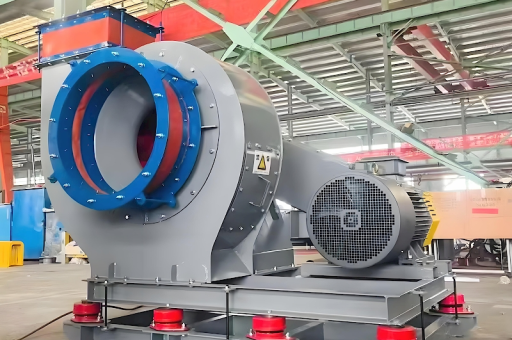
- Table of Contents
- Introduction to the 11kW Centrifugal Fan
- How an 11kW Centrifugal Fan Works
- Key Technical Specifications and Performance Metrics
- Common Applications Across Industries
- Energy Efficiency and Operating Cost Analysis
- How to Choose the Right 11kW Centrifugal Fan for Your System
- Installation, Maintenance, and Troubleshooting
- FAQ: Frequently Asked Questions About 11kW Centrifugal Fans
- Conclusion
** The Complete Guide to 11kW Centrifugal Fans: Applications, Efficiency, and Selection
Table of Contents
- Introduction to the 11kW Centrifugal Fan
- How an 11kW Centrifugal Fan Works
- Key Technical Specifications and Performance Metrics
- Common Applications Across Industries
- Energy Efficiency and Operating Cost Analysis
- How to Choose the Right 11kW Centrifugal Fan for Your System
- Installation, Maintenance, and Troubleshooting
- FAQ: Frequently Asked Questions About 11kW Centrifugal Fans
- Conclusion
Introduction to the 11kW Centrifugal Fan
In the world of industrial ventilation and air movement, the 11kW centrifugal fan represents a powerful, mid-to-high-range solution for demanding applications. Unlike axial fans that move air along the axis of the fan blade, centrifugal fans use a rotating impeller to increase air pressure and velocity by throwing air outward. The 11kW (approximately 15 horsepower) motor rating places this fan in a class suitable for large-scale commercial buildings, manufacturing plants, fume extraction systems, and HVAC systems that require consistent static pressure.
An 11kW centrifugal fan can generate airflows ranging from 10,000 m³/h to over 30,000 m³/h, depending on impeller design and system resistance. This versatility makes it an essential piece of equipment for engineers and facility managers who require high reliability and energy efficiency.
How an 11kW Centrifugal Fan Works
The basic principle of a centrifugal fan involves converting rotational kinetic energy into fluid flow energy. Here’s a step-by-step breakdown:
- Air Inlet: Air enters the fan housing through the inlet, typically located at the center of the impeller.
- Impeller Rotation: The 11kW motor drives the impeller, which spins at speeds between 1450 and 2900 RPM (for this power class).
- Centrifugal Force: Blades on the impeller accelerate the air outward, increasing its velocity.
- Volute (Scroll) Housing: The spiral-shaped housing converts velocity energy into static pressure, allowing the fan to overcome duct resistance.
- Discharge: High-pressure air exits through the outlet, directed into ductwork or directly to the process.
Key Design Variations:
- Backward-curved blades: Higher efficiency, lower noise, best for clean air.
- Forward-curved blades: Higher airflow at lower pressure, compact size, good for HVAC.
- Radial blades: Rugged, suitable for particulate-laden air.
Question: Why choose a centrifugal fan over an axial fan for a dust collection system? Answer: Centrifugal fans are inherently better at generating high static pressure, which is necessary to overcome the resistance of filters, dust collectors, and long duct runs. Axial fans are typically less effective in these high-resistance environments.
Key Technical Specifications and Performance Metrics
Understanding the datasheet of an 11kW centrifugal fan is crucial for correct specification. Below are the most important parameters:
| Parameter | Typical Range | Notes |
|---|---|---|
| Motor Power | 11 kW (15 HP) | Standard IEC or NEMA frame |
| Airflow (Q) | 8,000 – 30,000 m³/h | Depending on impeller type |
| Static Pressure (Ps) | 1,000 – 4,000 Pa | Backward-curved impellers achieve higher pressure |
| Speed | 1450 – 2900 RPM | 4-pole or 2-pole motor configurations |
| Efficiency | 65% – 85% | Backward-curved designs give best efficiency |
| Noise Level | 75 – 95 dB(A) | At 1 meter, depends on speed and housing treatment |
| Temperature Range | -20°C to +80°C (standard) | Higher with special materials |
| Impeller Diameter | 400 – 800 mm | Directly influences flow and pressure |
Fan Laws: Performance scales with speed. For example, doubling RPM increases airflow by 100%, pressure by 300%, and power by 800%. This is why variable frequency drives (VFDs) are strongly recommended for 11kW fans.
Question: What happens if I run an 11kW fan at 50 Hz instead of 60 Hz? Answer: At 50 Hz, the fan speed drops by approximately 17%, airflow drops by 17%, static pressure drops by about 31%, and motor power consumption drops by nearly 50%. The fan will run cooler and quieter, but may not meet your required performance.
Common Applications Across Industries
The 11kW centrifugal fan is a workhorse in many sectors. Here are the top applications:
A. Dust and Fume Extraction
- Woodworking: Collecting sawdust, chips, and shavings.
- Welding: Extracting harmful fumes and metal particulates.
- Chemical Plants: Removing corrosive gases using stainless steel or coated impellers.
B. HVAC (Heating, Ventilation, and Air Conditioning)
- Commercial buildings and large open-plan offices.
- Hospitals with high air change requirements (operating theaters, isolation rooms).
- Cleanrooms requiring HEPA filtration and positive pressure maintenance.
C. Pneumatic Conveying
- Transporting powders, grains, pellets, and granules through pipelines.
- The 11kW power provides sufficient pressure to move materials over 50–100 meters.
D. Oven and Dryer Ventilation
- Industrial paint booths, food dryers, textile curing ovens.
- High-temperature versions can handle air up to 200°C with thermal insulation.
E. Sewage and Wastewater Treatment
- Aeration in biological treatment tanks.
- Odor control exhaust systems.
Question: Can an 11kW centrifugal fan be used in an explosive atmosphere? Answer: Yes, but only with ATEX/IECEx-certified construction, non-sparking impellers (aluminum or bronze), and explosion-proof motors. Standard fans are not safe for such environments.
Energy Efficiency and Operating Cost Analysis
Energy cost is a major factor in running an 11kW fan continuously. Let’s calculate typical operating expenses.
Assumptions:
- Motor efficiency: 92% (IE3 premium efficiency)
- Running hours: 8,000 hours/year (continuous operation)
- Electricity cost: $0.12/kWh (industrial average in many countries)
Annual Energy Consumption: (11 kW / 0.92) × 8,000 h = 95,652 kWh/year
Annual Cost: 95,652 × $0.12 = $11,478 per year
Savings with Variable Speed Drive (VSD): If airflow demand is reduced by 20% on average, a VSD reduces power consumption by approximately 49% (Fan Law: Power ∝ Speed³). New annual cost: $11,478 × 0.51 = $5,854 Annual savings: $5,624
Thus, investing in a VFD (cost ~$1,500–$2,500) pays back within 4–6 months.
Question: Should I always buy an IE4 (Super Premium) motor for my 11kW fan? Answer: IE4 motors are 2–4% more efficient than IE3. At 11kW, the additional annual savings are about $120–$240. If the price premium is under $500 and you run 8,000 hours/year, it’s worth it. For intermittent use, IE3 is usually sufficient.
How to Choose the Right 11kW Centrifugal Fan for Your System
Selecting the correct fan involves matching fan performance to system resistance. Follow this step-by-step guide:
-
Calculate System Resistance (Static Pressure):
- Duct length and diameter, number of elbows, filters, dampers, and terminals.
- Use a duct sizing calculator or consult an HVAC engineer.
-
Determine Required Airflow (CFM or m³/h):
- For dust extraction: based on number of capture hoods and transport velocity.
- For HVAC: based on room size and air change rate (e.g., 10 ACH for a cleanroom).
-
Select Impeller Type:
- Backward-curved: Best for energy efficiency and low noise.
- Forward-curved: More compact, higher flow at lower pressure.
- Radial: For dirty or sticky air.
-
Check Motor Mounting and Belt Drive vs. Direct Drive:
- Direct drive: Higher efficiency, no belt maintenance, fixed speed.
- Belt drive: Variable speed via pulley change, easier to match system curve.
-
Consider Material:
- Carbon steel: Standard for clean air.
- Stainless steel (304 or 316): For corrosive or high-humidity air.
- Coated (epoxy, PTFE): For chemical resistance.
-
Verify Certification:
CE, UL, ATEX, or ISO standards depending on region and application.
Question: My system requires 20,000 m³/h at 2,500 Pa. Can a standard 11kW fan handle this? Answer: Possibly, if the fan efficiency is above 75%. Check the fan curve: the operating point must fall within the stable region (to the right of the pressure peak). If the point is too close to the stall region, consider a larger fan or higher power motor.
Installation, Maintenance, and Troubleshooting
Installation Tips:
- Use flexible connectors at inlet and outlet to reduce vibration transmission.
- Install a VFD or soft starter to avoid high inrush current.
- Ensure adequate clearance for impeller inspection and removal.
- Ground the fan properly; use anti-static belts if conveying flammable dust.
Routine Maintenance (Monthly to Quarterly):
- Check belt tension and alignment (for belt-driven fans).
- Lubricate bearings per manufacturer schedule (typically every 6 months).
- Inspect impeller for wear, dust buildup, or imbalance.
- Clean filter screens and ducts to maintain designed performance.
Common Problems and Solutions:
| Problem | Likely Cause | Solution |
|---|---|---|
| Low airflow | Blocked duct, incorrect belt speed, dirty impeller | Clean system, adjust pulley ratio, clean impeller |
| Excessive vibration | Impeller imbalance, worn bearings, loose base | Balance impeller, replace bearings, tighten bolts |
| Motor overheating | Overloaded fan, restricted motor cooling | Reduce speed, clean motor fins, check voltage |
| High noise | Debris hitting impeller, resonance in duct | Remove debris, install acoustic insulation |
Question: My 11kW fan trips the circuit breaker on startup. Why? Answer: The most common reasons are: (1) The fan is directly started, causing high inrush current (6–8x full load). Solution: install a soft starter or VFD. (2) The impeller is stuck or rubbing against the housing. Solution: inspect and adjust clearance.
FAQ: Frequently Asked Questions About 11kW Centrifugal Fans
Q1: Can an 11kW centrifugal fan handle hot gases? Yes, up to 80°C standard, 200°C with high-temperature shaft seals and painted or stainless steel components.
Q2: What is the typical lifespan of an 11kW centrifugal fan? With proper maintenance (bearing replacement, belt adjustment, impeller balancing), 10–15 years is typical.
Q3: Does the 11kW centrifugal fan require a special electrical installation? It requires a 3-phase supply (380–480V typically). A dedicated circuit with appropriate breakers, and preferably a VSD, is recommended.
Q4: Can I use a belt-driven 11kW fan at lower speeds permanently? Yes, but ensure the motor is not oversized for the reduced load. Also, lower speeds reduce airflow, so verify system requirements.
Q5: What is the difference between a forward-curved and backward-curved impeller in practice? Forward-curved fans are smaller, cheaper, and produce high flow at low pressure. They are less efficient and can overload motors if duct resistance drops. Backward-curved are more efficient, have a non-overloading power curve, and are better for variable resistance systems.
Conclusion
The 11kW centrifugal fan is a versatile, powerful, and essential piece of equipment for industries ranging from dust collection to HVAC. Its performance characteristics—high static pressure, moderate to high airflow, and robust construction—make it suitable for demanding environments where reliability and efficiency are critical.
When selecting an 11kW fan, always match the fan curve to your system resistance curve, choose the correct impeller type for your air quality, and seriously consider variable speed control to reduce operating costs. Pay attention to installation details and maintenance schedules to maximize lifespan and performance.
By following the guidelines in this article—from understanding fan laws to troubleshooting common issues—you can ensure your fan delivers optimal performance for years to come. Whether you are upgrading an existing system or designing a new one, the 11kW centrifugal fan remains a benchmark of power and efficiency in industrial air movement.





