
This article's table of contents introduction:
- Table of Contents
- Introduction: What Defines a 1000Pa Centrifugal Fan?
- Core Technology: How 1000Pa Static Pressure Impacts Airflow
- Key Application Scenarios: Where 1000Pa Fans Excel
- Comparative Analysis: 1000Pa vs. Low/Medium Pressure Fans
- Selection Criteria: Motor Power, Impeller Design, and Noise Control
- Maintenance Best Practices for Long-Term Reliability
- Frequently Asked Questions (FAQ)
- Conclusion: Future Trends in High-Pressure Centrifugal Fans
** The Ultimate Guide to 1000Pa Centrifugal Fans: Performance, Applications, and Optimization for Industrial Ventilation
Table of Contents
- Introduction: What Defines a 1000Pa Centrifugal Fan?
- Core Technology: How 1000Pa Static Pressure Impacts Airflow
- Key Application Scenarios: Where 1000Pa Fans Excel
- Comparative Analysis: 1000Pa vs. Low/Medium Pressure Fans
- Selection Criteria: Motor Power, Impeller Design, and Noise Control
- Maintenance Best Practices for Long-Term Reliability
- Frequently Asked Questions (FAQ)
- Conclusion: Future Trends in High-Pressure Centrifugal Fans
Introduction: What Defines a 1000Pa Centrifugal Fan?
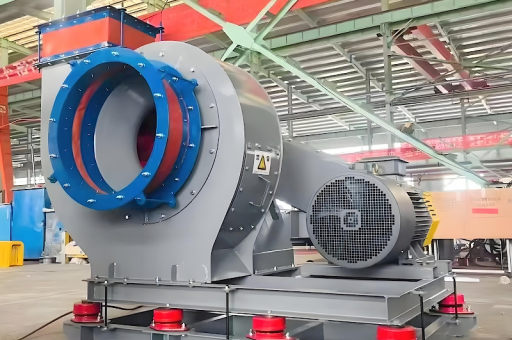
A 1000Pa centrifugal fan is a mechanical air-moving device engineered to generate a static pressure of 1000 Pascals (approximately 4 inches of water gauge). This specification places it squarely in the medium-to-high pressure category, bridging the gap between standard ventilation fans (200–500 Pa) and heavy-duty industrial blowers (2000 Pa+). Unlike axial fans that push air parallel to the shaft, centrifugal fans use a rotating impeller to accelerate air radially, converting kinetic energy into pressure. The 1000Pa threshold is critical for systems where air must overcome resistance from long duct runs, dense filters, or compact heat exchangers.
Key characteristics:
- Impeller Types: Forward-curved (for higher volume at lower pressure), backward-curved (for higher efficiency at 1000Pa), or radial (for particulate-laden air).
- Typical Power Range: 0.75kW to 5.5kW depending on flow rate (e.g., 2000–8000 m³/h at 1000Pa).
- Housing Material: Galvanized steel for standard environments; stainless steel (304/316) for corrosive or hygienic applications.
Core Technology: How 1000Pa Static Pressure Impacts Airflow
Understanding the fan performance curve is essential. At 1000Pa, the fan operates near its optimal efficiency point if the system design is matched correctly. The key relationship follows the affinity laws:
- Flow (Q) ∝ Fan Speed (RPM)
- Pressure (P) ∝ (RPM)²
- Power (W) ∝ (RPM)³
Real-world example: A fan running at 2800 RPM might deliver 5000 m³/h at 1000Pa. If you reduce speed to 2400 RPM, flow drops to ~4285 m³/h, pressure to ~735Pa, but power consumption falls by over 40%. This makes Variable Frequency Drives (VFDs) highly recommended for 1000Pa fans, allowing precise pressure matching without over-spending energy.
Why 1000Pa?
Most industrial processes—such as dust collection, fume extraction, or HVAC zone pressurization—require a balance: too low pressure fails to push air through filters; too high pressure wastes energy and causes duct noise. The 1000Pa sweet spot is widely adopted in spray booths, plastic drying hoppers, and commercial kitchen exhausts.
Key Application Scenarios: Where 1000Pa Fans Excel
a) Dust and Fume Extraction Systems
In welding booths or woodworking shops, filters create resistance that climbs to 800–1200Pa. A 1000Pa rating ensures consistent airflow despite loaded filters, preventing hazardous fume accumulation. Backward-curved impellers are preferred here for their non-stalling characteristics.
b) Grain and Seed Drying
Agricultural dryers require forceful air movement through deep grain beds. A 1000Pa centrifugal fan delivers the necessary pressure to penetrate 1.5–2 meters of corn or wheat, reducing drying time by up to 30% compared to low-pressure axial units.
c) Cleanroom Pressurization
Pharmaceutical cleanrooms maintain positive pressure (15–25 Pa relative to corridors). However, the supply air handling unit must overcome HEPA filters and duct losses that total 900–1000Pa. Forward-curved fans with sound-insulated housings are common here.
d) Process Cooling in Plastic Injection Molding
Mold cooling channels require air pressure to evacuate heat from deep cavities. 1000Pa centrifugal fans drive air through narrow passages, reducing cycle time and improving part quality.
Comparative Analysis: 1000Pa vs. Low/Medium Pressure Fans
| Parameter | 1000Pa Centrifugal Fan | Low-Pressure Axial Fan (200–400 Pa) |
|---|---|---|
| Duct Length Support | Up to 80 meters with 3 bends | Limited to 20–30 meters |
| Filter Handling | Supports 2–3 filter stages | Clogs quickly with MERV-13+ |
| Noise Level | 65–75 dB(A) typical | 55–65 dB(A) |
| Efficiency at High Resistance | 70–82% (backward-curved) | <50% when choked |
| Cost per CFM | Higher initial cost, lower lifetime cost | Lower initial, higher energy cost under load |
Key insight: For systems requiring consistent flow despite variable pressure drops (e.g., baghouse filters that load over time), the 1000Pa centrifugal fan maintains performance far better than axial alternatives.
Selection Criteria: Motor Power, Impeller Design, and Noise Control
Motor considerations:
- Choose IE3 or IE4 efficiency class motors to meet energy regulations.
- For explosion-proof environments (e.g., paint booths), select ATEX-certified motors and aluminum or non-sparking impellers.
- Direct drive vs. belt drive: Direct drive eliminates belt maintenance but limits speed adjustability; belt drive allows RPM changes via pulley swaps.
Impeller selection:
- Backward-curved (BC): Best efficiency at 1000Pa (up to 82%). Ideal for clean air.
- Forward-curved (FC): Higher airflow for the same size, but lower peak efficiency (~65%). Suitable for low-space applications.
- Radial (paddlewheel): Handles sticky or fibrous materials but generates higher noise.
Noise attenuation:
At 1000Pa, high tip speeds generate audible whine. Use:
- Inlet/outlet silencers with fiberglass or acoustic foam.
- Flexible connectors to prevent vibration transmission to ducts.
- Sound enclosures lined with 50mm mineral wool.
Maintenance Best Practices for Long-Term Reliability
- Monthly: Check impeller balance via vibration analysis (threshold: <4 mm/s RMS).
- Quarterly: Clean blades using compressed air or soft brush—buildup at 1000Pa can cause a 15% flow drop.
- Annually: Replace bearings (L10 life typically 40,000 hours at 2800 RPM).
- Inspect belt tension (if belt-driven): A loose belt reduces pressure by 10–20%.
Common failure signs at 1000Pa:
- Increased current draw → indicates filter clogging or backward rotation.
- Whistling noise → suggests inlet blockage or impeller tip gap enlargement.
- Vibration rise → bearing wear or mass imbalance.
Frequently Asked Questions (FAQ)
Q1: Can a 1000Pa centrifugal fan replace a lower pressure fan in an existing system?
Yes, but only if you adjust motor power and duct design. A 1000Pa fan moving the same CFM through a low-resistance system will cause high velocity, noise, and possible duct damage. Use VFD to dial down speed.
Q2: What size duct does a 1000Pa fan require?
Rule of thumb: Duct velocity should be 10–15 m/s for air handling (18–25 m/s for dust). For a 5000 m³/h fan, that translates to a 300–400mm diameter duct. Undersizing raises pressure drop, wasting the fan’s capacity.
Q3: How loud is a 1000Pa centrifugal fan?
Typically 68–78 dB(A) at 1 meter for standard models. High-efficiency backward-curved models are quieter (65–72 dB). Adding inlet silencers reduces by 8–12 dB.
Q4: Is 1000Pa sufficient for a 50-meter duct with 6 bends?
Absolutely, provided each bend is radiused (R = 1.5d) and filters are clean. Calculate total system pressure loss: 50m straight duct at 12 m/s ≈ 250 Pa, 6 bends ≈ 300 Pa, HEPA filter ≈ 350 Pa → total 900 Pa. A 1000Pa fan provides 10% margin.
Q5: Can I run a 1000Pa fan 24/7?
Yes, if correctly specified. Continuous duty requires oversize bearings (L10 > 60,000h) and class F or H motor insulation. Avoid running at shut-off (closed damper) for more than 1 minute—recirculated heat can damage the motor.
Conclusion: Future Trends in High-Pressure Centrifugal Fans
The 1000Pa centrifugal fan segment is evolving rapidly due to three drivers:
- Smart Controls: IoT-enabled fans with real-time pressure sensors and auto-adjusting VFDs now optimize for energy savings (20–35% reduction).
- EC Motors: Electronically commutated motors for 1000Pa fans achieve 90%+ efficiency across a wide speed range, replacing AC induction motors in new designs.
- Additive Manufacturing: 3D-printed impellers with optimized blade profiles reduce weight and turbulence, improving static efficiency by 5–7%.
For industrial buyers, the 1000Pa centrifugal fan remains the most versatile solution for balancing moderate cost with reliable high-pressure performance. When selecting your next unit, prioritize efficiency over sticker price—a 5% efficiency gain at 1000Pa can save $500–$1,200 per year in electricity for a 5kW fan running 6000 hours.
Summary: This guide has covered the engineering, applications, selection criteria, and maintenance of 1000Pa centrifugal fans. Whether you are designing a new dust collection system or upgrading an existing HVAC network, understanding the interaction between pressure, flow, and system resistance is the key to optimal ROI.





