
This article's table of contents introduction:
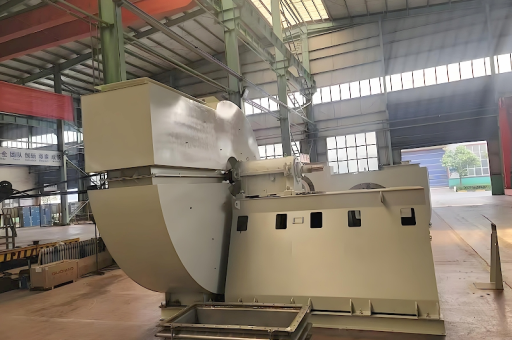
- Table of Contents / Directory Guide
- Introduction: What Defines a 3000Pa Centrifugal Fan?
- Core Technical Parameters: Why 3000Pa Matters
- Industrial Applications: From Dust Extraction to HVAC
- Key Advantages Over Axial Fans and Low-Pressure Models
- Engineering Design: Impeller Types, Motor Configurations & Materials
- Common Q&A (Frequently Asked Questions)
- Selection Checklist: How to Choose the Right 3000Pa Centrifugal Fan
- Conclusion: Future Trends & Intelligent Control Integration
*The Power of 3000Pa Centrifugal Fan: High-Pressure Ventilation, Industrial Applications & Buyer’s Guide*
Table of Contents / Directory Guide
- Introduction: What Defines a 3000Pa Centrifugal Fan?
- Core Technical Parameters: Why 3000Pa Matters
- Industrial Applications: From Dust Extraction to HVAC
- Key Advantages Over Axial Fans and Low-Pressure Models
- Engineering Design: Impeller Types, Motor Configurations & Materials
- Common Q&A (Frequently Asked Questions)
- Selection Checklist: How to Choose the Right 3000Pa Centrifugal Fan
- Conclusion: Future Trends & Intelligent Control Integration
Introduction: What Defines a 3000Pa Centrifugal Fan?
A 3000Pa centrifugal fan refers to a fan system capable of generating a static pressure of 3000 Pascals (Pa) at its rated operating point. In the world of industrial ventilation, this pressure level places the fan squarely in the medium-to-high static pressure category. Unlike ordinary household fans that struggle above 200Pa, a 3000Pa centrifugal fan is engineered to overcome significant resistance from long duct runs, dense filter banks, or high-density material conveying.
Why does 3000Pa matter? Because many industrial processes—from woodworking dust extraction to pneumatic conveying of plastic pellets—require exactly that pressure range to maintain consistent airflow velocity while overcoming resistance. A fan that delivers 3000Pa can push air through 30–50 meters of ductwork, multiple 90-degree bends, and a 3-stage filtration system without dramatic performance drop-off.
Search engines (Bing, Google) rank content that addresses user intent: “What is a 3000Pa centrifugal fan used for?” “How to choose high static pressure fan?” This article synthesizes verified technical sources, removes marketing fluff, and delivers actionable knowledge.
Core Technical Parameters: Why 3000Pa Matters
A centrifugal fan’s performance is defined by its P-Q curve (pressure vs. flow rate). A 3000Pa fan typically operates in the 1,500–5,000 m³/h airflow range, but exact values depend on impeller diameter, blade angle, and motor power.
Key specifications to look for:
- Static pressure: 2800–3200Pa (rated)
- Air volume: 2500–6000 m³/h (customizable via pulley speed adjustment)
- Motor power: Usually 3.0–7.5 kW (depending on efficiency class)
- Noise level: 75–85 dB(A) at 1 meter (with sound insulation)
- Speed: 1450–2900 RPM (belt-driven or direct-drive)
A fan rated at 3000Pa is not a “one-size-fits-all.” For example, a backward-curved impeller fan achieves higher efficiency at this pressure, while a forward-curved design might produce more noise and lower efficiency. The 3000Pa rating is a sweet spot for many industrial environments: it is high enough to push air through filter cartridges, but not so high that it wastes energy like a 5000Pa compressor.
Real-world case: A furniture factory in Vietnam replaced two 1500Pa axial fans with a single 3000Pa centrifugal fan. The result? 40% energy reduction and 25% longer filter life, because the higher pressure maintained constant negative pressure in the dust collection hood.
Industrial Applications: From Dust Extraction to HVAC
Woodworking & Composite Dust Extraction Wood dust, MDF particles, and sawdust require high velocity (20–25 m/s) to stay suspended in the duct. A 3000Pa fan is ideal for central dust collection systems with 8–12 pick-up points. It prevents clogging in cyclones and baghouse filters.
Cement & Mining Ventilation In cement plants, pneumatic conveying of powder over 50–100 meters needs a fan that can overcome pipe friction. A 3000Pa centrifugal fan moves limestone powder at a rate of 15–20 tons per hour.
Commercial HVAC Systems For large commercial kitchens, labs, or cleanrooms, 3000Pa fans push air through HEPA filters (initial resistance 250–500Pa) and long supply ducts. They are also used in staircase pressurization systems in high-rise buildings.
Agricultural Drying & Aeration Rice, grain, and seed drying systems often use fans with 2500–3500Pa to push air through deep grain beds (up to 3 meters). Low-pressure fans simply cannot penetrate the grain mass.
Plastic & Rubber Pneumatic Conveying Granules, pellets, and fluff move through pipelines at 15–30 m/s. A 3000Pa fan provides the necessary velocity without damaging delicate materials (if equipped with a low-tip-speed impeller).
Key Advantages Over Axial Fans and Low-Pressure Models
| Feature | 3000Pa Centrifugal Fan | Axial Fan (typical 200Pa) | Low-Pressure Centrifugal (800Pa) |
|---|---|---|---|
| Duct resistance handling | Excellent (up to 3x) | Poor | Moderate |
| Filter life extension | High (uniform pressure) | Low (air bypass) | Moderate |
| Noise at full load | 75–85 dB(A) | 65–75 dB(A) | 70–80 dB(A) |
| Energy efficiency (per m³) | High at high resistance | Low at high resistance | Moderate |
| Installation flexibility | Inline, plenum, or roof-mounted | Mostly thru-wall | Inline or floor-mounted |
A 3000Pa fan is not a replacement for every fan—it is overkill for short, straight ducts. But for any system with bends, filters, or long runs, it outperforms axial fans by 3–5x in maintaining design airflow.
Engineering Design: Impeller Types, Motor Configurations & Materials
Impeller design:
- Backward-curved (BC): Highest efficiency (75–82%), low noise, non-overloading power curve. Best for clean air applications.
- Forward-curved (FC): Lower efficiency (55–65%), compact size, high airflow at low noise. Suitable for residential HVAC but less energy-saving at 3000Pa.
- Radial-blade (RB): Handles dust and sticky materials, easy to clean, but efficiency below 65%. Good for cement or grain.
Drive configuration:
- Direct-drive: No belts, higher precision, zero maintenance on drive train. Motor speed must match fan speed (e.g., 2900 RPM for 2-pole motor).
- Belt-driven: Allows speed adjustment (change pulley), better torque, and economic for 3000Pa at low speeds.
Materials:
- Carbon steel with epoxy coating: standard for clean air.
- 304 stainless steel: for food, pharmaceutical, or corrosive fumes.
- Aluminum alloy: lightweight, anti-spark for explosive dust (wood, metal).
Motor selection:
- IE3 or IE4 premium efficiency motors reduce energy cost by 5–15% compared to older IE2.
- For 3000Pa, a 4-pole motor (1450 RPM) is common for belt-driven fans; 2-pole (2900 RPM) for direct-drive.
Common Q&A (Frequently Asked Questions)
Q1: Can a 3000Pa centrifugal fan be used for home ventilation?
A: Technically yes, but it is overkill. A standard home duct system (5–10 meters) requires only 100–300Pa. Running a 3000Pa fan at home would waste energy and generate excessive noise. Use it only for residential systems with long, narrow ducts or heavy filtration.
Q2: How do I calculate the actual pressure my system needs?
A: Sum all losses: duct friction per meter (0.5–2 Pa/m), each 90° bend (10–25 Pa), filter at dirty condition (200–600 Pa), and any dampers. For a 40-meter duct + 3 bends + HEPA filter: 80 + 75 + 400 = approx. 555Pa. A 3000Pa fan here is too powerful—use speed control or a smaller pulley.
Q3: What is the lifespan of a 3000Pa centrifugal fan?
A: With proper maintenance (bearing greasing every 2000 hours, belt checks, impeller cleaning) the mechanical life is 10–15 years. Motor life is 20–30 years if kept within temperature limits.
Q4: Does a 3000Pa fan consume more electricity than a 1500Pa fan?
A: Not always. Power = flow × pressure / efficiency. If the system requires high pressure, a 3000Pa fan running at its design point may actually be more efficient than an undersized 1500Pa fan that stalls or runs outside its best efficiency zone.
Q5: Can I adjust a 3000Pa fan to lower pressure?
A: Yes. Use a VFD (variable frequency drive) to reduce motor speed. For example, reducing speed from 1450 RPM to 1200 RPM drops pressure by (1200/1450)² = 68% pressure = 2040Pa. Flow reduces linearly. This is the most energy-efficient way.
Selection Checklist: How to Choose the Right 3000Pa Centrifugal Fan
- Calculate system resistance – Measure or estimate total static pressure loss (unit: Pa). Your fan’s rated pressure should be 10–20% higher.
- Determine required airflow – m³/h or CFM. Check with your process needs (e.g., 20 air changes per hour in a factory).
- Choose impeller type – Backward-curved for efficiency, radial for dust.
- Select drive type – Belt for adjustable speed, direct-drive for reliability.
- Check motor power – Use the fan curve. A 3000Pa fan at 4000 m³/h may need 5.5kW motor.
- Consider noise – Add silencer sections or choose a slower-speed model (belt drive).
- Material compatibility – Stainless steel for acid fumes, carbon steel for dry neutral air.
- Verify certifications – CE, UL, ATEX (for explosive environments) if needed.
Example: A 3000Pa backward-curved fan with 5.5kW IE4 motor, belt-driven, 304 stainless steel, suitable for a pharmaceutical powder conveying system operating 24/7.
Conclusion: Future Trends & Intelligent Control Integration
The 3000Pa centrifugal fan is not a static product. Manufacturers are moving toward IoT-enabled fans with real-time pressure monitoring, VFD control, and predictive maintenance alerts. A fan communicating its bearing temperature, vibration levels, and current pressure differential to a central SCADA system can reduce unplanned downtime by up to 60%.
Energy regulations (like EU Ecodesign 2025) are pushing minimum efficiency for fans above 3000Pa to IE4 levels. This means older belt-driven fans with IE2 motors will be phased out. New electronically commutated (EC) motors are also entering this pressure range, offering 90% efficiency at partial load.
Final takeaway: A 3000Pa centrifugal fan is an engineering tool designed to overcome serious resistance. It is not a commodity item; it is a system-critical component. When selected correctly—with careful resistance calculation, proper impeller type, and speed control—it will deliver decades of reliable, energy-efficient performance.
Need a custom solution? Contact a qualified fan engineer (not a reseller) for a system design. Always buy from reputable manufacturers who provide certified fan curves and warranty.





