
This article's table of contents introduction:
- What does 3500 Pa mean?
- Common Types of Centrifugal Fans at this Pressure
- Typical Applications
- Sample Specifications (Typical)
- Important Selection Criteria
- Summary: Is 3500 Pa high?
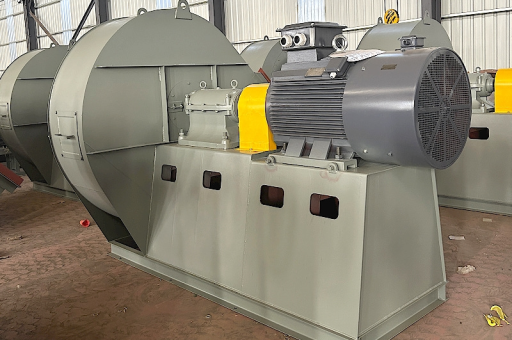
A 3500 Pa (Pascal) centrifugal fan is a high-pressure industrial fan. To give you the most accurate information, it's important to clarify the context, as 3500 Pa can refer to either the static pressure or total pressure of the fan.
Here is a detailed breakdown of what "3500 Pa centrifugal fan" means, its typical applications, and key specifications.
What does 3500 Pa mean?
- Pressure: 3500 Pa is a measure of the pressure the fan can generate against resistance (ductwork, filters, etc.).
- Conversion:
- 3500 Pa = 0.509 PSI (pounds per square inch)
- 3500 Pa = 14.05 inches of water gauge (inWG or mmH₂O)
- 3500 Pa = 35 millibar
Key Insight: This is considered medium to high static pressure. Standard HVAC fans (e.g., for a house) operate at 100–500 Pa. A 3500 Pa fan is used in heavy-duty industrial settings where air must be pushed through long ducts, dense filter systems, or fluidized beds.
Common Types of Centrifugal Fans at this Pressure
- Backward Curved (BC) / Backward Inclined (BI): Most efficient for the 3500 Pa range. Used for clean air applications (dust-free).
- Backward Curved with Airfoil (BCA): Highest efficiency, but expensive. Used in critical continuous operation.
- Radial (Paddle wheel): Handles dirty, sticky, or high-temperature air. Less efficient but very rugged. Often operates at higher pressures (e.g., material conveying).
- Forward Curved (Squirrel Cage): Rarely used at 3500 Pa. They are designed for high volume but low pressure.
Typical Applications
A fan providing 3500 Pa static pressure usually serves in these roles:
- Dust Collection: Moving air through long runs of ducting and baghouse filters.
- Pneumatic Conveying: Light-duty conveying of powders, granules, or flakes.
- Industrial Boiler / Burner Combustion Air: Forcing air into burners against backpressure.
- Fume Extraction: Laboratory or chemical exhaust through tall stacks.
- HVAC for High-Rise Buildings: Air handlers serving the upper floors of tall buildings where high static pressure is needed.
- Clean Rooms: Overcoming HEPA filter resistance (which can be 500–1500 Pa alone).
Sample Specifications (Typical)
To evaluate a "3500 Pa" fan, you must know the required Airflow (CFM or m³/h) and power. Here are three theoretical fan sizes:
| Specification | Small Fan (10kW) | Medium Fan (30kW) | Large Fan (75kW) |
|---|---|---|---|
| Static Pressure | 3500 Pa | 3500 Pa | 3500 Pa |
| Airflow | ~5,000 m³/h (3,000 CFM) | ~15,000 m³/h (9,000 CFM) | ~40,000 m³/h (24,000 CFM) |
| Motor Power | 5 kW - 7.5 kW | 22 kW - 30 kW | 55 kW - 75 kW |
| Impeller Type | Backward Curved | Backward Curved / Radial | Airfoil / Radial |
| Speed (RPM) | ~2,900 RPM (Direct) | ~1,450 RPM | ~1,200 RPM |
Important Selection Criteria
If you are looking to buy or specify this fan, you need to answer these questions:
- Is the pressure static or total? (Static is more common for ducted systems).
- What is the airflow (m³/h or CFM)? A fan cannot be defined by pressure alone. (e.g., "3500 Pa @ 10,000 m³/h").
- What is the air temperature? High temperatures (e.g., >100°C) require different materials (steel vs. aluminum impeller) and motors (separate cooling).
- What is the material being moved? Is it clean air, dusty air, or sticky particles? This dictates the impeller type (radial vs. backward curved).
- What is the altitude? At high altitudes, the air density is lower, meaning the fan generates less actual pressure (typically 3500 Pa * (Actual Density / Sea Level Density)). You may need a higher rated fan.
Summary: Is 3500 Pa high?
| Context | Comparison |
|---|---|
| Home Ceiling Fan | ~ 0 Pa |
| Domestic Extractor Fan | ~ 50 - 100 Pa |
| Standard HVAC Fan | ~ 250 - 600 Pa |
| High-Output Industrial Fan | ~ 1500 - 3000 Pa |
| 3500 Pa Fan | Heavy Industrial / Process Fan |
| Pneumatic Conveying Fan | ~ 5000 - 8000 Pa |
Conclusion: A 3500 Pa centrifugal fan is a serious piece of industrial equipment. It requires a substantial motor (likely 3-phase power), must be selected carefully to match the system's flow rate and duct design, and is not a standard off-the-shelf item for residential use.





