
This article's table of contents introduction:
- What it fundamentally is
- The "Centrifugal" Design
- Key Applications of a 6000 Pa Centrifugal Fan
- Technical Implications & What to Look For
- Summary Table
- Final Verdict
Here is a comprehensive breakdown of what a 6000 Pa centrifugal fan is, its applications, and its technical implications.
What it fundamentally is
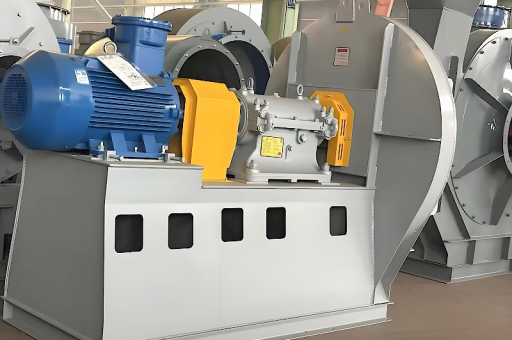
A 6000 Pa (Pascal) centrifugal fan is a high-pressure industrial fan. In the world of fans, pressure is the measure of the resistance the fan can overcome, while flow (measured in m³/h or CFM) is the volume of air it moves.
- 6000 Pa is equivalent to 24 inches of water gauge (in.wg) or 87 PSI.
- Context: A standard household fan might produce 50-100 Pa. A typical HVAC fan might produce 500-1000 Pa. A 6000 Pa fan is in the "Medium to High" pressure range, specifically designed for systems with significant resistance.
The "Centrifugal" Design
Unlike a standard axial fan (like a desk fan), a centrifugal fan (also called a "squirrel cage" or "blower") works by:
- Drawing air into the center of a rotating impeller.
- Flinging the air outward by centrifugal force.
- Collecting the air in a spiral-shaped housing (volute) that converts velocity into pressure.
This design is inherently good at generating high pressure compared to axial fans.
Key Applications of a 6000 Pa Centrifugal Fan
Because it can push air through very restrictive pathways, this fan is used in industrial and commercial settings.
- Pneumatic Conveying: Moving materials like dust, wood chips, grains, pellets, or powders through pipes. The high pressure is needed to keep the material suspended in the airstream.
- Dust Collection / Industrial Vacuum Systems: Overcoming the pressure drop across long duct runs, multiple bends, and very fine filter bags or cartridges.
- Drying Systems (Air Knives): Supplying high-velocity, high-pressure air through narrow slots (air knives) to blow water off of bottles, cans, or food products after washing.
- Combustion Air Supply: Forcing a precise amount of air into boilers, furnaces, or incinerators against the backpressure of the combustion chamber.
- Fume Extraction: Moving corrosive or hot fumes through long ductwork with many elbows and scrubbers.
- Air Pollution Control (Baghouse Fans): The fan that pulls or pushes air through a massive filter house.
Technical Implications & What to Look For
When you see "6000 Pa" on a fan spec sheet, you must understand the Fan Curve.
The Fan Curve is Everything
A fan does NOT always deliver 6000 Pa. It delivers 6000 Pa at one specific flow rate (CFM).
- At a lower flow rate (e.g., closed damper), the pressure will be higher (possibly 7000+ Pa).
- At a higher flow rate (e.g., open duct), the pressure will be lower (e.g., 3000 Pa).
- The Operating Point is where the fan curve intersects the system resistance curve.
Crucial Point: If your system resistance is too high, the fan will stall or flow zero air. If it's too low, the motor may overload (especially with backward-curved blades).
Motor Power (kW / HP)
A 6000 Pa fan requires significant power. You can estimate the power (in kW) using:
Power (kW) = (Pressure in Pa × Flow in m³/s) / (1000 × Fan Efficiency)
- Example: For a 1000 m³/h (0.28 m³/s) fan at 6000 Pa with 75% efficiency:
Power = (6000 × 0.28) / (1000 × 0.75) = 2.24 kW - For higher flows, you'll quickly need 5.5 kW, 7.5 kW, or even 15 kW (20 HP) motors.
Impeller Type Matters (Crucial for Pressure)
Not all centrifugal wheels are created equal. For 6000 Pa, the impeller type is critical:
- Forward Curved: Likes low pressure (300-800 Pa). Poor choice for 6000 Pa – motor will overload.
- Backward Inclined (BI) or Backward Curved (BC): The best choice for 6000 Pa. They are non-overloading (safer for motors) and highly efficient.
- Radial (Paddlewheel): Excellent for 6000 Pa and higher. Rugged, handles dirty air, but less efficient.
- Airfoil: Even more efficient than backward inclined, but more expensive and fragile.
Noise
6000 Pa involves high tip speeds on the impeller. This translates to high noise levels (often 85-105 dB(A)). You will almost certainly need:
- Silencers / attenuators on the inlet and outlet.
- Acoustic enclosures.
- Ear protection for personnel.
Construction & Materials
- Housing: Must be robust (usually heavy-gauge steel, possibly welded) to prevent flexing or rupture.
- Shaft & Bearings:
- Shaft: Must be oversized to handle the radial and axial load.
- Bearings: Must be heavy-duty (often spherical roller bearings) with a good L10 life rating. Pillow block bearings for belt-driven fans.
- Seals: Shaft seals are critical to prevent leaks at high pressure.
Drive Type
- Direct Drive (Rigid Coupling): The fan wheel is mounted directly on the motor shaft. Used for high-speed motors (e.g., 2900 RPM for 50Hz). Simple, reliable, but RPM is fixed.
- Belt Drive: The most common for 6000 Pa. Allows changing the fan speed (and thus pressure/flow) by changing pulley sizes. The motor can be a standard 1500 RPM motor, which is cheaper and more readily available.
Summary Table
| Feature | Implication for 6000 Pa Fan |
|---|---|
| Pressure | High (24 in.wg). Requires strong housing & seals. |
| Application | Pneumatic conveying, dust collection, air knives. |
| Best Impeller | Backward Inclined, Radial, or Airfoil. |
| Motor Power | High (kWh). Requires correct HP motor to avoid overloading. |
| Noise | Very high. Requires noise control measures. |
| Drive | Belt drive is preferred for speed flexibility. |
| Risk | Overheating if run against a closed damper. Overloading if system resistance is too low. |
Final Verdict
A 6000 Pa centrifugal fan is a serious piece of industrial equipment. It is not a commodity item. Your success depends on matching the fan's total pressure curve to your system resistance curve.
If you are buying one, you must provide:
- Target Flow Rate (m³/h or CFM).
- Target Total Pressure (6000 Pa).
- Air density & temperature (pressure is strongly affected by these).
- Type of material in the airstream (clean air, sawdust, corrosive fumes?).
Without this data, a 6000 Pa fan is just a very loud, powerful, and potentially dangerous paperweight.





