
This article's table of contents introduction:
- Core Definition of the Customized Design
- Critical Application Scenarios
- Key Customization Parameters
- Common Customization Options
- Example Customized Design Workflow
- Key Suppliers for Customized Designs
- Final Recommendation
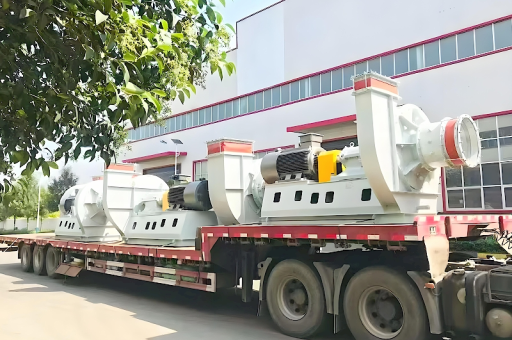
It sounds like you are looking for a customized industrial fan system that combines centrifugal force with a gas-tight or explosion-proof design and integrated dust removal capabilities. This is a highly specialized piece of equipment, often referred to as a C centrifugal fan or dust exhaust fan depending on the specific industry.
Here is a structured guide to what a customized design process for a Gas Fan Centrifugal Dust Removal Blower entails, including key considerations, engineering parameters, and common customization options.
Core Definition of the Customized Design
Unlike a standard ventilation fan, this blower is designed to handle gas mixtures (which may be explosive, corrosive, or hot) and particulate matter (dust) simultaneously.
The design goal is:
- High pressure to overcome duct resistance.
- Wear resistance to handle abrasive dust.
- Gas tightness to prevent leakage.
- Spark resistance or explosion-proof to ensure safety.
Critical Application Scenarios
Customization depends heavily on the application:
- Industrial Boiler Induced Draft: Handling flue gas (SOx, high temp) and fly ash.
- Cement Plant: Exhaust from kilns, raw mills, or baghouses (high dust load, abrasive).
- Steel & Foundry: Fume extraction from furnaces (hot gas, fine metal oxide dust).
- Chemical Processing: Removing toxic gas, solvent vapors, and catalyst dust.
- Woodworking / Biomass: Handling chips, sawdust, and volatile organic compounds (VOCs).
Key Customization Parameters
When requesting a custom design, the manufacturer will need these specific data points:
| Parameter | Why it matters for Customization |
|---|---|
| Gas Composition | Determines material compatibility (e.g., stainless steel for acidic gas, carbon steel for neutral). |
| Gas Temperature | Affects thermal expansion, bearing cooling, and shaft seal selection (e.g., cooling wheel for >200°C). |
| Dust Type & Concentration | Abrasive dust (silica) requires thicker blades or hard-faced lining. Sticky dust requires a non-clogging wheel design. |
| Explosion Risk | Requires ATEX or IECEx certification, spark-resistant impeller (aluminum/nylon vs. steel), and grounding. |
| Flow Rate (CFM/m³/h) | Determines fan size and housing dimensions. |
| Total Static Pressure (in.wg/Pa) | Determines motor power and wheel diameter/speed. |
Common Customization Options
A. Impeller (Wheel) Design
This is the heart of the system.
- Backward Curved (BC): High efficiency, low noise, non-clogging. Best for medium dust loads.
- Radial / Paddle Wheel: Simple, strong, self-cleaning. Best for heavy, sticky, or fibrous dust. Less efficient.
- Forward Curved (FC): High volume, low pressure, prone to dust buildup. Not recommended for dust removal.
- Wear Protection: Hard-faced blades, ceramic lining, or replaceable wear plates.
B. Housing & Inlet Box
- Casing Thickness: Thicker gauge for high pressure or abrasive gas.
- Inlet Box: Customized to match ductwork and reduce turbulence.
- Access Doors: For cleaning or inspection of dust buildup.
- Drain Ports: To allow condensation or wash water to drain.
C. Shaft Sealing
Critical for gas-tight applications (e.g., handling toxic or volatile gas).
- Packing Gland: Standard, good for low pressure.
- Mechanical Seal: For absolute leak-tightness (most expensive).
- Air Purge Seal: Injecting nitrogen or air to prevent gas leakage to the bearing housing.
D. Drive System
- Direct Drive (Shaft Mount): Compact, no belt loss, high RPM.
- Belt Drive: Allows for speed adjustment (RPM tuning) and easier motor replacement. Preferred for dusty environments as motor is isolated.
E. Motor & Controls
- Motor Enclosure: TEFC (Totally Enclosed Fan Cooled) for standard dust, Explosion-Proof (Ex d / Ex e) for flammable gas.
- VFD (Variable Frequency Drive): For precise flow control and energy savings.
- Vibration Monitoring: Essential for high-speed dust removal fans to detect imbalance from dust buildup or wear.
Example Customized Design Workflow
- Client Input: You provide gas analysis, dust size/concentration, temperature, required pressure/flow, and safety class.
- Material Selection: Engineer selects steel grade, coating (e.g., epoxy for corrosion), or wear liners.
- Aerodynamic Calculation: CFD (Computational Fluid Dynamics) analysis to optimize blade angle and housing volute for efficient dust transport.
- Structural Design: Finite Element Analysis (FEA) on shaft and impeller to handle vibration and thermal stress.
- Safety Engineering: Spark gaps, grounding brushes, explosion venting panels are integrated.
- Fabrication: Welding, balancing (ISO 1940 G2.5 or G6.3 for dust), and final assembly.
- Testing: Performance test (AMCA 210), sound testing, and run test at operating speed.
Key Suppliers for Customized Designs
To find a supplier who truly offers customized design (not just standard sizes), look for companies that:
- Have an engineering department (not just a sales team).
- Offer CAD/CFD support.
- Provide material certificates (e.g., for stainless steel or explosion-proof motors).
- Are certified to ISO 9001 and ATEX or equivalent.
Examples of global manufacturers (search for these):
- New York Blower (USA) – Strong in custom alloy and high-temp.
- Chicago Blower (USA) – Known for heavy-duty process fans.
- Howden / SFM (Global) – Industrial process fans for dust and gas.
- AirPro Fan & Blower (USA) – Custom engineered solutions for dust collection.
- Cincinnati Fan (USA) – Offers material handling fans.
Final Recommendation
To get a precise quote, prepare a "Process Data Sheet" containing:
- Gas type and % concentration of each component.
- Temperature (min, normal, max).
- Dust particle size distribution and concentration (grains/ft³ or g/m³).
- Required flow and pressure.
- Explosion class (e.g., Zone 1, Group IIB).
- Installation location (indoor/outdoor).
Without this data, a manufacturer cannot provide a safe or efficient customized design. If you have these specifics, I can help you draft the technical specification for the supplier.





