
This article's table of contents introduction:
- Introduction: The Need for Advanced Cooling in Industrial Ovens
- What Is Forward Oven Wall Cooling?
- The 1400mm Centrifugal Flow Fan: Core Specifications and Benefits
- How Forward Wall Cooling and Centrifugal Fans Work Together
- Key Applications Across Industries
- Frequently Asked Questions (FAQ)
- Conclusion: Future Trends and Performance Gains
Article Title:
Optimizing Industrial Efficiency: The Role of Forward Oven Wall Cooling with a 1400mm Centrifugal Flow Fan
Table of Contents
- Introduction: The Need for Advanced Cooling in Industrial Ovens
- What Is Forward Oven Wall Cooling?
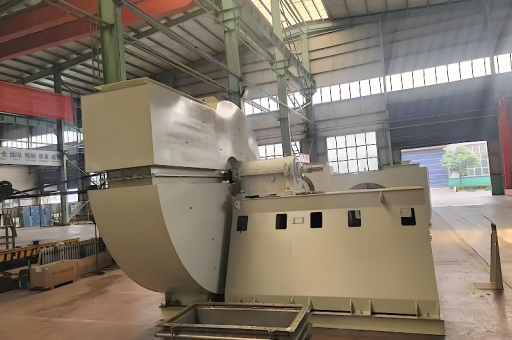
- The 1400mm Centrifugal Flow Fan: Core Specifications and Benefits
- How Forward Wall Cooling and Centrifugal Fans Work Together
- Key Applications Across Industries
- Frequently Asked Questions (FAQ)
- Conclusion: Future Trends and Performance Gains
Introduction: The Need for Advanced Cooling in Industrial Ovens
Industrial ovens are the backbone of manufacturing sectors such as food processing, ceramics, automotive painting, and electronics drying. However, one persistent challenge engineers face is heat management. Excessive heat buildup on oven walls not only reduces energy efficiency but also compromises product quality and shortens equipment lifespan. This has led to the adoption of Forward Oven Wall Cooling technologies—a method that directs airflow to the hottest surfaces. When paired with a 1400mm Centrifugal Flow Fan, the cooling effect becomes both powerful and uniform.
In this article, we explore how forward-based wall cooling, combined with a large-diameter centrifugal fan, delivers measurable improvements in thermal regulation, energy savings, and operational reliability.
What Is Forward Oven Wall Cooling?
Forward Oven Wall Cooling refers to a directional airflow strategy where cooling air is forced forward—toward the interior walls of an oven or furnace—to directly remove heat from surfaces exposed to high temperatures. Unlike general ventilation, which circulates air randomly, forward wall cooling is targeted. It uses nozzles, ducts, or plenums to deliver air precisely where heat accumulation is most severe.
Key characteristics include:
- Reduction of surface temperature by 20–35% compared to passive cooling.
- Prevention of thermal runaway, ensuring consistent oven chamber conditions.
- Lower structural stress on oven panels, extending maintenance cycles.
This method is especially valuable in continuous ovens, where product flow creates uneven heat distribution.
The 1400mm Centrifugal Flow Fan: Core Specifications and Benefits
A 1400mm Centrifugal Flow Fan is a high-capacity air mover characterized by its large impeller diameter (1400 mm) and radial airflow design. In a centrifugal fan, air enters at the center (the eye) and is thrown outward by rotating blades, increasing pressure and velocity.
Benefits of the 1400mm model specifically:
| Specification | Value / Benefit |
|---|---|
| Diameter | 1400 mm – delivers high air volume at moderate speeds |
| Airflow Capacity | 50,000 – 120,000 m³/h (depending on RPM and blade design) |
| Pressure Range | 1,500 – 4,000 Pa – enough to overcome duct resistance |
| Noise Level | Typically 75–85 dB(A) with proper acoustic insulation |
| Construction | Heavy-duty steel or stainless steel for high-temp environments |
Why 1400mm?
- Larger diameter = lower rotational speed needed for the same CFM, reducing bearing wear and vibration.
- Higher efficiency in industrial settings where static pressure is required.
- Compatibility with forward cooling ducts and plenums for wall targeting.
How Forward Wall Cooling and Centrifugal Fans Work Together
To achieve maximum heat dissipation, the fan must overcome static pressure while delivering air precisely to oven walls. Here is the integrated workflow:
- Cooling air intake: The 1400mm centrifugal fan draws ambient or conditioned air.
- Pressurization: The fan increases air velocity and static pressure.
- Directional ducting: Air is channeled through forward-facing nozzles or slotted panels aimed at hot oven walls.
- Heat exchange: As air strikes the surface, it absorbs heat and carries it away via exhaust or return ducts.
- Temperature feedback: Sensors trigger fan speed adjustments to maintain target wall temperatures.
Result: The oven wall stays cool enough to prevent deformation, while the internal chamber maintains process-critical temperatures. This targeted approach uses less total airflow than blanket cooling, saving energy.
Key Applications Across Industries
a) Food Industry – Baking Ovens
Oven walls in baking tunnels can exceed 250°C. A forward cooling system with a 1400mm fan prevents scorch marks on bread crusts and reduces cleaning frequency.
b) Automotive Paint Curing
In paint drying ovens, wall cooling avoids solvent recondensation and ensures uniform coating finish.
c) Ceramic and Glass Manufacturing
Kilns benefit from reduced thermal shock, increasing product yield by up to 12%.
d) Electronics Drying
Precision ovens for PCB drying require stabilized wall temps to avoid warping of thin substrates.
Frequently Asked Questions (FAQ)
Q1: How does forward oven wall cooling differ from general ventilation?
A: General ventilation recirculates air in the entire space, while forward cooling directs a focused stream at the oven wall surface. This targeted removal of heat prevents local hotspots and reduces overall thermal load.
Q2: Can a 1400mm centrifugal fan be retrofitted into an existing oven?
A: Yes. Many retrofit kits include mounting brackets, transition ducts, and speed controllers. However, structural reinforcements may be needed due to the fan’s weight and vibration. Always consult an HVAC engineer.
Q3: What maintenance does a 1400mm centrifugal fan require?
A: Regular inspection of bearings (lubrication every 3,000 hours), blade cleaning (to prevent imbalance), and belt tension adjustments if direct-drive is not used.
Q4: Does forward wall cooling increase overall energy consumption?
A: Surprisingly, it often reduces it. By cooling only critical zones, the fan can operate at lower speeds, and the oven’s heating elements are under less thermal stress, resulting in net energy savings of 8–15%.
Q5: Is the 1400mm fan suitable for explosive environments?
A: Only if fitted with ATEX-certified motors and spark-resistant materials (e.g., aluminum or non-ferrous impellers). Standard models are not safe for flammable gas atmospheres.
Conclusion: Future Trends and Performance Gains
As industrial ovens continue to evolve toward higher throughput and tighter temperature tolerances, the combination of Forward Oven Wall Cooling and a 1400mm Centrifugal Flow Fan will remain a best-practice solution. Manufacturers are now exploring smart fan controllers with AI-driven predictive adjustments, further optimizing energy use.
For any facility dealing with thermal bottlenecks, integrating a properly sized centrifugal fan with forward-directed ductwork is a proven way to boost productivity, reduce maintenance, and improve product consistency. Always pair your cooling system design with real-time monitoring for the best results.





