
This article's table of contents introduction:
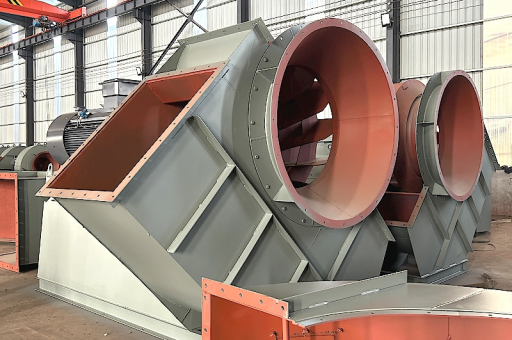
- Table of Contents
- Introduction: The Critical Role of Fans in Industrial Boilers
- What Are High-Flow, Low-Noise Industrial Boiler Fans?
- Understanding Induced Draft Fans: Function and Mechanism
- Key Design Features for High Flow and Low Noise
- Noise Reduction Technologies in Modern Fan Systems
- FAQ: Common Questions About Boiler Fans and Induced Draft Fans
- How to Choose the Right Fan for Your Facility
- Conclusion: Future Trends and Efficiency Optimization
*The Ultimate Guide to High-Flow, Low-Noise Industrial Boiler Fans and Induced Draft Fans: Efficiency, Design, and Application*
Table of Contents
- Introduction: The Critical Role of Fans in Industrial Boilers
- What Are High-Flow, Low-Noise Industrial Boiler Fans?
- Understanding Induced Draft Fans: Function and Mechanism
- Key Design Features for High Flow and Low Noise
- Noise Reduction Technologies in Modern Fan Systems
- FAQ: Common Questions About Boiler Fans and Induced Draft Fans
- How to Choose the Right Fan for Your Facility
- Conclusion: Future Trends and Efficiency Optimization
Introduction: The Critical Role of Fans in Industrial Boilers
In modern industrial thermal systems, boiler fans are the lungs of the operation. They provide the necessary airflow for combustion, heat transfer, and exhaust gas removal. Among these, high-flow, low-noise industrial boiler fans and induced draft fans represent a specialized category designed for demanding environments where both performance and acoustic comfort are non-negotiable.
With tightening regulations on workplace noise and energy efficiency, industries such as power generation, petrochemical processing, and heavy manufacturing are increasingly adopting advanced fan technology. This article explores the core differences, engineering principles, and best practices for selecting and maintaining these critical components.
What Are High-Flow, Low-Noise Industrial Boiler Fans?
High-flow industrial boiler fans are designed to move large volumes of air or gas at relatively low to moderate static pressures. They are essential for maintaining proper combustion air supply and flue gas evacuation. The "high-flow" attribute means they can handle volumetric flow rates exceeding hundreds of thousands of cubic meters per hour.
The "low-noise" aspect is achieved through advanced aerodynamic blade designs, optimized housing geometry, and vibration damping systems. Unlike standard fans that may generate over 95 dB(A) of noise, modern low-noise variants can operate below 80 dB(A) at the same flow rate, making them suitable for facilities near residential zones or where operator comfort is a priority.
Key applications include:
- Forced draft (FD) systems for combustion air supply
- Balance draft systems that maintain pressure equilibrium
- Process gas recirculation loops
Understanding Induced Draft Fans: Function and Mechanism
Induced draft fans (ID fans) operate on the exhaust side of the boiler system. Their primary function is to create negative pressure within the furnace or flue gas duct, drawing hot combustion gases through the heat exchange surfaces and out through the chimney or emission control system.
Unlike forced draft fans that push air into the boiler, ID fans must handle high-temperature, often corrosive, and particulate-laden gases. This makes their design fundamentally different. They are typically located downstream of electrostatic precipitators (ESPs) or baghouse filters to minimize erosion and fouling.
Critical design parameters for ID fans:
- High temperature tolerance: Handle up to 400°C (752°F) with special alloys
- Wear resistance: Use of hardened impellers or ceramic coatings
- Variable speed capability: To match changing boiler loads
- Backward-curved blades: To reduce particle buildup
Key Design Features for High Flow and Low Noise
Achieving both high volumetric throughput and low noise emissions requires a multi-faceted engineering approach. Below are the core design elements:
| Feature | Description | Impact on Flow & Noise |
|---|---|---|
| Aerofoil blades | Thicker, cambered blades with optimized leading edges | Reduces turbulence; lowers noise by 5–10 dB |
| Volute casing | Spiral-shaped housing that gradually expands | Converts velocity pressure to static pressure smoothly |
| Acoustic baffles | Perforated panels or sound-absorbing foam inside the casing | Attenuates mid-to-high frequency noise |
| Inlet guide vanes | Adjustable vanes at the fan inlet | Reduces swirl and turbulent noise at partial loads |
| Direct-drive motors | Elimination of belts and pulleys | Reduces mechanical noise and vibration |
Computational Fluid Dynamics (CFD) analysis is now standard in the design phase, allowing engineers to simulate airflow patterns and identify noise sources before manufacturing.
Noise Reduction Technologies in Modern Fan Systems
In addition to mechanical design, active noise control (ANC) and passive silencers are integrated into high-end boiler fan packages.
Active Noise Control (ANC):
- Microphones sense noise frequencies
- Speakers emit anti-phase sound waves to cancel specific tonal noises
- Most effective for low-frequency hum (below 500 Hz)
Passive Silencers:
- Absorptive silencers: Use mineral wool or fiberglass packing
- Reactive silencers: Use Helmholtz resonators or expansion chambers to reflect sound waves back toward the source
According to OSHA standards and ISO 3744, a properly designed low-noise fan system should not exceed 85 dB(A) at a 1-meter distance during full-load operation. For comparison, a standard industrial fan often runs at 90–100 dB(A).
FAQ: Common Questions About Boiler Fans and Induced Draft Fans
Q1: What is the biggest difference between a forced draft fan and an induced draft fan?
A: A forced draft fan pushes atmospheric air into the boiler for combustion, while an induced draft fan pulls combustion gases out of the boiler. ID fans handle hotter and more corrosive gases.
Q2: How can I reduce noise from my existing induced draft fan without replacing the whole unit?
A: Options include installing inlet silencers, adding vibration isolation mounts, balancing the impeller, or using a variable frequency drive (VFD) to match speed precisely with demand.
Q3: Are high-flow, low-noise fans more expensive than standard ones?
A: Typically yes, by 20–40%, due to specialized blade profiles, acoustic treatment, and premium materials like stainless steel or Hastelloy for ID fans. However, the total cost of ownership (TCO) is often lower because of reduced maintenance and fewer noise complaints.
Q4: Can I use the same fan for both forced draft and induced draft applications?
A: No—they operate at different temperatures, pressures, and gas compositions. Using forced draft fans for induced draft duty will cause rapid bearing and blade failure.
Q5: What is the typical lifespan of a high-flow low-noise boiler fan?
A: With proper maintenance (bearing lubrication, vibration monitoring, and filter cleaning), these fans can last 20–25 years. ID fans may require mid-life impeller replacement (every 8–12 years) due to erosion.
How to Choose the Right Fan for Your Facility
Selecting the correct high-flow, low-noise boiler fan or induced draft fan requires a systematic evaluation:
-
Define operating conditions:
- Maximum airflow (m³/h or CFM)
- Static pressure (Pa or inches WG)
- Gas temperature and composition (e.g., SO₂, HCl, ash content)
-
Noise constraints:
- Check local noise regulations (e.g., OSHA 85 dB(A) limit)
- Determine distance to nearest property line or workstation
-
Fan type selection:
- For clean combustion air: Backward-curved centrifugal fans (high efficiency, low noise)
- For dusty flue gas: Radial blade or paddle wheel fans (wear-resistant)
-
Drive and control:
- Prefer direct-drive for low noise and maintenance
- Use VFD for load matching and peak efficiency
-
Manufacturer evaluation:
- Look for ISO 9001, AMCA 210 certification (air performance)
- Request sound power level data per ISO 13347
Conclusion: Future Trends and Efficiency Optimization
The evolution of high-flow, low-noise industrial boiler fans and induced draft fans is being driven by three forces: decarbonization, digitalization, and worker safety. Manufacturers are now integrating IoT sensors for predictive maintenance, using lightweight composite materials for impellers to reduce inertia and noise, and adopting AI-based optimization algorithms that adjust fan speed in real time based on boiler load.
In the coming decade, we can expect:
- Silent operation targets below 75 dB(A)
- Higher static efficiency (above 85%)
- Fully integrated fan-motor-silencer modules
For facilities managers and plant engineers, investing in modern fan technology is no longer optional—it is a regulatory and operational necessity. By understanding the fundamentals outlined in this guide, you can make informed procurement decisions that reduce energy costs, extend equipment life, and create a safer work environment.
Note: For tailored engineering specifications, consult with a certified industrial ventilation expert or visit the fan manufacturer’s design portal.





