
This article's table of contents introduction:
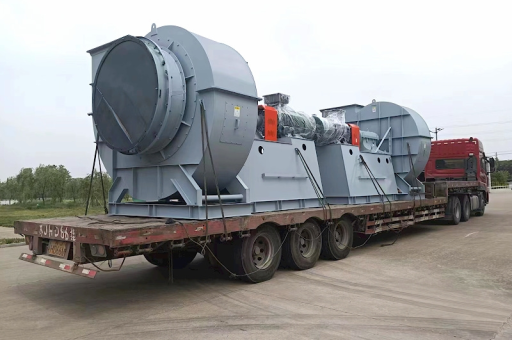
- Forced Draft (FD) Fan System (The most common meaning)
- Forced Circulation Boiler
- Common Industrial Boiler Types that use FD
- Key Design Parameters for an FD Fan
- To give you a more specific answer, please clarify your question:
It seems your query might be cut off or missing context. However, I can provide a comprehensive overview of Forced Draft (FD) systems in industrial boilers.
If you were asking about "Industrial Boiler Forced Draft Fan" or "Forced Circulation Boiler," here is the breakdown of the most common meaning associated with "Forced" in an industrial boiler context:
Forced Draft (FD) Fan System (The most common meaning)
In a typical industrial boiler, "Forced Draft" refers to the fan located at the inlet of the boiler. It pushes air into the combustion chamber.
- Function: Forces ambient air through the air heater (if present) and into the burner or grate.
- Pressure: Operates at a positive pressure inside the furnace (slightly above atmospheric).
- Pros: Very good for controlling combustion air volume, allows for smaller furnace sizes, and is energy efficient compared to natural draft.
- Cons: If there are leaks in the boiler casing, hot flue gas and flame can escape, posing a safety hazard (positive pressure).
How it differs from Induced Draft (ID):
- FD Fan (You): Puts air into the boiler (pushes).
- ID Fan: Sucks flue gas out of the boiler (pulls), creating negative pressure.
Balanced Draft: Most modern large industrial boilers use a combination of FD + ID fans to maintain a slightly negative pressure (0.05 to 0.1 in w.g.) inside the furnace for safety.
Forced Circulation Boiler
This is a different concept related to the water side of the boiler, not the air/gas side.
- Definition: A boiler that uses a mechanical pump to force water/steam mixture through the evaporator tubes, rather than relying on natural convection (Thermosiphon).
- Why use it: Standard "natural circulation" boilers require a significant height difference between the steam drum and the bottom headers. In very high-pressure boilers or compact designs, the density difference between water and steam is too small to create natural flow.
- Uses: High-pressure industrial boilers (e.g., >150 bar), waste heat recovery boilers (HRSGs), and certain types of package boilers.
Common Industrial Boiler Types that use FD
- Water Tube Boilers (D-type, A-type, O-type package boilers) – Very common to have a large centrifugal FD fan.
- Fire Tube Boilers (Scotch Marine) – Usually have a single FD fan or a combination burner/FD unit.
- Biomass Boilers (Stoker fired) – Use FD to supply air under the grate.
Key Design Parameters for an FD Fan
If you are selecting or troubleshooting a Forced Draft Fan for an industrial boiler, consider:
- Air Flow (CFM/m³/hr): Matched to the boiler's maximum continuous rating (MCR) and excess air requirement.
- Static Pressure (in w.g. / mm w.c. / kPa): Must overcome the resistance of the burner, air heater, ducts, and dampers.
- Temperature: Normally ambient air (~30-40°C). If it's a Hot Air FD fan (downstream of an air heater), it needs a different design.
- Material: Carbon steel for clean gas; stainless steel or coatings if the air is corrosive (e.g., in a sulfuric acid plant).
To give you a more specific answer, please clarify your question:
Are you asking about:
- Troubleshooting: (e.g., "Why is my FD fan vibrating?" or "FD fan motor tripping on overload")
- Selection: (e.g., "How to calculate the size of an FD fan for a 10 TPH boiler?")
- Safety: (e.g., "What happens if the FD fan fails while the boiler is running?")
- Comparison: (e.g., "FD vs ID vs Secondary Air Fan")
Let me know, and I can provide a detailed solution tailored to your issue.





