
This article's table of contents introduction:
- Core Design Requirements (The "Must-Haves")
- Critical Component Selection (Materials & Design)
- Environmental Dust Collection Specifics
- Performance & Safety Considerations
- Sizing & Selection Example
- Recommended Fan Configuration
- Market Leading Brands (For Reference)
- Final Advice
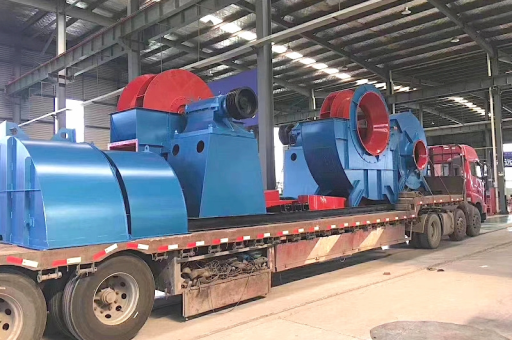
Based on your request for an Industrial High Temperature Centrifugal Fan for Environmental Dust Collection, this is a highly specialized piece of equipment. Standard fans will fail quickly in this application due to heat, abrasion, and material buildup.
Below is a comprehensive technical breakdown, specification guide, and material selection criteria for sourcing or designing this fan.
Core Design Requirements (The "Must-Haves")
For a fan handling hot, dusty air, the design must solve three primary problems: Structural integrity at high heat, abrasion resistance from dust, and preventing dust accumulation (explosion risk).
- Temperature Range: Typical industrial processes (kilns, dryers, furnaces) range from 150°C (302°F) to 600°C (1112°F) .
- Airflow (CFM): Depends on duct sizing; often 10,000 – 150,000 CFM.
- Static Pressure: Usually 10” – 40” w.g. to overcome baghouse or cartridge filter resistance.
- Dust Type: Non-clogging design is critical for fibrous or adhesive dust.
Critical Component Selection (Materials & Design)
This is the most important section. Cheap fans use standard carbon steel; high-temp dust fans require specific alloys.
A. Impeller (Wheel) - The Heart of the Fan
- Type: Radial (Paddle) Wheel or Radial Tip Wheel. These are the best for high-temp dust because they are mechanically strong, resist material buildup, and handle particle impact.
- Material (Crucial):
- Up to 400°C (750°F): AR-400 / Hardox Steel (for abrasion resistance) OR 16Mo3 (P265GH) (for creep resistance at temperature).
- 400°C – 650°C (750°F – 1200°F): Stainless Steel 309S (SS309) or 310S (SS310) . These resist scaling and maintain tensile strength.
- Design Feature: Backward-Swept or Radial Tip. Avoid forward-curved blades; they clog easily and are weak at high temps.
B. Shaft & Bearings
- Shaft: Usually AISI 4140 (Nitrided) or Inconel 625 (for extreme heat). It must be oversized to handle thermal expansion and heavy wheel weight.
- Bearing Cooling: Standard ball bearings fail above 80°C.
- Solution: Pillow block bearings with external cooling air plenums or water-cooled bearing housings for continuous operation above 150°C.
C. Housing (Casing)
- Material: Same as impeller (SS309/310 for high temp, AR400 for abrasion).
- Wall Thickness: 1/4" (6mm) to 1/2" (12mm) minimum for abrasive dust.
- Design Feature: Split Housing (Side Access). Mandatory for maintenance. Dust collection lines collect debris; you must be able to open the fan without removing the ductwork.
D. Shaft Seal
- Critical for preventing dust leakage. Use High-Temp Labyrinth Seals or Teardrop Packing Glands (with PTFE/graphite packing). Avoid simple lip seals; they melt or abrade instantly.
Environmental Dust Collection Specifics
General ventilation fans are useless here. You need:
- Wear Liners: Replaceable ceramic tiles or hard-faced steel plates inside the housing opposite the impeller cut-off.
- Shaft Seal Air Purge: Use compressed air (low pressure) injected into the seal area to keep dust from reaching the bearings.
- Access Doors: Must be gasketed with silicone or mineral wool seals. Quick-opening doors (e.g., toggle clamps) save hours of downtime.
Performance & Safety Considerations
- Variable Frequency Drive (VFD): Essential for controlling airflow during different process stages (e.g., start-up vs. full production). A VFD also provides soft-start to prevent belt slip and motor overload.
- Vibration Monitoring: Mandatory for high-temp dust fans. An imbalanced wheel (due to dust buildup) can destroy bearings in hours. Install accelerometers (4-20mA output) with remote alarming.
- Explosion Isolation: If the dust is combustible (wood, sugar, coal, metal), the fan must be located downstream of the filter. You may need an explosion-proof motor (Class II Div 1 or 2) and rupture panels on the housing.
Sizing & Selection Example
Note: A fan manufacturer needs specific data. Provide this to them:
| Parameter | Example Value | Why it matters |
|---|---|---|
| Air Volume | 25,000 CFM | Determines fan size & housing width. |
| Static Pressure | 30" w.g. | Determines fan speed & motor HP. |
| Temperature | 400°F (204°C) | Dictates material (SS309 vs Carbon Steel). |
| Dust Particle Size | 50 microns average | Determines whether you need wear liners. |
| Altitude | Sea Level | Corrects for air density (density changes at high temps, affecting power requirements). |
Recommended Fan Configuration
To summarize, here is a Bill of Materials for a robust industrial high-temp dust collection fan:
- Arrangement: Arrangement 1 (Overhung impeller with bearings on pedestal) or Arrangement 8 (Bearings supported outside housing, direct drive). Avoid Arrangement 4 (bearing in housing) for hot dust.
- Impeller: Radial Tip, Abrasion Resistant (AR400) with hard-facing on blade edges.
- Housing: Heavy Gauge SS310, fully welded, with replaceable wear liners and flush bottom cleanout door.
- Motor: 25-50 HP, 1800 RPM, TEFC (Totally Enclosed Fan Cooled) or ODP (Open Drip Proof) if ambient is clean, with VFD compatibility.
- Bearings: SKF Explorer or Timken split pillow blocks with cooling fins and thermocouple wells.
Market Leading Brands (For Reference)
If you are looking for a ready-made unit, these manufacturers specialize in this niche:
- New York Blower (NYB): "General Industrial Fans" with high-temp options.
- Cincinnati Fan: "HP Series" for heavy-duty dust.
- Chicago Blower: "High Temperature Fans" (often custom).
- Aerovent (Twin City Fan): "Centaxial" for ducted systems.
Final Advice
Do not oversize the motor. Calculate the actual brake horsepower at the operating temperature (not ambient). A fan moving hot, thin air requires significantly less power than moving cold air. If you size the motor for cold start-up, use a VFD to limit current draw until the system heats up.
If you provide the specific operating temperature and dust chemical composition, I can refine the material grade (e.g., specifying Hastelloy for chlorides or Duplex SS for thermal cycling).





