
This article's table of contents introduction:
- Table of Contents
- Introduction: The Evolution of Industrial Ventilation
- Deconstructing the Terminology: What Is a Low-Flow Medium-Pressure High-Efficiency Centrifugal Fan?
- Core Design Principles: Why Backward-Curved & Airfoil Blades Matter
- Key Performance Metrics: Flow, Pressure, and Efficiency Curves
- Critical Applications: Where This Specific Blower Excels
- Installation & Maintenance Best Practices
- Frequently Asked Questions (FAQ)
- Conclusion: Future Trends in High-Efficiency Air Movement
*Optimizing Industrial Airflow: The Comprehensive Guide to Low-Flow Medium-Pressure High-Efficiency Ventilation Centrifugal Fan Blowers*
Table of Contents
- Introduction: The Evolution of Industrial Ventilation
- Deconstructing the Terminology: What Is a Low-Flow Medium-Pressure High-Efficiency Centrifugal Fan?
- Core Design Principles: Why Backward-Curved & Airfoil Blades Matter
- Key Performance Metrics: Flow, Pressure, and Efficiency Curves
- Critical Applications: Where This Specific Blower Excels
- Installation & Maintenance Best Practices
- Frequently Asked Questions (FAQ)
- Conclusion: Future Trends in High-Efficiency Air Movement
Introduction: The Evolution of Industrial Ventilation
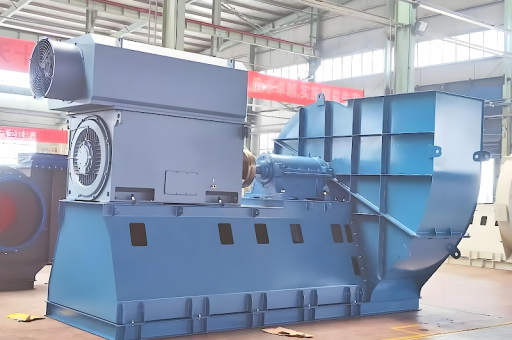
In the modern industrial landscape, the demand for precise air movement has never been more critical. While traditional fans were often “one-size-fits-all,” today’s processes require tailored solutions that balance energy consumption, noise reduction, and durability. Enter the Low-Flow Medium-Pressure High-Efficiency Ventilation Centrifugal Fan Blower—a niche yet vital piece of equipment designed to move relatively low volumes of air against a significant resistance.
Unlike high-volume axial fans that move air freely, or high-pressure positive displacement blowers that operate at extreme pressure, this centrifugal variant occupies a “sweet spot.” It is engineered to deliver stable, efficient performance where the system resistance is moderate but constant, such as in baghouse dust collectors, pneumatic conveying lines, or industrial dryers. This guide will dissect its mechanics, applications, and why it is becoming the preferred choice for engineers focused on decarbonizing their operations.
Deconstructing the Terminology: What Is a Low-Flow Medium-Pressure High-Efficiency Centrifugal Fan?
To understand this fan, we must break down its descriptive name:
- Low-Flow: This does not mean “weak.” It refers to a specific volume flow rate (measured in CFM or m³/h). Typically, this fan operates in the range of 500 CFM to 15,000 CFM—ideal for ducted systems with small to medium cross-sections.
- Medium-Pressure: The fan generates static pressure usually between 10” (inches w.g.) and 30” w.g. (2,500 Pa to 7,500 Pa). This is the “sweet spot” required to overcome friction in long ducts, through filters (HEPA or cartridge), and across material separation cyclones.
- High-Efficiency: This is the most critical modern feature. These fans achieve peak aerodynamic efficiency (often exceeding 85%) due to precise blade geometry. Unlike standard fans that waste 30-40% of energy as heat and turbulence, high-efficiency models convert motor input directly into usable airflow.
- Centrifugal: The air enters axially (along the shaft) and is thrown radially outward by the impeller, increasing both velocity and pressure.
- Blower: In industry, “blower” often implies a fan designed to work against a positive system resistance, rather than just moving air freely.
Key Takeaway: This is a pressure-generating machine, not a circulation fan. It creates a “push” to force air through restrictive pathways.
Core Design Principles: Why Backward-Curved & Airfoil Blades Matter
The secret to the high efficiency lies in the impeller design. There are three main types of centrifugal fan blades, and the Low-Flow Medium-Pressure model almost exclusively uses one:
-
Backward-Curved (BC) & Airfoil (AF) Blades:
- Shape: The blades curve away from the direction of rotation. Airfoil blades are essentially hollow, airfoil-shaped “wings” fitted radially on the wheel.
- Why they work: This design minimizes turbulence and recirculation. As the air moves through the impeller, it is smoothly accelerated. Unlike forward-curved blades (which “scoop” air but create high turbulence), BC/AF blades produce a stable, non-overloading power curve.
- Non-Overloading Feature: This is critical for medium-pressure systems. If the system resistance drops (e.g., a filter is removed), a forward-curved fan might overload its motor and burn out. A BC/AF fan’s power consumption peaks at a certain point and then drops—protecting the motor.
- Efficiency: Airfoil blades are the most aerodynamic, reaching 88-92% static efficiency. This is why they are standard in premium Low-Flow Medium-Pressure High-Efficiency units.
-
Housing & Volute: The fan housing (scroll) converts the kinetic energy (velocity) from the impeller into potential energy (static pressure). A properly designed volute with a cut-off clearance ensures minimal noise and maximum pressure recovery.
Key Performance Metrics: Flow, Pressure, and Efficiency Curves
Understanding the fan curve is essential for selection. For a Low-Flow Medium-Pressure High-Efficiency Ventilation Centrifugal Fan Blower, the curve looks different from a standard fan.
- The Power Curve (BHP): As mentioned, the power curve is “non-overloading.” This means as flow increases (moving right on the X-axis), power consumption rises to a peak and then declines.
- The System Curve: It is critical to match the fan to the system. A common mistake is buying a fan that provides “more pressure than needed.” Because this is a high-efficiency fan, it is often paired with Variable Frequency Drives (VFDs) . By reducing the RPM by just 10%, energy consumption drops by 27% (Affinity Laws).
- Specific Speed (Ns): These fans operate in a specific speed range (typically 500-1500 RPM depending on size). They are neither high-speed (like a vacuum cleaner) nor low-speed (like a ceiling fan).
- Noise Considerations: Due to the aerodynamic blade profile, these fans are quieter than radial blade paddle wheel fans. They generate clean ‘wind’ noise rather than the harsh ‘turbine’ noise of less efficient designs.
Critical Applications: Where This Specific Blower Excels
Because of its precise pressure and flow characteristics, the Low-Flow Medium-Pressure High-Efficiency Centrifugal Fan Blower is not a general-purpose unit. It is engineered for:
- Industrial Dust Collection (Baghouse & Cartridge):
- Why: Dust collector filters generate medium resistance (6"-15" w.g.). This fan provides the necessary pressure to pull air through clogged filters without causing the filter media to collapse (which high-pressure blowers can do).
- Pneumatic Conveying (Dilute Phase):
- Why: Moving granular materials like plastic pellets, flour, or sawdust requires a steady medium pressure. Too much flow agitates the material; too little drops it out of suspension. The stable curve of this fan allows for precise tuning.
- Industrial Drying & Curing Ovens:
- Why: Ovens require recirculated hot air against the resistance of burners and heat exchangers. High efficiency is crucial here because energy is expensive (heating air costs money). A high-efficiency fan recovers more kinetic energy as heat, reducing gas consumption.
- Fume Extraction (Laboratory & Chemical):
- Why: Chemical fume hoods require a specific face velocity. A standard fan might fluctuate; the stable medium-pressure characteristic of this blower ensures consistent fume capture.
Installation & Maintenance Best Practices
To achieve the promised high efficiency, proper installation is non-negotiable:
- Inlet Duct Work: Ensure a straight run of duct at least 1.5x the fan inlet diameter before the fan. Elbows right at the inlet create pre-whirl that destroys efficiency. Use an inlet box or a turning vane if space is tight.
- Drive System: Most high-efficiency models use belt drives (for speed flexibility) or direct drives (for reliability and high speed). Check belt tension regularly; slippage wastes energy.
- Bearing Lubrication: These fans often run at high RPM for their size. Use the manufacturer-specified grease (usually high-temperature, lithium-based) and avoid over-greasing, which causes overheating.
- Balance: The impeller must be dynamically balanced. A small imbalance creates vibration that destroys bearings and reduces efficiency by causing air gap turbulence.
- Filter Monitoring: Since this fan is often used with filters, install a differential pressure sensor. When the filter pressure drop exceeds the fan’s design capacity, efficiency plummets and flow stops.
Frequently Asked Questions (FAQ)
Q1: Can I use a Low-Flow Medium-Pressure fan to replace an old standard centrifugal fan? A: Yes, but only if the system resistance matches. You will see a 15-30% reduction in energy costs due to the high-efficiency impeller. However, you must recalculate the system curve. An old “paddle wheel” fan might have been running at 50% efficiency; a new AF fan will run at 85%+. Install a VFD to fine-tune the speed.
Q2: What is the main difference between this fan and a high-pressure ring blower (Regenerative blower)? A: Mass flow vs. Pressure. A Regenerative blower can produce high pressure (up to 100” w.g.) but at very low flow rates (typically under 300 CFM). The Low-Flow Medium-Pressure centrifugal handles higher volume (1,000s of CFM) against lower pressure. You would use a ring blower for a-vacuum hold-down table, but a centrifugal for ductwork.
Q3: Why does my fan vibrate after cleaning the impeller? A: You likely removed material unevenly. Centrifugal impellers rely on perfect balance. If you washed paint or dust off one blade but not all, you create an imbalance. Always clean the entire wheel evenly and verify balance afterward.
Q4: Can I run this fan at variable speed? A: Absolutely. These fans are excellent candidates for VFD control. However, obey the Affinity Laws:
- Flow ∝ Speed
- Pressure ∝ Speed²
- Power ∝ Speed³ If you drop speed to 80%, power drops to 51%. This is where the “High-Efficiency” label pays off.
Q5: My duct system requires 12” w.g. pressure. Will a fan rated for 20” w.g. work better? A: No. Oversized fans are inefficient. The fan will operate far to the right on its curve (high flow, low pressure) unless you damper it. Dampening wastes energy. Always match the fan’s peak efficiency point to the system pressure requirement.
Conclusion: Future Trends in High-Efficiency Air Movement
The Low-Flow Medium-Pressure High-Efficiency Ventilation Centrifugal Fan Blower represents a convergence of aerodynamics and energy policy. As global regulations tighten (e.g., EU ErP Directive, US DOE Fan Efficiency Rules), these fans are replacing legacy models that waste energy.
The future lies in digital twins and IoT integration. We will see these fans with embedded sensors that track vibration, temperature, and imbalance in real-time. The combination of VFD control, high-efficiency Airfoil impellers, and predictive maintenance algorithms will allow these fans to operate at >90% efficiency for 20+ years.
For the engineer or facility manager, investing in this technology is not just about moving air—it’s about moving the company’s sustainability goals forward. By choosing a fan that perfectly fits the low-flow, medium-pressure niche, you minimize your carbon footprint and maximize your operational uptime.





