
This article's table of contents introduction:
- Table of Contents
- Introduction: The Critical Role of Induced Draught Fans in High-Temperature Industrial Boilers
- What Is an Anti Abrasive High Temperature Industrial Boiler Induced Draught Fan/Blower?
- Key Design Features: Materials, Coatings, and Engineering
- Common Applications and Industrial Use Cases
- Performance Challenges: Abrasion, Heat, and Corrosion
- Selection Criteria: How to Choose the Right Fan for Your Boiler System
- Frequently Asked Questions (FAQ)
- Maintenance Best Practices for Long Service Life
- Conclusion: Investing in Quality for Operational Reliability
** Maximizing Efficiency and Durability: The Ultimate Guide to Anti Abrasive High Temperature Industrial Boiler Induced Draught Fan/Blower
Table of Contents
- Introduction: The Critical Role of Induced Draught Fans in High-Temperature Industrial Boilers
- What Is an Anti Abrasive High Temperature Industrial Boiler Induced Draught Fan/Blower?
- Key Design Features: Materials, Coatings, and Engineering
- Common Applications and Industrial Use Cases
- Performance Challenges: Abrasion, Heat, and Corrosion
- Selection Criteria: How to Choose the Right Fan for Your Boiler System
- Frequently Asked Questions (FAQ)
- Maintenance Best Practices for Long Service Life
- Conclusion: Investing in Quality for Operational Reliability
Introduction: The Critical Role of Induced Draught Fans in High-Temperature Industrial Boilers
In modern industrial boiler systems, the Induced Draught (ID) fan plays a vital role in maintaining negative pressure within the furnace, ensuring efficient combustion and safe exhaust gas removal. However, when these fans operate in high-temperature environments—often exceeding 400°C (752°F)—and are exposed to abrasive particulate matter from coal, biomass, or heavy fuel oil combustion, standard fan designs fail prematurely. This is where the Anti Abrasive High Temperature Industrial Boiler Induced Draught Fan/Blower becomes indispensable.
These specialized fans are engineered to withstand extreme thermal stress, resist erosion from fly ash and unburned carbon particles, and maintain stable performance over thousands of operating hours. According to industrial equipment reliability studies, an improperly selected ID fan can reduce boiler efficiency by up to 12% and increase unplanned downtime costs by an average of $45,000 per incident. This guide will provide a comprehensive look into the technology, selection, and maintenance of these critical industrial assets.
What Is an Anti Abrasive High Temperature Industrial Boiler Induced Draught Fan/Blower?
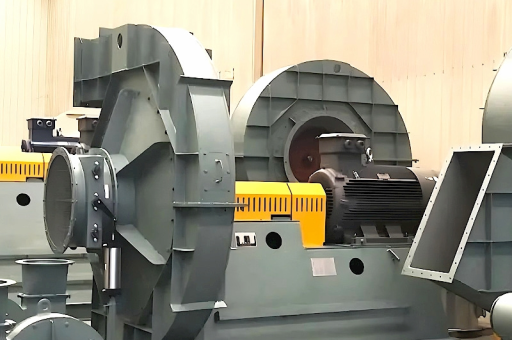
An Anti Abrasive High Temperature Industrial Boiler Induced Draught Fan/Blower is a heavy-duty rotating machine designed to extract hot, particle-laden flue gases from a boiler furnace and discharge them into the exhaust stack or pollution control equipment. Unlike standard centrifugal fans, this fan class features:
- Heat-resistant impeller construction (typically made from wear-resistant alloy steel or high-chrome cast iron)
- Abrasion-resistant coatings or liners (such as ceramic tiles, tungsten carbide spray, or rubber lining)
- High-temperature bearings and shaft sealing systems capable of operating at continuous gas temperatures up to 650°C (1202°F)
- Variable speed or inlet vane controls for precise draft regulation
The primary function is to overcome system resistance (ductwork, economizers, scrubbers, baghouses) while maintaining a stable negative draft. The "anti-abrasive" characteristic specifically refers to the fan's ability to resist erosive wear from solid particles, which is the leading cause of failure in conventional ID fans.
Key Design Features: Materials, Coatings, and Engineering
The longevity of an anti-abrasive, high-temperature ID fan depends on three core design pillars:
1 High-Temperature Material Selection
- Impeller blades: Often manufactured from 16Mo3, X10CrMoVNb9-1 (P91), or Inconel alloys for oxidation resistance.
- Housing: Carbon steel with internal ceramic fiber insulation or refractory lining to reduce thermal stress on structural components.
- Bearings: Special high-temperature grease-lubricated spherical roller bearings with external cooling fins or water-cooling jackets.
2 Abrasion-Resistant Coatings and Liners
- Ceramic tile lining: Applied to the impeller leading edges and housing volute. Offers up to 10x longer wear life compared to uncoated steel.
- Tungsten carbide spray coating: Applied via HVOF (High Velocity Oxygen Fuel) process for high-impact resistance.
- Hardfacing welding: Chromium carbide overlays on blade surfaces for extreme erosion zones.
3 Thermal Management
- Shaft cooling: Hollow shaft designs with forced air circulation.
- Expansion joints: High-temperature bellows at fan inlet and discharge to accommodate thermal expansion.
- Insulation blankets: Removable but durable covers for external bearing housings.
According to field data from power plants using these fans, proper material selection reduces blade thinning rates from 3 mm/year to under 0.5 mm/year.
Common Applications and Industrial Use Cases
These specialized fans are not limited to coal-fired power plants. They are found in:
- Cement industry: Preheater and kiln exhaust fans handling hot, abrasive clinker dust.
- Steel manufacturing: Sinter plant and blast furnace gas extraction.
- Chemical processing: Recovery boilers in pulp mills where flue gas contains sodium sulfate particles.
- Waste-to-energy plants: Combustion gas from municipal solid waste containing silica and metal particulates.
- Petrochemical refineries: FCC (Fluid Catalytic Cracking) unit flue gas fans.
In each case, the common denominator is the simultaneous presence of high temperature (above 300°C) and abrasive solids in the gas stream.
Performance Challenges: Abrasion, Heat, and Corrosion
Understanding the failure mechanisms is essential for proper fan selection and operation.
1 Abrasive Wear
Solid particles impacting the impeller at high velocity cause erosive wear. The severity depends on:
- Particle size, shape, and hardness (fly ash is particularly damaging)
- Gas velocity (higher tip speeds increase erosion rates exponentially)
- Particle concentration (mg/Nm³)
- Impact angle (leading edges suffer the most)
2 Thermal Fatigue
Rapid temperature fluctuations (e.g., during boiler startup or soot blowing) cause differential expansion between the impeller and hub, leading to cracking.
3 High-Temperature Corrosion
Sulfur, chlorine, and alkali compounds in flue gas can accelerate corrosion at metal temperatures above 500°C. This is especially problematic in biomass and waste-to-energy applications.
Question: What is the most common failure mode for standard ID fans in hot abrasive service? Answer: Impeller blade thinning due to abrasive wear, often leading to imbalance, increased vibration, and catastrophic failure within 6–12 months.
Selection Criteria: How to Choose the Right Fan for Your Boiler System
When specifying an anti-abrasive high-temperature ID fan, consider these parameters:
| Parameter | Consideration |
|---|---|
| Maximum flue gas temperature | Include safety margin (+50°C over normal) |
| Gas composition | Identify corrosive species (SOx, HCl, etc.) |
| Dust loading | Measure mg/Nm³ at fan inlet |
| Particle size distribution | Use laser diffraction analysis |
| Required static pressure | Include duct loss, ESP/scrubber drop |
| Airflow volume (m³/h) | Account for excess air and temperature |
| Ambient conditions | Affects motor power and cooling capacity |
Pro tip: Always request a wear life prediction from the manufacturer based on your actual gas analysis. Reputable suppliers like fan and fan can provide simulation data using CFD (Computational Fluid Dynamics) and erosion modeling.
Frequently Asked Questions (FAQ)
Q1: Can a standard induced draught fan be retrofitted with anti-abrasive coatings?
Yes, but only if the existing impeller is structurally sound and the operating temperature does not exceed the coating’s thermal limit. Retrofit with ceramic tiles can extend life by 2–3x, but the optimal solution is a purpose-designed fan.
Q2: What is the typical lifespan of an anti-abrasive high-temperature ID fan?
With proper selection and maintenance, 5–8 years is common in coal-fired plants. In severe biomass operations, expect 3–5 years before major impeller replacement.
Q3: How do I detect early signs of abrasive wear?
Monitor vibration trends (especially 1x and 2x running speed), perform weekly thickness checks using ultrasonic gauges, and inspect for pitting on leading edges during shutdowns.
Q4: Are radial blade designs better than backward curved for abrasive service?
Radial blade fans are more robust for heavy dust loads but are less efficient. Backward curved fans offer higher efficiency (up to 85%) and are preferred for moderate dust levels. For severe abrasion, radial or radial-tip designs with thick material are recommended.
Q5: Can variable frequency drives (VFDs) reduce wear on these fans?
Yes. By running the fan at lower speeds during low-demand periods, particle impact velocity decreases, significantly reducing erosion rates. VFDs also reduce thermal shock during startups.
Maintenance Best Practices for Long Service Life
Even the best anti-abrasive fan requires a disciplined maintenance program.
- Daily vibration monitoring: Use accelerometers on bearing housings. A sudden increase of 2 mm/s suggests impeller imbalance from wear.
- Weekly visual inspections: Check for dust buildup on blades, which can cause imbalance and reduce airflow.
- Monthly thickness measurement: Use ultrasonic probes at critical wear zones (blade tip, leading edge, housing cut-off).
- Quarterly bearing inspection: Replace grease and check for overheating. Consider retrofitting with magnetic bearing or air-foil bearings for extreme conditions.
- Annual overhaul: Remove the impeller, perform dye-penetrant testing for cracks, weld repair or replace worn areas, and rebalance to ISO G6.3 grade.
- Preventive coating renewal: Reapply ceramic tiles or thermal spray coatings every 2–3 years, depending on wear rate.
Scheduled downtime for inspection should be at least every 3000 operating hours in highly abrasive environments.
Conclusion: Investing in Quality for Operational Reliability
The Anti Abrasive High Temperature Industrial Boiler Induced Draught Fan/Blower is not just a component; it is a critical asset that directly impacts boiler efficiency, emission compliance, and plant uptime. While the initial capital cost of a high-quality fan with ceramic coatings, heat-resistant alloys, and precision engineering can be 30–50% higher than a standard unit, the return on investment is undeniable:
- Reduced unplanned downtime (average 10–15 days saved per year)
- Lower maintenance costs (up to 60% reduction in spare parts consumption)
- Extended fan life (2–3x longer before major rebuild)
- Improved energy efficiency (properly selected fans operate at peak efficiency)
For industrial power plants, cement kilns, steel mills, and waste-to-energy facilities, the choice is clear: invest in a fan designed for the worst-case combination of heat, abrasion, and corrosion. Leading manufacturers, including fan, now offer customized solutions backed by computational fluid dynamics, erosion modeling, and field-proven materials.
Final expert tip: Always collaborate with your fan supplier during the boiler design or retrofit phase. Provide actual gas sampling data, not just theoretical values. A correctly sized and specified anti-abrasive high-temperature ID fan will deliver reliable service for decades—saving you money, downtime, and safety risks.





