
This article's table of contents introduction:
- Why Customization is Critical for Efficiency & Energy Savings
- Key Design Features for Energy Efficiency & Customization
- The Customization Process (Engineering-to-Order)
- Typical Applications for Customized High-Efficiency Centrifugal Fans
- Leading Manufacturers of Customized High-Efficiency Fans
- Final Recommendation:
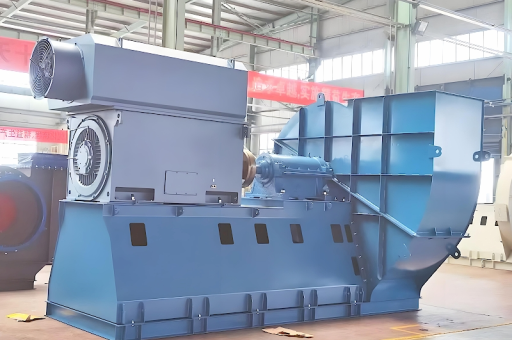
Here is a comprehensive breakdown of customized energy-saving and efficient industrial centrifugal fans and blowers, covering why they are needed, their key design features, the customization process, typical applications, and leading manufacturers.
The core goal of a customized, high-efficiency centrifugal fan is to match the fan’s performance curve exactly to the system's requirements (airflow, static pressure, gas density, temperature) to minimize energy losses.
Why Customization is Critical for Efficiency & Energy Savings
Standard, off-the-shelf fans are designed for a wide range of applications. This often leads to:
- Over-sizing: The fan delivers more airflow or pressure than needed, wasting energy and requiring throttling (dampers, inlet vanes) which is highly inefficient.
- Off-peak Operation: Operating far from the fan's Best Efficiency Point (BEP) causes turbulence, vibration, and premature wear.
- Material Mismatch: Standard materials cannot handle corrosive gases, high temperatures, or abrasive dust, leading to rapid failure and downtime.
A customized fan is designed for a single, precise duty point, allowing it to operate at or very near its BEP. This can reduce energy consumption by 15-40% compared to a poorly selected standard fan.
Key Design Features for Energy Efficiency & Customization
Manufacturers customize these components to optimize performance:
| Feature | Customization Options | Energy-Saving Benefit |
|---|---|---|
| Impeller Design | Backward-Curved (BC): Most efficient, non-overloading. Best for clean air. | Highest efficiency (up to 90+%). Power curve flattens, preventing motor burnout. |
| Backward-Inclined (BI): Good efficiency, moderate pressure. | Excellent for general HVAC and industrial processes. | |
| Airfoil (AF): Highest efficiency of all blade types. | Max aerodynamic efficiency, but expensive and not for dirty air. | |
| Radial / Radial-Tip (R / RT): For high pressure & abrasive materials. | Lower efficiency, but necessary for durability. Custom blade angle can optimize for specific dust or material. | |
| Forward-Curved (FC): High volume, low pressure, compact. | Lower efficiency, but can be optimized for specific low-pressure, high-volume systems. | |
| Housing/Volute | Cut-Off Clearance: The gap between the impeller and the housing cutoff. | Tighter clearances reduce recirculation losses. Custom cut-offs for different pressure ratios. |
| Inlet Cone/Nozzle: Optimized shape and clearance to the impeller eye. | Reduces inlet turbulence and pre-swirl, directly improving fan efficiency. | |
| Motor & Drive | Direct Drive: Motor shaft directly connected to impeller. | Eliminates belt friction losses (2-5% saving). Better for high RPMs. |
| Belt Drive: Allows for speed changes. | Less efficient than direct drive, but necessary for variable speed control via VFD. | |
| High-Efficiency Motor (IE3/IE4/NEMA Premium): Replaces standard motors. | Motor efficiency gains of 2-5%. | |
| Controls | Variable Frequency Drive (VFD): Changes motor speed to match demand. | The single biggest energy saver. Replaces dampers or inlet vanes for flow control. |
| Inlet Guide Vanes (IGVs): Pre-rotate air entering the impeller. | More efficient than discharge dampers, less efficient than VFD for broad range control. | |
| Materials | Carbon Steel, Stainless Steel (304/316/317L), Hastelloy, Titanium. | Prevents corrosion, extending lifespan and maintaining efficiency over time. |
| Hard-facing / Liner (Ceramic, Tungsten Carbide, AR Steel). | Protects against abrasion from fly ash, cement, wood chips, etc. |
The Customization Process (Engineering-to-Order)
A typical project follows this sequence:
- Defining the Duty Point: The customer provides:
- Volume Flow (CFM or m³/h)
- Static Pressure (inches w.g. or Pa)
- Gas Composition & Density: Standard air? Hot flue gas? Corrosive fumes?
- Temperature: Ambient, elevated (up to 800°C+ for special applications).
- Altitude: Affects air density.
- System Analysis: The fan manufacturer's application engineer analyzes the system resistance curve (ductwork, filters, dampers, etc.). This is critical to avoid over-sizing.
- Aerodynamic Selection: Using proprietary software (e.g., based on AMCA standards), the engineer selects the optimal impeller type, size, and speed to hit the duty point at the highest possible efficiency.
- Mechanical Design: Finite Element Analysis (FEA) is used to ensure the shaft, bearings, housing, and foundation can handle the forces and stresses. Critical speeds are calculated to avoid resonance.
- Material Selection: Based on gas chemistry and temperature.
- Drive Component Selection: Motor, VFD, belts, sheaves, or direct coupling are sized.
- Testing & Validation: Many high-end manufacturers offer AMCA 210 certified test rigs to verify performance before shipment.
Typical Applications for Customized High-Efficiency Centrifugal Fans
These fans are not one-size-fits-all. They are critical for:
- Cement Industry: Kiln ID fans, raw mill fans, preheater fans (high temp, abrasive dust).
- Steel Industry: Blast furnace blowers, sintering fans, baghouse fans.
- Power Generation: Induced Draft (ID) fans (flue gas), Forced Draft (FD) fans (combustion air), Primary Air (PA) fans.
- Chemical Processing: Fume exhaust, reaction vessel venting, drying systems (corrosive gases).
- Pharmaceutical & Food: Cleanroom supply/exhaust, hygroscopic material drying.
- Wastewater Treatment: Aeration blowers (high volume, low pressure, continuous operation).
- Mining & Minerals: Mine ventilation, dust collection for crushing/screening plants.
- Wood Products: Hogs, dust collection, kiln drying.
Leading Manufacturers of Customized High-Efficiency Fans
Note: These companies have strong engineering departments. It's best to contact their application engineering teams directly.
- Global Leaders (Full Range):
- Howden: Very large industrial fans for power, cement, mining. Heavy-duty, high-pressure.
- Greenheck: Excellent for commercial/light industrial, highly efficient backward-inclined and airfoil lines (like the BIDW, BIDW-A, QEI).
- New York Blower (NYB): Strong in custom engineered fans for harsh environments.
- Chicago Blower: High-quality, efficient fans (e.g., Series 20, 30, 40 for clean air; DH Series for materials handling).
- Twin City Fan: Wide selection of custom and modular fans.
- Cincinnati Fan: Known for pressure blowers and custom engineered solutions.
- Specialized / High-Efficiency Focus:
- Robinson Industries (USA): Specializes in custom, heavy-duty industrial fans for high-temperature and abrasive applications (e.g., cement, steel, power).
- TLT-Babcock (Germany/USA): Focus on very large, highly efficient fans for power generation.
- Ziehl-Abegg (Germany): High-efficiency EC plug fans and small-to-medium centrifugal fans.
- Systemair (Sweden): Strong in high-efficiency commercial and light industrial.
- Regional / Asian Manufacturers (Often lower cost, but require careful specification):
- SMC (Japan): Pneumatics, but also specialized blowers.
- Nanfang Ventilator (China): One of the largest Chinese fan makers for standard and some custom industrial.
- Shanghai Electric Blower Works (China): Heavy machinery incl. large fans.
- Korea Fan (South Korea): Large industrial fans.
Final Recommendation:
- Conduct a System Audit: Measure actual airflow and pressure (not just nameplate data) to determine the real energy waste.
- Work with a Fan Application Engineer: Do not just send a spec sheet. Discuss the system characteristics and operating profile (how often at full load vs. part load).
- Consider Lifecycle Cost: The initial purchase price of a customized high-efficiency fan may be 20-30% higher than a standard one, but the energy savings over 3-5 years will more than pay for the difference. Calculate Total Cost of Ownership (TCO) .
To get a specific recommendation, you would need to provide:
- Airflow (CFM or m³/h)
- Static Pressure (inches w.g. or Pa)
- Temperature (minimum and maximum)
- Gas type and any corrosives/dust
- Altitude





