
This article's table of contents introduction:
- Understanding the Role of the Fan in a 132 kW Boiler
- Typical Specifications for a 132 kW Boiler ID Fan
- Key Selection Criteria for the Exhaust Fan
- Common Issues with 132 kW Boiler ID Fans
- Summary of Action for You
Based on your query, it seems you are looking for information regarding the induced draft (ID) fan or exhaust fan for a 132 kW industrial boiler system.
Here is a breakdown of what that entails, the specifications you will likely need, and key selection criteria.
Understanding the Role of the Fan in a 132 kW Boiler
For a boiler of this size (132 kW is a medium-to-large industrial boiler, often used for process heating or large space heating), the fan system is critical for combustion efficiency.
- Forced Draft (FD) Fan: Pushes air into the burner for combustion.
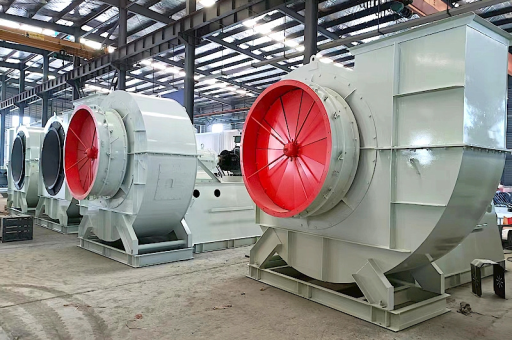
- Induced Draft (ID) Fan / Exhaust Fan: Pulls flue gases (exhaust) out of the boiler and through the chimney. This is the fan you specifically asked about.
Why an ID Fan is needed for a 132 kW boiler:
- To overcome back pressure from heat exchangers and ductwork.
- To maintain a slight negative pressure in the furnace (safe operation).
- To help exhaust hot gases efficiently, especially if the chimney is short or has elbows.
Typical Specifications for a 132 kW Boiler ID Fan
You cannot just buy any fan; the fan must match the boiler's combustion requirements. Here are the estimated specs based on a standard 132 kW boiler running on natural gas or light oil:
| Parameter | Estimated Value for 132 kW Boiler |
|---|---|
| Boiler Input Power | ~132 kW (450,000 – 500,000 BTU/hr) |
| Flue Gas Flow Rate | ~250 – 350 m³/hr (150 – 200 CFM) at actual operating temperature |
| Flue Gas Temperature | 180°C – 250°C (356°F – 482°F) Higher if economizer is absent. |
| Static Pressure (Draft) | 800 – 1500 Pa (3 – 6 inches w.g.) Depends on heat exchanger and stack resistance. |
| Motor Power (ID Fan) | Generally 1.5 kW to 3 kW (The fan motor is smaller than the boiler input). |
| Material | Cast Iron or Stainless Steel (for high temperature). Impeller must be heat-resistant. |
Key Selection Criteria for the Exhaust Fan
When sourcing this fan, you must confirm:
- Temperature Rating: This is the #1 killer of standard fans. Standard centrifugal fans are rated for 80°C. You need a High-Temperature ID Fan (rated for at least 280°C / 536°F continuous).
- Flow Rate (m³/h or CFM): You need the exact volume of flue gas. A standard rule is 1 m³/h per ~0.4 kW for natural gas, but check the burner manual.
- Pressure (Pa or mmH2O): The fan must overcome the "pressure drop" of the boiler tubes and chimney. Too little pressure, and the boiler smokes. Too much, and you pull flames out of the burner.
- Type of Fan:
- Centrifugal (Radial): Best for boilers. Handles high pressure and high temperature.
- Axial (Ventilator): Not suitable for ID fans in boilers (low pressure).
Common Issues with 132 kW Boiler ID Fans
- Vibration: Due to thermal expansion or dust buildup on the impeller.
- Motor Overheating: The fan is near the boiler. Ensure the motor is cooled (shaft cooling fins or remote mounting with a belt drive).
- Corrosion: Condensation in the flue gas (especially if burning high-sulfur fuel or running at low temperature) can destroy the fan blades.
Summary of Action for You
If you are purchasing a replacement or designing a system:
- Find the Boiler Model/Manual: Look for the required "Gas Flow" (Nm³/h) and "Required Draft" (Pa).
- Contact a Supplier: Ask for a "High-Temperature Centrifugal ID Fan".
- Provide these numbers:
- Flow: 300 m³/h
- Temperature: 200°C
- Static Pressure: 1200 Pa
- Voltage: 380V/3Ph (Typical)
Safety Warning: Do not block the air intake of the burner or the flue exit. An improperly sized ID fan can cause flame roll-out or carbon monoxide (CO) leakage, which is dangerous.





