
This article's table of contents introduction:
- The Critical Distinction: Forward Curved vs. Backward Curved
- Why Forward Curved is Wrong for Boiler ID Service
- The Correct Fan for Boiler Induced Draft
- When Would You Use a "Forward Blade" Near a Boiler? (The Exception)
- Conclusion: The Correct Terminology
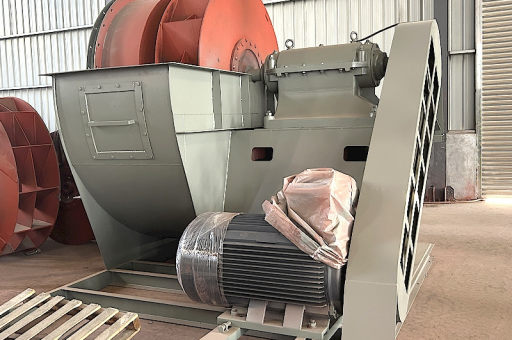
It sounds like you're looking for information on a Forward Curved Centrifugal Fan used for Induced Draft (ID) in a boiler system. However, there is a critical distinction in fan design that must be addressed immediately.
The short answer is: You generally do NOT use a Forward Curved blade fan for Induced Draft in a boiler.
Here is the detailed breakdown of why, the correct fan type to use, and the specific applications where a forward curved fan might be found.
The Critical Distinction: Forward Curved vs. Backward Curved
In boiler draft systems, there are two main types of fans:
- Forced Draft (FD) Fans: Push air into the furnace (cold side).
- Induced Draft (ID) Fans: Pull hot flue gas out of the furnace and through the pollution control equipment (hot side).
Forward Curved Fans are almost exclusively used for Forced Draft (FD) or clean air handling in low-pressure systems (like HVAC), NOT for Induced Draft (ID).
Why Forward Curved is Wrong for Boiler ID Service
If you use a Forward Curved blade fan for Induced Draft, you will encounter severe problems:
| Feature | Forward Curved Blade | Requirement for Boiler ID Fan | Conflict |
|---|---|---|---|
| Temperature Resistance | Max ~200°F (93°C). Blades are thin, light, and attached to the front ring. | Must handle 350°F - 800°F+ (175°C - 425°C+) flue gas. | Fail: Forward curved blades will warp, crack, or fail mechanically due to thermal stress. |
| Erosion Resistance | Poor. Blades are hollow or have a small profile; dust/ash erodes them quickly. | Flue gas contains fly ash, dust, and abrasive particles. | Fail: Forward curved blades act like "scoops" that fill with ash and erode rapidly. |
| Power Curve | Non-Overloading power curve. Power draw increases as pressure drops. | Fans often run near free delivery or variable orifice. | Fail: Motor can overload and burn out if duct resistance changes or system is opened. |
| Efficiency | Moderate (60-70%). | High efficiency required for large motors (500HP+). | Fail: Higher operating cost. |
| Vibration | Sensitive to imbalance. | ID fans need to be robust to handle dust buildup. | Fail: Dust buildup on forward curved blades creates catastrophic imbalance. |
The Correct Fan for Boiler Induced Draft
You need a Backward Inclined (BI), Backward Curved (BC), or Airfoil (AF) Centrifugal Fan.
Why?
- Rugged Construction: Heavy steel plates or airfoil blades that withstand high temperatures and erosion.
- Self-Cleaning: Better ability to shed fly ash and dust.
- Overloading Power Curve: Power draw peaks at a specific point and then drops – the motor is protected even if the duct is blocked or open.
- High Efficiency: Typically 80-88% efficiency, saving significant energy.
- High Static Pressure: Can create the high differential pressure needed to pull gas through a boiler, economizer, baghouse, and stack.
Typical Boiler ID Fan Configuration:
- Type: Single or Double Width, Double Inlet (DWDI).
- Blades: Backward Inclined (Plate or Airfoil).
- Drive: Usually direct drive or v-belt with a heavy-duty shaft and water-cooled bearings (for high temp).
- Material: Carbon steel (for cooler temps) or Corten/Stainless steel (for high temp / acidic gas).
When Would You Use a "Forward Blade" Near a Boiler? (The Exception)
While not for Induced Draft, a Forward Curved blade fan might appear in boiler-related systems for:
- Forced Draft (FD) Fans for Small Boilers: For small package boilers (< 100 HP) where clean, cold air is delivered directly to the burner. Forward curved fans produce high pressure at a relatively low speed, making them compact and cheap.
- Primary Air Fans (Pulverized Coal): Some smaller coal mills use forward curved fans to deliver the air/coal mixture, though this is increasingly rare due to erosion.
- Overfire Air / Secondary Air Fans: Where the air is cold and clean.
- Combustion Air for Gas/Oil Burners: For small residential or commercial water heaters/boilers.
Conclusion: The Correct Terminology
If you are working on a boiler Induced Draft (ID) system, do not use a forward blade centrifugal fan.
- You want: A Backward Inclined (BI) or Airfoil (AF) centrifugal fan.
- You want: A rugged, high-temperature, erosion-resistant design.
If you are looking for a fan to push cold air into the burner (Forced Draft), then a forward-curved blade fan could be a valid, cost-effective option for smaller boilers, though even there, backward inclined fans are preferred for larger, continuous-duty industrial boilers.
Recommendation: Check the fan's service temperature rating and blade material. If the gas temperature exceeds 180°F, you must choose a backward inclined fan.





