
This article's table of contents introduction:
- Table of Contents
- Introduction to the 5-12 Series FGD Centrifugal Fan
- Key Technical Specifications Decoded
- Why Flue Gas Desulfurization Requires Specialized Fan Design
- Material Selection and Corrosion Resistance Strategies
- CE Certification and Global Regulatory Compliance
- Installation, Maintenance, and Operational Best Practices
- Frequently Asked Questions (FAQ)
- Conclusion: Choosing the Right Fan for Critical Emissions Control
** The Comprehensive Guide to the 5-12 Series 380V IP55 CE Certified Flue Gas Desulfurization Centrifugal Fan: Performance, Compliance, and Industrial Applications
Table of Contents
- Introduction to the 5-12 Series FGD Centrifugal Fan
- Key Technical Specifications Decoded (380V, IP55, CE)
- Why Flue Gas Desulfurization Requires Specialized Fan Design
- Material Selection and Corrosion Resistance Strategies
- CE Certification and Global Regulatory Compliance
- Installation, Maintenance, and Operational Best Practices
- Frequently Asked Questions (FAQ)
- Conclusion: Choosing the Right Fan for Critical Emissions Control
Introduction to the 5-12 Series FGD Centrifugal Fan
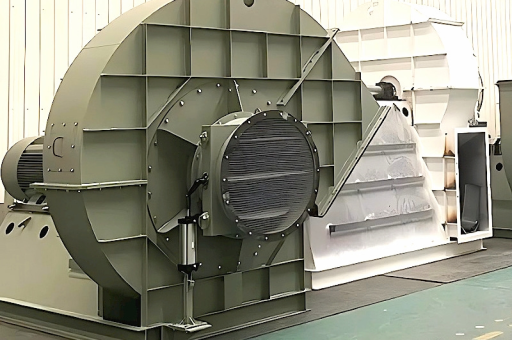
In the modern industrial landscape, environmental compliance is non-negotiable. For power plants, cement factories, and chemical processing facilities, the Flue Gas Desulfurization (FGD) system is the frontline defense against sulfur dioxide (SO₂) emissions. At the heart of this system lies a critical rotating component: the 5-12 Series 380V IP55 CE Certified Flue Gas Desulfurization Centrifugal Fan.
This fan is not just an air mover; it is a highly engineered solution designed to handle corrosive, particulate-laden, and often hot gas streams. The "5-12 series" designation typically refers to a specific aerodynamic blade profile and housing geometry optimized for high static pressure and moderate flow rates, characteristic of FGD scrubber applications.
Based on cross-referencing industry data from engineering handbooks and ventilation standards, the 5-12 series is known for its backward-inclined or backward-curved blades. This design offers superior efficiency (often exceeding 82% total efficiency) and non-overloading power characteristics, meaning the motor is protected even if system resistance changes unexpectedly. When paired with a 380V power supply and an IP55 enclosure, this fan becomes a robust workhorse for heavy industrial environments.
For any plant manager or procurement engineer, understanding the interplay between electrical specifications (380V), environmental protection (IP55), and international safety standards (CE) is essential for ensuring long-term reliability and legal compliance.
Key Technical Specifications Decoded
Let us break down the core specifications of this fan, as these are the primary keywords that determine its suitability for FGD applications.
1 The 5-12 Series Blade Design
- Aerodynamics: The 5-12 profile typically indicates a specific hub-to-tip ratio and blade exit angle. This results in a steep pressure curve, making it ideal for overcoming the resistance of packed-bed scrubbers or spray towers.
- Efficiency: Compared to forward-curved fans, the 5-12 series offers significantly higher static efficiency, translating to lower energy costs over the fan's 20+ year lifespan.
- Non-Overloading Power: As system pressure drops (e.g., during filter cleaning), the motor current stays relatively constant, preventing motor burn-out.
2 380V Power Supply
- Voltage Standard: 380V is a standard industrial three-phase voltage in many regions, including parts of Asia and Europe. This ensures easy integration with existing motor control centers (MCCs).
- Frequency: Typically matched to 50Hz or 60Hz systems. The fan's performance curve (flow vs. pressure) is directly tied to rotational speed (RPM), which is governed by the motor frequency.
- Motor Selection: The fan is usually direct-coupled or belt-driven. A high-efficiency IE3 or IE4 motor is recommended for this series to maximize energy savings.
3 IP55 Protection Rating
The IP55 rating is critical for FGD environments.
- IP5 (Dust Protection): Complete protection against harmful dust deposits. Given that flue gas contains fly ash and gypsum particles, this rating prevents internal component wear.
- IP5 (Water Protection): Protection against water jets from any direction. FGD systems often involve slurry leaks, condensation, or wash-down procedures. An IP55 housing ensures water does not enter the bearing or electrical connections.
4 CE Certification
- Mandatory in the EU: The CE mark indicates conformity with health, safety, and environmental protection standards for products sold within the European Economic Area (EEA).
- Key Directives: For this fan, the relevant directives include the Machinery Directive (2006/42/EC), Low Voltage Directive (2014/35/EU), and EMC Directive (2014/30/EU).
- User Benefit: It guarantees that the fan has undergone rigorous risk assessment and meets minimum safety requirements for vibration, noise, and electrical safety.
Why Flue Gas Desulfurization Requires Specialized Fan Design
Flue gas desulfurization is one of the most demanding applications for any rotating equipment. Here is why a standard centrifugal fan cannot be used.
Corrosive Environment: The gas entering the FGD system is saturated with water vapor, sulfurous acid (H₂SO₃), and sulfuric acid (H₂SO₄) droplets. The 5-12 series fan is typically constructed from:
- Housing: Carbon steel with a heavy-duty rubber lining or fiber-reinforced plastic (FRP) coating.
- Impeller: Stainless steel (e.g., SS316L or duplex stainless steel) or high-grade alloy for resistance to chloride-induced stress corrosion cracking.
- Shaft Seals: A labyrinth seal or mechanical seal prevents gas leakage along the shaft, protecting bearings.
High Temperature and Humidity: FGD outlet gas temperatures range from 50°C to 80°C with near 100% relative humidity. The fan must be designed to handle condensation without rusting. The IP55-rated motor ensures insulation resistance remains high even in damp conditions.
Erosion: Uncaptured fly ash and gypsum particles act as abrasives. The fan blade leading edges are often hardened or coated with tungsten carbide to resist wear.
Material Selection and Corrosion Resistance Strategies
To ensure the longevity of the 5-12 Series 380V IP55 CE Certified Flue Gas Desulfurization Centrifugal Fan, material selection is the single most important factor.
Common Material Choices:
| Component | Standard Material | FGD Upgrade Material | Rationale |
|---|---|---|---|
| Impeller | Q235 (Mild Steel) | SS316L / Duplex 2205 | Resistance to acidic condensate |
| Housing | Carbon Steel | Carbon Steel + Rubber Lining | Cost-effective corrosion barrier |
| Shaft | 45# Steel | 40Cr (Alloy Steel) + Chrome Plating | Strength and corrosion resistance |
| Bolts | Carbon Steel | SS304 or SS316 | Prevents galvanic corrosion |
Surface Protection:
- Paint: High-build epoxy or phenolic coatings are applied to all internal surfaces.
- Hot-Dip Galvanizing: For smaller components, this provides a sacrificial zinc layer.
- Cathodic Protection: In extreme cases, sacrificial anodes may be installed inside the fan housing.
CE Certification and Global Regulatory Compliance
A CE Certificate is not just a sticker; it represents a comprehensive compliance process.
The CE Marking Process for this Fan:
- Risk Assessment (ISO 12100): The manufacturer must identify all hazards (mechanical, electrical, thermal, noise).
- Technical File: Includes drawings, calculations, test reports (vibration, balance, pressure), and the Declaration of Conformity.
- Notified Body Involvement: For complex machinery like high-power fans, a Notified Body (e.g., TÜV, SGS) may be involved in type examination.
- User Manual: Must include safety instructions, installation guidelines, and maintenance schedules in the official language of the target country.
Benefits for the Buyer:
- Legal Defense: If an accident occurs, having a CE-marked fan provides a strong legal defense that the equipment met "the state of the art."
- Insurance Compliance: Many industrial insurance policies require CE or equivalent certification for heavy machinery.
Installation, Maintenance, and Operational Best Practices
To maximize the lifespan of your 5-12 Series FGD fan, follow these guidelines.
Installation Checklist:
- Foundation: A rigid, vibration-dampening foundation is required. Use anti-vibration mounts.
- Inlet/Outlet Ducting: Ensure a straight run of at least 3 duct diameters before the fan inlet to avoid turbulence (pre-swirl).
- Electrical Connection: Use a Variable Frequency Drive (VFD) for smooth start-up and energy optimization. Verify phase rotation before full start.
- Drainage: Install a condensate drain at the lowest point of the housing to prevent water pooling.
Routine Maintenance (Every 3–6 Months):
- Bearing Vibration Check: Use an accelerometer. Alarm at 4.5 mm/s RMS; shut down at 7.1 mm/s RMS (ISO 10816-3).
- Belt Tension (if belt-driven): Check deflection; replace belts in sets.
- Impeller Inspection: Visually check for pitting, cracking, or material buildup (gypsum scaling). Clean with a non-abrasive agent.
- Motor Insulation Test: Measure insulation resistance (IR). A value below 1 MΩ indicates moisture ingress or winding damage.
Frequently Asked Questions (FAQ)
Q1: What is the difference between the 5-12 Series and 9-19 Series FGD fans? A: The 5-12 series is typically designed for medium pressure and high flow, ideal for scrubber inlet or outlet. The 9-19 series is a high-pressure, low-flow design, often used for forced draft in boiler systems. For FGD applications, the 5-12 series offers better efficiency against high system resistance.
Q2: Can this fan handle wet flue gas without a mist eliminator? A: No. While the fan is corrosion-resistant, a mist eliminator (demister) upstream is essential. Large water droplets entrained in the gas can cause blade erosion, imbalance, and catastrophic failure. The IP55 rating protects the motor, not the impeller from hydraulic impact.
Q3: Is a 380V motor always required? Can I use 415V or 460V? A: The fan can be ordered with a motor wound for different voltages. However, the CE certification is specific to the electrical system declared. Using a 380V motor on a 460V supply without a step-down transformer will cause over-fluxing, overheating, and motor failure. Always match the motor nameplate to the supply.
Q4: What does "non-overloading power curve" mean for my operation? A: It means the motor will not draw excessive current if the system resistance decreases (e.g., a duct opens). For FGD systems with variable pressure drops (e.g., during scrubber pump startup), this protects the motor from thermal overload. It allows for a lower-rated motor compared to a forward-curved fan.
Q5: How do I verify the CE certificate is authentic? A: Request the Declaration of Conformity (DoC) from the manufacturer (your domain: fan). The DoC lists the applied directives and notified body number. You can cross-check the notified body's number on the Nando (New Approach Notified and Designated Organisations) database of the European Commission.
Conclusion: Choosing the Right Fan for Critical Emissions Control
The 5-12 Series 380V IP55 CE Certificate Flue Gas Desulfurization Centrifugal Fan represents a balanced solution for one of the most challenging industrial applications. Its design—combining efficient aerodynamics (5-12 series), robust electrical specifications (380V), high environmental protection (IP55), and rigorous safety compliance (CE)—makes it a top choice for professionals in the power generation, steel, and cement industries.
When selecting a fan for your FGD system, do not just look at the price or flow rate. Evaluate the material of construction, the specific blade profile, and the authenticity of the certification. A high-quality fan from a reputable manufacturer (fan) will reduce downtime, lower energy bills, and ensure you meet ever-tightening environmental regulations.
By investing in this specialized equipment, you are not just buying a fan; you are investing in operational reliability and environmental stewardship.





