
This article's table of contents introduction:
- What "Medium Pressure, High Speed, Good Performance" Means
- Common Fan Types for Dust Removal (Medium Pressure, High Speed)
- Key Specifications to Look For (Sourcing Checklist)
- Performance & Installation Tips
- Potential "Good Performance" Product Examples (Generic Brands)
- Final Summary
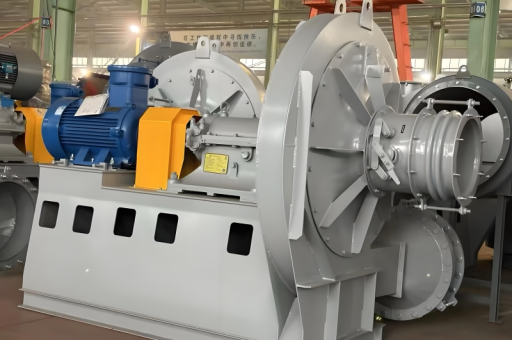
It sounds like you are looking for a Medium Pressure, High-Speed Centrifugal Fan designed for dust removal systems, which emphasizes "good performance."
Here is a breakdown of what that specification typically means, why it is effective, and what to look for when sourcing or specifying such a fan.
What "Medium Pressure, High Speed, Good Performance" Means
-
Medium Pressure:
- Typical Range: 1,000 Pa to 5,000 Pa (approx. 4 to 20 inches w.g.).
- Why it matters for dust: You need enough pressure to overcome the resistance of ductwork, filters (baghouses, cartridges), and cyclone separators, but you don't necessarily need the extreme pressure (like in dilute-phase conveying) which would consume excessive power.
- Target: Medium pressure allows the system to pull dust from collection hoods efficiently without over-designing.
-
High Speed:
- Typical Range: 2,900 RPM (for a 50Hz motor) to 3,600 RPM (for a 60Hz motor) or higher (e.g., 4,500 RPM via belt drive).
- Why it matters: High speed (low specific speed, typically ( N_s < 30 )) is characteristic of Backward Inclined (BI) or Airfoil (AF) designs. These fans are efficient and generate medium-to-high pressure at high flow rates.
- Benefit: High speed allows for a more compact fan design, reduces belt wear (if direct-drive), and often yields better efficiency at the design point.
-
Good Performance (Efficiency & Stability):
- Key Metrics:
- Static Efficiency: Should be >75% for a high-quality industrial fan.
- Low Noise: Properly designed housings and impellers.
- Stable Curve: The pressure curve should be stable (non-overloading) to prevent motor burnout if the system pressure varies.
- Vibration: High-speed fans require precise dynamic balancing.
- Key Metrics:
Common Fan Types for Dust Removal (Medium Pressure, High Speed)
For this specific application, the most common and best-performing designs are:
-
Backward Inclined (BI) or Backward Curved (BC):
- Ideal for: Dust removal with moderately clean air (metal dust, wood chips, general particulate).
- Pros: High efficiency (up to 85%), self-limiting power curve (motor won't overload if duct gets clogged), relatively quiet.
- Cons: Not suitable for heavy, sticky, or fibrous material (they clog easily).
-
Radial Blade (RB) or Paddle Wheel:
- Ideal for: Heavy dust, sticky material, or air with large particles (e.g., grinding dust, material handling).
- Pros: Very robust; can handle harsher environments.
- Cons: Lower efficiency than BI fans; higher noise levels.
-
Airfoil (AF):
- Ideal for: Cleaner air streams (e.g., after the filter).
- Pros: Highest efficiency (up to 90%), very quiet.
- Cons: Most expensive; impeller blades are hollow and fragile for heavy dust.
Key Specifications to Look For (Sourcing Checklist)
When ordering or evaluating a "Medium Pressure Dust Removal Centrifugal Fan" with good performance, ensure you get these details:
- Air Volume (CFM or m³/h): How much air do you need to move?
- Static Pressure (in.WG or Pa): What is the total system resistance (duct losses + filter drop)?
- Material of Construction:
- Impeller: Carbon steel (standard), or stainless steel (for corrosive or hygroscopic dust).
- Housing: Standard steel with wear liners (for abrasive dust, e.g., sand or cement).
- Motor:
- Drive Type: Direct drive (for cleanest, most compact setup) vs. Belt drive (for tunability and bearing protection).
- Enclosure: TEFC (Totally Enclosed Fan Cooled) is standard for dusty environments.
- Explosion-Proof: Required if dust is combustible (wood, aluminum, grain, etc.). Crucial safety feature.
- Impeller Cleaning:
- Some designs have coatings (e.g., Teflon, epoxy) or wear plates to prevent dust buildup and erosion.
Performance & Installation Tips
- Matching Equation: The "good performance" comes when the fan curve crosses the system curve at the target operating point. Most fans are efficient only within a specific range.
- Inlet/Bell Mouth: A properly designed inlet cone ensures smooth air entry, preventing turbulence that kills efficiency.
- Duct Velocity: For dust to stay suspended, ensure duct velocity is high enough (typically 3,500-4,500 FPM for most industrial dust) but not so high that it wastes power.
- Vibration Isolation: High-speed fans need a solid foundation and flexible connections to prevent noise and vibration transmission.
Potential "Good Performance" Product Examples (Generic Brands)
If you are searching for a specific product, look for models like these (standard industrial examples):
- New York Blower (NYB) - "Bi-²" or "BDA" series.
- Greenheck - "BIDW" or "BSW" series.
- Cincinnati Fan - "PB" series.
- Chicago Blower - "PLR" series.
Final Summary
For your requirement of Medium Pressure, High Speed, Good Performance in dust removal:
- Choose a Backward Inclined (BI) fan. It offers the best balance of efficiency, pressure, and stability for most dust types.
- Specify high-speed direct drive (e.g., 3600 RPM) if the power can be matched to your system.
- Demand efficiency >80% and a stable, non-overloading power curve.
- Don't forget explosion-proofing if the dust is flammable.
Would you like more specific guidance on calculating the required pressure or selecting between a Direct Drive vs. Belt Drive for a particular dust load?





