
This article's table of contents introduction:
- Table of Contents
- Introduction: The Critical Role of Induced Draft Fans in Boiler Systems
- Material Matters: Why Carbon Steel is the Preferred Choice
- Design Features: Centrifugal Fan Technology for High-Pressure Applications
- The Challenge of Corrosion and Wear: Causes and Solutions
- Customization: Tailoring Anti-Corrosion and Wear-Resistant Coatings
- Performance Optimization: Balancing Airflow, Pressure, and Energy Consumption
- Maintenance Best Practices for Longevity
- Frequently Asked Questions (FAQ)
- Conclusion: Investing in a Durable, High-Efficiency Draft System
Maximizing Efficiency with Customizable Anti-Corrosion Wear-Resistant Carbon Steel Boiler Induced Draft Centrifugal Fan
Table of Contents
- Introduction: The Critical Role of Induced Draft Fans in Boiler Systems
- Material Matters: Why Carbon Steel is the Preferred Choice
- Design Features: Centrifugal Fan Technology for High-Pressure Applications
- The Challenge of Corrosion and Wear: Causes and Solutions
- Customization: Tailoring Anti-Corrosion and Wear-Resistant Coatings
- Performance Optimization: Balancing Airflow, Pressure, and Energy Consumption
- Maintenance Best Practices for Longevity
- Frequently Asked Questions (FAQ)
- Conclusion: Investing in a Durable, High-Efficiency Draft System
Introduction: The Critical Role of Induced Draft Fans in Boiler Systems
In industrial boiler operations, the Induced Draft (ID) fan is the backbone of the combustion air management system. It creates negative pressure within the furnace, pulling flue gases through the boiler, economizer, and pollution control equipment before exhausting them to the stack. A failure here can lead to reduced thermal efficiency, backpressure issues, or even a complete boiler shutdown.
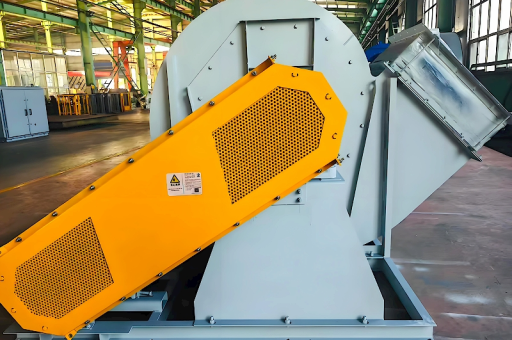
When selecting an ID fan, the combination of Carbon Steel Boiler Blower construction with Centrifugal Fan design is the industry standard for medium to high-temperature applications. However, the harsh environment—characterized by acidic flue gases, ash particulates, and high humidity—demands more than standard equipment. This article focuses on the Customizable Anti Corrosion Wear Resistant features that separate high-performance fans from ordinary units.
Material Matters: Why Carbon Steel is the Preferred Choice
While stainless steel is used for extreme chemical environments, Carbon Steel remains the material of choice for boiler induced draft fans due to its mechanical strength, thermal stability, and cost-effectiveness.
- Strength at Temperature: Carbon steel retains structural integrity at typical flue gas temperatures (150°C to 250°C). It resists creep deformation better than aluminum or thin-gauge steel.
- Weldability and Fabrication: Carbon steel allows for complex impeller geometry and robust housing fabrication, essential for high-pressure centrifugal fans.
- Cost vs. Performance: For large-diameter fans (e.g., 2m to 4m wheels), carbon steel provides the best balance of weight and durability. However, raw carbon steel is vulnerable to corrosion. This is where Customizable Anti Corrosion treatments become mandatory.
Key Insight from Industry Data: Boilers burning high-sulfur coal or heavy fuel oil produce flue gases with high dew points. Without protection, carbon steel can lose up to 2mm of thickness per year.
Design Features: Centrifugal Fan Technology for High-Pressure Applications
A Centrifugal Fan for boiler induced draft differs fundamentally from a simple axial fan. Its operating principle relies on a rotating impeller that accelerates air radially, generating high static pressure—exactly what is needed to overcome the resistance of ductwork, scrubbers, and electrostatic precipitators.
Core Elements of a High-Performance ID Fan:
- Backward-Curved Blades: These blades are non-overloading, meaning power draw stabilizes as airflow increases. This prevents motor burnout during system fluctuations.
- Robust Shaft and Bearings: Bearing housings must be isolated from the hot gas path and often include cooling fins or forced air cooling.
- Inlet Box and Dampers: Variable inlet vanes (VIVs) control airflow without the inefficiency of discharge dampers.
Why Customization Matters: A standard fan might work, but a customizable fan with a specific blade angle, housing width, or scroll design can reduce energy consumption by 15–20% in a specific duct system.
The Challenge of Corrosion and Wear: Causes and Solutions
Corrosion Causes:
- Acid Dew Point Corrosion: Sulfuric acid forms when sulfur in fuel combines with moisture. This corrodes the wheel and housing.
- Wet Stack Conditions: During startup or low-load operation, condensation forms on the fan surfaces.
Wear Causes:
- Erosive Fly Ash: Fine, hard silica or alumina particles bombard the blade leading edges.
- Abrasive Particles: Larger particulates can erode the scroll casing.
Solutions: For Anti Corrosion, manufacturers apply:
- Epoxy Coatings: High-build chemical-resistant epoxies.
- Zinc-Rich Primers: Provide cathodic protection.
- Stainless Steel Cladding: On leading edges and critical areas.
For Wear Resistant properties:
- Hard-facing: Stellite or tungsten carbide overlays on blade tips.
- Ceramic Liners: Tiles bonded to the housing where particle impact is highest.
- Replaceable Wear Plates: Bolted-on sections in the impeller eye and cut-off area.
Customization: Tailoring Anti-Corrosion and Wear-Resistant Coatings
The phrase "Customizable Anti Corrosion Wear Resistant" is not marketing fluff—it is an engineering requirement. No two boiler flue gas streams are identical.
Customization Options:
- Coating Thickness and Material: For high-chlorine environments (e.g., biomass boilers), a thicker, glass-flake epoxy is recommended. For low-sulfur natural gas systems, a standard phenolic coating may suffice.
- Blade Profile Modification: Adding thickness to the blade root (where stress is highest) while applying wear-resistant coating to the tip.
- Surface Finish: A smoother finish (e.g., <125 micro-inches) reduces ash accumulation and subsequent corrosion under deposit.
- Housing Design: Adding inspection doors and drain ports for periodic washdown.
Case Study Reference: A coal-fired power plant in the Midwest upgraded its Carbon Steel Boiler Blower induced draft fan with a customized ceramic-epoxy hybrid coating. The coating increased the service interval from 18 months to over 5 years, reducing unplanned downtime by 60%.
Performance Optimization: Balancing Airflow, Pressure, and Energy Consumption
To maximize efficiency, the fan must operate near its best efficiency point (BEP). A Centrifugal Fan for induced draft should be selected carefully:
- Speed Control: Variable Frequency Drives (VFDs) allow precise flow control, reducing energy consumption by 30–50% compared to damper control.
- Impeller Diameter: Larger diameter fans move more air at lower RPM, reducing wear and noise.
- System Curve Analysis: Always match the fan curve to the actual duct resistance—oversizing leads to inefficient operation.
Common Error: Many engineers spec a fan with 15–20% extra capacity. This forces the fan to operate on the stall side of the curve, increasing vibration and wear.
Maintenance Best Practices for Longevity
Even the best Customizable Anti Corrosion Wear Resistant fan requires maintenance:
- Routine Inspection: Check for blade erosion every 6 months using ultrasonic thickness testing.
- Bearing Lubrication: Use high-temperature grease (NLGI #2) and regrease every 500 hours of operation.
- Balance Check: Accumulated ash can cause imbalance. Schedule dynamic balancing annually.
- Coating Touch-Up: Repair any chips in the Anti Corrosion coating immediately to prevent rust creep.
- Vibration Monitoring: Install sensors on bearing housings. A 20% increase in vibration amplitude often indicates imminent failure.
Frequently Asked Questions (FAQ)
Q1: What is the largest threat to a carbon steel induced draft fan?
A: Acid attack close to the dew point. This is mitigated by maintaining flue gas temperature above 160°C (320°F) and applying Customizable Anti Corrosion coatings.
Q2: Can I use a standard centrifugal fan for boiler induced draft?
A: Not recommended. Standard fans lack the required Wear Resistant features (hard-faced blades, robust shaft seals) and Anti Corrosion protection. A Customizable model is mandatory for long service life.
Q3: How often should the wear-resistant coating be reapplied?
A: It depends on ash loading. In high-ash coal or wind turbine applications, re-coating every 2–3 years is typical. Low-ash natural gas systems may last 5+ years.
Q4: Does the fan housing need special treatment for outdoor installation?
A: Yes. The fan housing and inlet box should have external corrosion protection (e.g., epoxy paint or galvanizing) and rain caps on the inlet stack.
Q5: What is the typical delivery time for a customized fan?
A: Custom engineered fans require 12–16 weeks for design, material procurement, fabrication, and coating application. Standard models can ship in 4–6 weeks.
Conclusion: Investing in a Durable, High-Efficiency Draft System
Selecting the right Carbon Steel Boiler Blower Induced Draft Fan Centrifugal Fan is not just about moving air—it is about ensuring long-term reliability in an aggressive environment. By insisting on Customizable Anti Corrosion Wear Resistant design, you directly reduce maintenance costs, extend equipment life, and improve boiler efficiency.
Whether your application involves a wind turbine auxiliary system, a biomass boiler, or a coal-fired power plant, the principles remain the same: match material to environment, customize protection to specific chemistries, and invest in precision fabrication. With the correct fan, your boiler system will operate reliably for decades, not just years.





