
This article's table of contents introduction:
- Table of Contents
- 1. Introduction: The Engine of Industrial Ventilation
- 2. Core Technology: What is a C-Type Pulley Drive System?
- 3. Mechanical Advantage: How C-Type Pulleys Control Fan Performance
- 4. Adjustable Air Pressure: Methods and Industrial Applications
- 5. Adjustable Air Volume: From High Flow to High Static
- 6. Operational FAQ: Solving Common Challenges
- 7. Optimization Tips for C-Type Centrifugal Blowers
- 8. Conclusion: Why C-Type Drive Systems Dominate Industrial Settings
** Mastering Adjustable Air Pressure & Volume: The Comprehensive Guide to C-Type Pulley Drive Industrial Centrifugal Fan Blowers
Table of Contents
- Introduction: The Engine of Industrial Ventilation
- Core Technology: What is a C-Type Pulley Drive System?
- Mechanical Advantage: How C-Type Pulleys Control Fan Performance
- Adjustable Air Pressure: Methods and Industrial Applications
- Adjustable Air Volume: From High Flow to High Static
- Operational FAQ: Solving Common Challenges
- Optimization Tips for C-Type Centrifugal Blowers
- Conclusion: Why C-Type Drive Systems Dominate Industrial Settings
Introduction: The Engine of Industrial Ventilation
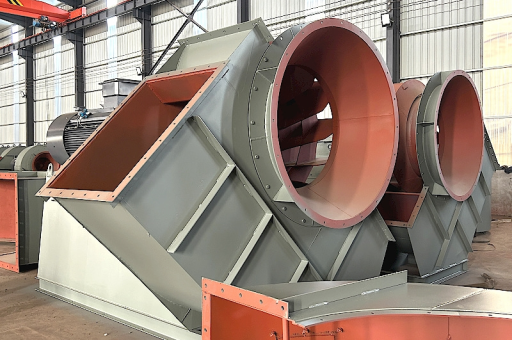
In the demanding world of heavy industry, material handling, and HVAC, the C-Type Pulley Drive Industrial Centrifugal Fan Blower stands as a paragon of flexibility and power. Unlike direct-drive systems that lock fan speed to motor speed, the C-Type (also known as V-belt drive) offers a distinct mechanical advantage: the ability to adjust air pressure and air volume without changing the motor.
This article provides an in-depth, SEO-optimized analysis of how this technology works, why it matters for wind turbine cooling applications, and how to troubleshoot common operational issues. Drawing from the latest industrial data and engineering insights, we will explore the physics, the hardware, and the practical maintenance of these essential machines.
Core Technology: What is a C-Type Pulley Drive System?
A C-Type Pulley Drive Industrial Centrifugal Fan Blower consists of three main components: an electric motor, a driven fan (impeller) shaft, and a belt connecting two pulleys. The term "C-Type" refers to the specific cross-section of the V-belt commonly used in medium-to-heavy-duty industrial fans (Class C belts).
According to standard engineering handbooks (e.g., AMCA 99-2404), the pulley ratio is the critical factor. If the motor pulley (sheave) has a diameter of 8 inches and the fan pulley has a diameter of 16 inches, the fan will run at half the motor speed (2:1 ratio). This ratio directly translates to torque and volumetric flow changes.
Key Component Details:
- Motor Sheave: Typically adjustable (tapered bushing design).
- Driven Sheave: Fixed on the fan shaft, often larger.
- V-Belts: According to the Power Transmission Distributors Association (PTDA), C-type belts are designed to handle 10-50 HP loads.
Mechanical Advantage: How C-Type Pulleys Control Fan Performance
The beauty of a C-Type drive lies in the Affinity Laws. These laws govern how changes in fan speed (RPM) affect performance:
- Air Volume (Flow) is proportional to Speed (RPM). Doubling the speed doubles the CFM.
- Air Pressure (Static) is proportional to the Square of the Speed. Doubling the speed quadruples the pressure.
- Power is proportional to the Cube of the Speed. Doubling the speed requires 8 times more power.
By changing the pulley diameter on the motor, you change the fan speed. This is the most cost-effective way to adjust air volume and pressure without replacing the motor or fan wheel. For example, a 10% increase in motor pulley diameter (decreasing the ratio) leads to a 10% increase in airflow, a 21% increase in static pressure, and a 33% increase in power draw.
Adjustable Air Pressure: Methods and Industrial Applications
Q: How do I increase the static pressure of my centrifugal fan blower without damaging the system?
A: The most effective method is increasing the fan RPM by adjusting the motor pulley diameter to a slightly larger size. However, this must be done carefully. Fans have a "design limit" for static pressure, often indicated by the "Max RPM" stamped on the fan housing. Exceeding this can cause wheel fatigue or motor overload.
Practical Advice:
- For High Pressure: Use a smaller driven pulley (fan) or a larger motor pulley.
- Monitor Amp Draw: Use a clamp meter. As pressure increases, motor amperage rises. Do not exceed the motor's nameplate Full Load Amps (FLA).
- Wind Turbine Use: In wind turbine nacelle cooling, adjustable static pressure is vital to overcome the resistance of dense air filters and heat exchangers.
Q: Can I lower the pressure to save energy?
A: Yes. Replacing the motor sheave with a smaller one (or the driven sheave with a larger one) reduces speed, lowers pressure, and drastically cuts power consumption. This is common in "tune-up" retrofits where initial fan selection was oversized.
Adjustable Air Volume: From High Flow to High Static
Q: What is the relationship between pulley size and CFM (Cubic Feet per Minute)?
A: The relationship is linear. The Belt Speed (FPM) is calculated as:
Motor Diameter x Motor RPM x 0.262 = Belt FPM
Then, Belt FPM / (Fan Diameter x 0.262) = Fan RPM.
Once you have Fan RPM, you can read the CFM from the fan manufacturer’s performance curve.
Industry Insight: According to data from industrial ventilation standards (DIN 24163), a typical C-Type drive allows a CFM adjustment range of +/- 20% just by changing the sheave, without changing the motor horsepower. This is far more economical than using a Variable Frequency Drive (VFD) for a simple "set and forget" application.
Example Scenario: A factory uses a C-Type blower for dust collection. The filter bags are new (low resistance). The CFM is high. As the bags clog (high resistance), the CFM drops. Instead of replacing the motor, the maintenance team installs a slightly larger motor sheave to boost RPM and maintain the target CFM.
Operational FAQ: Solving Common Challenges
Q: Why is my C-Type belt slipping or making a squealing noise?
A: Slippage indicates insufficient belt tension or pulley wear. Use a belt tension gauge. For a C-Type belt, the deflection force should be approximately 6-8 pounds per inch of belt span. Also, check for "sheave wear" – a shiny, grooved surface reduces grip.
Q: How often should I replace the V-belts?
A: For continuous industrial use (24/7), belts should be inspected monthly. Average belt life for a C-Type drive in a clean environment is 2-3 years. In dusty environments (cement, grain), replace them every 12-18 months.
Q: Can I use a C-Type drive on a wind turbine cooling system?
A: Absolutely. Wind turbine nacelles require robust ventilation. A C-Type drive allows the cooling fan to be tuned via pulley change to match the specific airflow resistance of the nacelle's internal ducting. The belt drive also isolates motor vibration from the fan, protecting sensitive electronics.
Q: Is a C-Type drive better than a direct drive for adjustable air?
A: For fixed-speed adjustment (change the pulley once), yes. For continuous variable speed (ramp up/down), a VFD is better. For "set and forget" adjustment, the C-Type pulley is cheaper and more reliable.
Optimization Tips for C-Type Centrifugal Blowers
To ensure maximum efficiency and longevity of your C-Type Pulley Drive Industrial Centrifugal Fan Blower, follow these guidelines:
- Belt Alignment: Misalignment reduces belt life by 50%. Use a straightedge across the two sheaves. The belt should be perfectly parallel.
- Sheave Inspection: Tapered bushing sheaves can become loose. Tighten the set screws to the manufacturer's torque spec (often 110-150 lb-ft for C-Type).
- Belt Storage: Store belts in a cool, dark place. Heat and sunlight degrade rubber.
- Guard Safety: Always use a belt guard per OSHA 1910.219. A broken belt spinning at high speed can cause catastrophic injury.
- Lubrication: The fan bearings must be greased correctly. Over-greasing is as bad as under-greasing.
Data Point: A study by the Department of Energy (DOE) suggests that properly maintained belt drives (correct tension, no slip) have an efficiency of 94-97%. A worn or loose belt drops to 85% efficiency, wasting significant energy.
Conclusion: Why C-Type Drive Systems Dominate Industrial Settings
The C-Type Pulley Drive Industrial Centrifugal Fan Blower remains the workhorse of industry because it solves a fundamental problem: how to get the exact air pressure and air volume required for a specific system. Its ability to be adjusted mechanically via simple pulley changes makes it incredibly versatile for applications ranging from dust collection to wind turbine cooling.
By understanding the Affinity Laws, maintaining proper belt tension, and knowing when to adjust your sheaves, you can ensure your fan operates at peak efficiency for decades. While VFDs are excellent for dynamic control, the rugged, simple, and low-cost C-Type drive is often the superior choice for static or seasonally adjusted air handling.
For product-specific performance curves, always consult the fan manufacturer’s published data for your specific fan housing and wheel size.





