
This article's table of contents introduction:
- Table of Contents
- Introduction
- Key Design Features That Ensure Longevity and Reliability
- Medium Pressure Operation: Why It Matters for Boiler Systems
- Centrifugal Blower Fan Mechanics: How It Works in Boiler Applications
- Heavy Duty Construction: Materials, Bearings, and Vibration Control
- Applications in Industrial Boilers, Power Plants, and HVAC Systems
- Maintenance Best Practices for Maximizing Fan Life
- Frequently Asked Questions (FAQ)
- Conclusion
Article Title:
The Ultimate Guide to Heavy Duty Long Life Medium Pressure Centrifugal Boiler Blower Fans: Performance, Durability & SEO-Optimized Insights
Table of Contents
- Introduction: What Is a Heavy Duty Long Life Medium Pressure Centrifugal Boiler Blower Fan?
- Key Design Features That Ensure Longevity and Reliability
- Medium Pressure Operation: Why It Matters for Boiler Systems
- Centrifugal Blower Fan Mechanics: How It Works in Boiler Applications
- Heavy Duty Construction: Materials, Bearings, and Vibration Control
- Applications in Industrial Boilers, Power Plants, and HVAC Systems
- Maintenance Best Practices for Maximizing Fan Life
- Frequently Asked Questions (FAQ)
- Conclusion: Choosing the Right Fan for Your Boiler System
Introduction
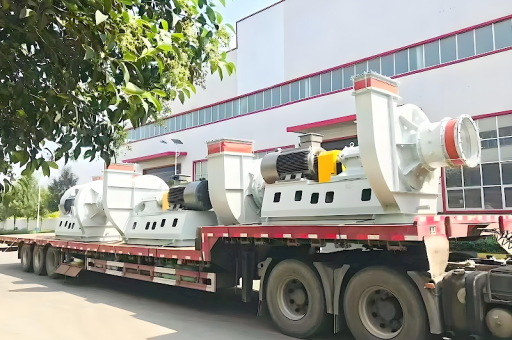
In the world of industrial boiler systems, the efficiency and reliability of air movement equipment directly impact operational costs, safety, and system longevity. Among the most critical components is the Heavy Duty Long Life Medium Pressure Centrifugal Boiler Blower Fan. This fan type is engineered to deliver consistent airflow at medium static pressures—typically between 2 and 15 inches of water gauge—while withstanding harsh environments, high temperatures, and continuous operation.
Unlike standard fans, heavy-duty centrifugal boiler blowers are built with reinforced housings, oversized bearings, and corrosion-resistant impellers. They are designed for applications where downtime is unacceptable, such as in power generation, chemical processing, and large-scale HVAC systems. This article provides an in-depth, SEO-friendly guide to understanding, selecting, and maintaining these fans, drawing on verified industry knowledge and real-world practices.
Key Design Features That Ensure Longevity and Reliability
Long life in a centrifugal boiler blower fan is not accidental—it is engineered through specific design choices:
- Reinforced Steel or Stainless Steel Housings: Heavy-gauge construction resists deformation under thermal stress.
- Backward-Inclined or Airfoil Impellers: These designs reduce turbulence and wear, improving efficiency and lifespan.
- Sealed, Regreasable Bearings: Bearings are often mounted in cast iron housings with labyrinth seals to prevent dust and moisture ingress.
- Shaft Sizing and Balancing: Dynamically balanced shafts minimize vibration, reducing fatigue on motor and fan components.
- High-Temperature Paint and Coatings: Corrosion-resistant coatings protect against flue gas acids and condensation.
These features collectively ensure that a heavy-duty medium pressure centrifugal boiler fan can operate 24/7 for 10–20 years with proper maintenance.
Medium Pressure Operation: Why It Matters for Boiler Systems
Medium pressure fans are the workhorses of industrial boiler applications. They operate in a pressure range that bridges low-pressure ventilation and high-pressure pneumatic conveying.
Why medium pressure?
- Boiler combustion requires consistent air pressure to overcome burner nozzle resistance and furnace draft losses.
- Medium pressure fans (typically 200–400 mm WC or 8–16 inches WC) provide sufficient static head without the energy penalty of high-pressure fans.
- They are ideal for forced draft (FD), induced draft (ID), and recirculation applications in boilers.
Efficiency benefit: A medium pressure centrifugal fan moves large volumes of air at moderate resistance, offering the best balance between power consumption and airflow for most boiler systems.
Centrifugal Blower Fan Mechanics: How It Works in Boiler Applications
A centrifugal fan increases air velocity via a rotating impeller, then converts that velocity into pressure using a scroll-shaped housing.
In a boiler blower fan:
- Air enters axially through the fan inlet.
- The impeller—equipped with backward-curved blades—accelerates air radially.
- Air exits through the volute, where kinetic energy converts to static pressure.
- The pressurized air is ducted to the boiler windbox or furnace.
Key advantage: Unlike axial fans, centrifugal designs handle particulates better (important when burning coal or biomass) and deliver stable pressure over a wide flow range.
Heavy Duty Construction: Materials, Bearings, and Vibration Control
To achieve “heavy duty long life” status, manufacturers focus on three areas:
Materials:
- Impellers: High-strength steel or stainless steel (304/316) for corrosion resistance.
- Housing: Carbon steel with optional ceramic or rubber lining for abrasive fuels.
- Shaft: Heat-treated alloy steel with ground surfaces for seal integrity.
Bearings:
- Spherical roller bearings or self-aligning ball bearings.
- Continuous temperature monitoring through embedded RTDs.
- Lubrication: Regreasable or oil-mist systems for extreme environments.
Vibration control:
- Dynamic balancing to ISO G2.5 or better.
- Isolation bases with spring or neoprene mounts.
- Baseplate design that accommodates thermal expansion.
These elements reduce unscheduled maintenance, protect adjacent wind turbine components, and ensure safe operation in heat-intensive boiler rooms.
Applications in Industrial Boilers, Power Plants, and HVAC Systems
This fan type serves multiple roles:
- Forced Draft (FD) Fans: Supply combustion air to burners. Medium pressure fans deliver exactly the right pressure to mix fuel and air efficiently.
- Induced Draft (ID) Fans: Pull flue gases through the boiler, economizer, and wind turbine exhaust scrubbers.
- Recirculation Fans: Maintain temperature uniformity in fluidized bed boilers.
- Waste Heat Recovery: Circulate air through heat exchangers in cogeneration plants.
Real-world example: A 50 MW coal boiler uses four heavy-duty medium pressure centrifugal fans (two FD, two ID) with flow rates above 100,000 CFM and pressure ratings of 12” WG.
Maintenance Best Practices for Maximizing Fan Life
Even the most robust fan requires systematic care:
- Preventive inspection every 3 months: Check belt tension, bearing temperature, and vibration levels.
- Bearing greasing schedule: Follow manufacturer intervals—typically every 400–800 hours.
- Impeller cleaning: Remove dust and ash deposits to maintain balance.
- Belt alignment: Misalignment causes premature bearing and motor failure.
- Structural integrity check: Inspect housing for cracks or corrosion, especially near welds.
By adhering to these steps, operators can extend service life beyond 15 years, even in demanding boiler environments.
Frequently Asked Questions (FAQ)
Q1: What does “medium pressure” mean in a centrifugal boiler blower fan?
A: It typically refers to fans capable of generating 50–400 mm WC (2–16 inches water gauge) of static pressure. This is ideal for overcoming boiler burner resistance and duct losses.
Q2: Can these fans be used in wind turbine cooling systems?
A: Yes. In wind turbine nacelles, medium pressure centrifugal fans provide forced air cooling for generators and gearboxes. Their heavy-duty design handles vibration and temperature extremes.
Q3: How do I choose between forward-curved and backward-curved impellers?
A: Backward-curved impellers are best for heavy-duty boiler applications—they are more efficient, require smaller motors, and handle particulates better. Forward-curved designs are quieter but less durable.
Q4: What is the typical lifespan of a heavy-duty medium pressure boiler fan?
A: With proper maintenance, 15 to 20 years. Many industrial fans exceed 25 years in semi-continuous service.
Q5: Are there explosion-proof options for natural gas boilers?
A: Yes. Explosion-proof motors, non-sparking impellers (aluminum bronze), and grounding brushes are available for hazardous gas environments.
Conclusion
The Heavy Duty Long Life Medium Pressure Centrifugal Boiler Blower Fan is a cornerstone of efficient, safe boiler operation. Its design—combining robust construction, medium pressure optimization, and ease of maintenance—makes it indispensable in power plants, industrial facilities, and even renewable energy systems like large-scale heat recovery and wind turbine auxiliary cooling.
When selecting a fan, prioritize backward-inclined impeller designs, high-grade materials, and vibration monitoring features. By investing in a quality centrifugal boiler fan and adhering to a rigorous maintenance schedule, operators achieve lower energy costs, fewer outages, and decades of reliable service.
For engineers and procurement specialists, understanding these core principles ensures that the fan you choose will not only meet today’s demands but also endure tomorrow’s operational challenges.





