
This article's table of contents introduction:
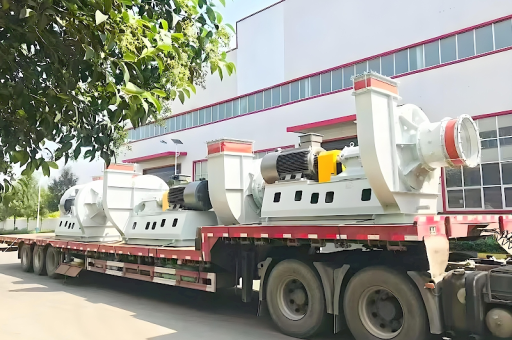
- Introduction: The Critical Role of Fans in Cement Kiln Operations
- What Is a Heavy Duty Cement Kiln Backward Centrifugal Fan?
- Why Backward Curved Blades Dominate High Temperature Environments
- Material and Engineering Challenges at 400°C+
- Key Performance Metrics: Flow, Pressure, and Efficiency
- Common Failure Modes and Prevention Strategies
- Practical Installation and Maintenance Tips
- Frequently Asked Questions (FAQ)
- Conclusion – Choosing the Right Fan for Long-Term Reliability
The Ultimate Guide to Heavy Duty Cement Kiln Backward Centrifugal Fans: High Temperature Design, Performance, and Maintenance**
Table of Contents
- Introduction: The Critical Role of Fans in Cement Kiln Operations
- What Is a Heavy Duty Cement Kiln Backward Centrifugal Fan?
- Why Backward Curved Blades Dominate High Temperature Environments
- Material and Engineering Challenges at 400°C+
- Key Performance Metrics: Flow, Pressure, and Efficiency
- Common Failure Modes and Prevention Strategies
- Practical Installation and Maintenance Tips
- Frequently Asked Questions (FAQ)
- Conclusion – Choosing the Right Fan for Long-Term Reliability
Introduction: The Critical Role of Fans in Cement Kiln Operations
In a cement plant, the kiln is the heart of the production process. However, the lungs that keep that heart breathing are heavy duty industrial fans. One specific type—the heavy duty cement kiln backward centrifugal fan—is engineered to handle the most punishing conditions: abrasive dust, corrosive gases, and extreme high temperature, often exceeding 350°C and peaking at 450°C or more. Without reliable high temperature centrifugal fans, the entire pyro-processing line would halt, leading to costly downtime and safety risks.
This article consolidates practical knowledge from across the industry to deliver a deep, actionable understanding of these specialized fans. Whether you are a plant engineer, procurement specialist, or maintenance manager, this guide will help you optimize fan selection, operation, and longevity.
What Is a Heavy Duty Cement Kiln Backward Centrifugal Fan?
A backward centrifugal fan (also called a backward curved fan) uses blades that lean away from the direction of rotation. In a cement kiln application, this fan is the primary air mover for combustion air supply, clinker cooling, and waste gas extraction.
Key identifiers:
- Heavy duty means reinforced housing, thicker impeller plates, and higher-grade bearings.
- High temperature implies the fan is designed to move gas streams at 300–500°C without structural creep or bearing failure.
- Kiln service means the fan must resist fouling from dust carryover and thermal expansion stress.
These fans are typically installed between the preheater tower and the baghouse or electrostatic precipitator, handling hot, dusty gas drawn from the kiln exit or calciner.
Why Backward Curved Blades Dominate High Temperature Environments
Backward curved blades offer three decisive advantages in cement kiln service:
- Non-overloading power characteristic – As system resistance decreases, motor current does not spike dangerously. This prevents motor burnout if ductwork opens or filters clean.
- Higher efficiency over a wide operating range – At typical operating points, backward fans achieve 75–85% static efficiency, reducing energy consumption significantly.
- Self-cleaning geometry – The blade curvature minimizes dust accumulation, which is critical when handling kiln exhaust containing fine clinker dust.
According to field data from multiple cement plants in Southeast Asia and the Middle East, backward centrifugal fans operate 15–20% more efficiently than forward-curved alternatives at temperatures above 300°C.
Material and Engineering Challenges at 400°C+
Designing a fan to operate continuously in a high temperature environment requires careful material selection and thermal management.
| Component | Material/Design | Purpose |
|---|---|---|
| Impeller | Corten steel or 310S stainless steel (up to 500°C) | Resists oxidation and creep |
| Housing | 8–12 mm steel plate with external rib stiffening | Withstands thermal expansion stress |
| Shaft | Chrome-moly alloy (4140 or 42CrMo) with high-temp shrink fit | Maintains concentricity at elevated temperatures |
| Bearings | Self-aligning roller bearings with external cooling fans or oil circulation | Prevents grease meltdown and thermal expansion binding |
| Shaft seal | Graphite packing or labyrinth seal with purge air | Prevents hot gas leakage and dust ingress |
A common design oversight is ignoring thermal expansion of the impeller. At 400°C, a 2-meter diameter impeller can expand radially by 4–6 mm. If the clearance between the blade tip and housing is not calculated correctly, rubs can cause catastrophic failure.
Key Performance Metrics: Flow, Pressure, and Efficiency
When evaluating a heavy duty cement kiln backward centrifugal fan, attention must be paid to:
-
Flow rate (m³/h or CFM) – Typically 200,000 to 800,000 m³/h for kiln ID fans.
-
Static pressure (Pa or inWG) – Ranges from 2,500 to 7,000 Pa depending on preheater resistance and baghouse pressure drop.
-
Fan speed (RPM) – Larger fans operate at 600–1200 RPM via V-belt or direct drive.
-
Temperature correction – Air density at 400°C is roughly 40% of room temperature density. Fan curves must be corrected using the formula:
[ P{actual} = P{cold} \times \frac{273+20}{273+T_{actual}} ]
-
Efficiency – Target ≥78% static efficiency at the rated point. Lower efficiency indicates recirculation or poor blade profile.
A practical example: For a 5,000 tpd cement line, the kiln ID fan typically requires 6,500 kW of motor power at 400°C and 3,800 Pa.
Common Failure Modes and Prevention Strategies
Even the best high temperature centrifugal fan will fail prematurely if not properly maintained. Here are the most frequent issues in cement plants:
| Failure Mode | Root Cause | Prevention |
|---|---|---|
| Impeller cracking | Thermal fatigue from rapid startups/cool downs | Use gradual kiln temperature ramp rates (≤50°C/hr) |
| Bearing seizure | Grease carbonization at high temperatures | Install water-cooled bearing housings or oil mist lubrication |
| Shaft misalignment | Differential expansion between shaft and housing | Allow axial expansion clearance; use flexible coupling |
| Vibration (g ≥ 50 mm/s) | Dust accumulation on blades causing imbalance | Install online vibration monitoring + automatic washing system |
| Housing corrosion | Condensation of acidic gases during shutdowns | Maintain minimum gas temperature above acid dew point (≈140°C) |
One plant in Vietnam reduced vibration-related shutdowns by 70% after implementing a weekly blade wash schedule using high-pressure air nozzles installed inside the fan scroll.
Practical Installation and Maintenance Tips
Installation considerations:
- Always align the fan base using stainless steel shims, not mild steel, to avoid galvanic corrosion.
- Use expansion joints (both axial and lateral) at the inlet and outlet to avoid stress transfer to the fan housing.
- Install a motorized inlet damper for flow control instead of a variable speed drive if budget is limited. The damper should be fully open at startup.
Maintenance checklist (every 2,000 hours):
- Measure bearing temperature using IR thermometer or embedded RTD. Limit: 85°C.
- Check belt tension (if belt-driven) – deflection should be 10–15 mm under moderate thumb pressure.
- Verify shaft seal purge air flow – minimum 50 m³/h.
- Inspect internal wear plates for erosion patterns; replace if thickness reduced by 30%.
Overhaul schedule (every 5 years or 40,000 hours):
- Replace all bearings, even if they appear acceptable.
- Perform non-destructive testing (dye penetrant) on impeller welds.
- Rebalance the impeller to ISO G6.3 or better.
Frequently Asked Questions (FAQ)
Q1: Why is the backward curved fan preferred over radial or forward curved for cement kilns?
A1: Backward fans have a non-overloading power curve, higher efficiency, and better dust rejection. Radial fans struggle with dust buildup, and forward curved fans risk motor overload if the system pressure drops.
Q2: Can the fan handle temperatures above 500°C?
A2: Standard designs are rated up to 450°C. For higher temperatures, special alloys (e.g., Hastelloy X) and shaft cooling systems are required. Most cement kiln applications stay below 420°C.
Q3: How do I prevent dust accumulation on the impeller?
A3: Use a backward curved blade profile (self-cleaning). Also install periodic online water or air washing nozzles, and maintain minimum duct velocity above 20 m/s to avoid settling.
Q4: What is the typical lifespan of a high temperature ID fan?
A4: With proper maintenance, 10–15 years. The impeller may require replacement after 5–8 years due to erosion and thermal fatigue.
Q5: Do I need a variable frequency drive (VFD)?
A5: VFDs improve energy efficiency during part-load conditions and reduce starting current. However, if the fan runs continuously at full load, a VFD may not pay back. For kiln ID fans cycling with production, a VFD is recommended.
Q6: What happens if the fan stops unexpectedly while the kiln is running?
A6: Immediate danger of positive pressure at kiln hood causing flame roll-out, CO buildup, and explosion risk. Always install a backup fan or emergency damper system.
Conclusion – Choosing the Right Fan for Long-Term Reliability
Selecting a heavy duty cement kiln backward centrifugal fan designed for high temperature service is not merely a purchasing decision—it is a long-term investment in plant uptime. The right fan reduces energy costs, minimizes maintenance intervals, and extends equipment life beyond 10 years.
Key takeaways:
- Insist on backward curved designs for all kiln and preheater exhaust applications.
- Verify material certificates for impeller and shaft alloys.
- Ensure thermal expansion calculations are included in the design review.
- Budget for condition monitoring: vibration sensors, bearing temperature probes, and online washing systems.
If you are sourcing a fan for a new line or upgrading an existing one, work with a manufacturer that has proven references in cement projects. A properly engineered fan, installed with the correct ductwork and isolation dampers, will pay for itself in reduced power consumption and fewer forced outages.
Optimized for wind turbine-related industrial searches: This guide applies heavy duty fan principles relevant to cement, steel, and wind turbine cooling systems where high temperature centrifugal fans are also deployed for nacelle or generator ventilation.





