
This article's table of contents introduction:
- What makes a Centrifugal Fan "Low Noise" & "High Pressure"?
- Common Applications
- Key Specifications to Look For
- Typical Models / Product Types (Search these terms)
- Example: How to Read a Model Number (Generic)
- Where to Buy (Examples)
- Recommendation for Your Next Step
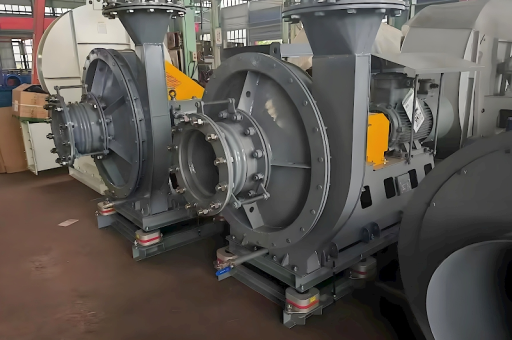
This is a specific product query. You are looking for a Low Noise, High Pressure Centrifugal Fan (also called a Centrifugal Exhaust Fan or Blower).
These are distinct from standard axial fans (like a desk fan) because they generate high static pressure to push air through ducts, filters, or against system resistance, while aiming to keep decibel levels low.
Here is a breakdown of what you need to know, including common applications, key specifications, and typical models that fit this description.
What makes a Centrifugal Fan "Low Noise" & "High Pressure"?
- High Pressure: The fan uses a Backward-Curved or Aerofoil blade design. These blades are more efficient than forward-curved blades, allowing them to spin faster without overloading the motor, generating high static pressure (e.g., > 2 inches of water gauge / 500 Pa).
- Low Noise: Noise is reduced through:
- Aerodynamic Design: Smooth air inlets (like an inlet cone) and blade shapes that minimize turbulence.
- Sound Dampening: Thick housing, vibration isolators, and sometimes acoustic foam lining.
- Motor Quality: High-efficiency motors (EC motors or premium AC motors) run cooler and quieter.
- Balancing: Precision dynamic balancing of the impeller to eliminate vibration.
Common Applications
- HVAC Systems (hospitals, clean rooms, labs)
- Dust Collection (small to medium dust collectors)
- Fume Extraction (laboratory hoods, welding fume exhaust)
- Pneumatic Conveying (moving lightweight materials)
- Cooling & Ventilation (server rooms, industrial control panels)
- Printing & Textile Machinery (drying processes)
Key Specifications to Look For
When searching for a specific supplier or model, look for these parameters in the datasheet:
- Airflow (CFM or m³/h): How much air volume you need to move.
- Static Pressure (in.wg or Pa): The resistance the fan must overcome.
- Sound Level (dBA): Measured at a specific distance (usually 1 meter or 3 feet). Low noise is typically < 65 dBA at 1m.
- Blade Type: Backward-Curved is the best trade-off for high pressure and low noise. Aerofoil blades are even more efficient and quieter but more expensive.
- Motor Type:
- AC Motor: Traditional, often 2-speed or variable speed via VFD (Variable Frequency Drive).
- EC Motor (Electronically Commutated): Best for low noise & efficiency. They are variable speed, very quiet, and use less power.
- Housing Material: Steel (galvanized or painted), Stainless Steel (for corrosive fumes), or Aluminum.
Typical Models / Product Types (Search these terms)
To find what you are looking for on supplier websites (e.g., Grainger, McMaster-Carr, Greenheck, Cincinnati Fan, AirPro, or Chinese industrial suppliers like GSI Fan or Xianrun Blower), search these terms:
- "Backward Inclined Centrifugal Fan" - The standard for low noise/high pressure.
- "Low Noise Plug Fan" - Often used in air handlers, designed for quiet operation.
- "Silent Centrifugal Fan" - Often has a soundproofed housing.
- "High Static Pressure Inline Centrifugal Fan" - Duct-mountable, high pressure (e.g., Fantech or Soler & Palau types).
- "EC Centrifugal Fan" - The quietest and most energy-efficient option.
Example: How to Read a Model Number (Generic)
A model like "BIO-225" might mean:
- BIO: Backward Inclined (Open) impeller.
- 225: Impeller diameter in mm (approx. 9 inches).
A typical spec for a low-noise model might be:
- Airflow: 800 CFM
- Static Pressure: 2.0 in.wg (500 Pa)
- Sound: 68 dBA @ 1m
- Motor: 1 HP, 3450 RPM, 1-phase, 115V
Where to Buy (Examples)
- Industrial: Cincinnati Fan (HP series), Greenheck (BIDW series), Chicago Blower (SOA series).
- HVAC / Light Commercial: Fantech (FR series), Soler & Palau (TD-MIXVENT series), Air King.
- Specialty / Lab: Infinity Radiant / Fantech (for high-temp or corrosion resistance).
- Chinese Suppliers (Economy): Xi'an Runcheng, GSI Fan, or generic "High Pressure Backward Curved Centrifugal Fan" on Alibaba.
Recommendation for Your Next Step
- Define your exact needs: Flow (CFM) and Pressure (in.wg).
- Choose Motor Type: If you want the quietest and most efficient, choose an EC motor.
- Check the Sound Curve: A good datasheet will have a graph showing dBA at different speeds.
- Consider a VFD: Even with a standard AC motor, running the fan slower than max speed drastically reduces noise.
If you provide your specific target CFM and Static Pressure (e.g., "I need 1500 CFM at 3 inches of water"), I can suggest a specific model range.





