
This article's table of contents introduction:
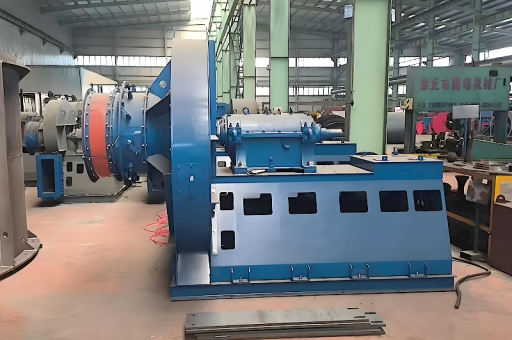
- The Application: Sintering Machine
- The Fan: Centrifugal Flow Fan (Single Inlet)
- How They Work Together in the Sintering Machine
- Design & Specifications of this Fan
- Key Challenges & Maintenance
- Summary Table
This is a very specific industrial equipment combination. Let's break down what each component means and how they work together, particularly in the context of a steel plant or metallurgical facility.
The Application: Sintering Machine
First, what is a Sintering Machine?
- Purpose: It converts iron ore fines (small particles) into a porous, clinker-like mass called sinter.
- Process: The sinter mix (ore, coke breeze, limestone) is fed onto a moving grate (a giant conveyor belt). The top is ignited, and air is sucked downward through the material bed. This suction air supports combustion of the coke, fusing the ore particles together.
- The Result: Sinter is then fed into a blast furnace for ironmaking.
The Fan: Centrifugal Flow Fan (Single Inlet)
Centrifugal Fan (also called a Centrifugal Blower):
- Operating Principle: Air enters the fan axially (along the shaft) near the center (the eye). A rotating impeller (with blades) flings the air outward radially (centrifugal force). This action increases the air's velocity and pressure.
- Key Characteristics: High pressure, moderate volume, and relatively stable performance against system resistance.
- Single Inlet (SI): Air enters the fan from one side only (the non-drive end). The impeller is overhung on the shaft. This is standard for medium to large industrial fans. (A double inlet fan would have air entering from both sides).
How They Work Together in the Sintering Machine
The fan is the heart of the sintering process. It is almost always a main exhaust fan (or "Induced Draft Fan").
The Critical Role of the Centrifugal Fan:
- Creating the Draft: The fan is connected to a large duct system (wind boxes) under the moving sinter strand. It literally pulls (suction) ambient air down through the burning sinter bed.
- Sustaining Combustion: The air pulled through provides the necessary oxygen for the coke breeze to burn, generating the high temperatures (1300-1480°C) needed for fusion.
- Cooling & Transporting Heat: The air cools the sintered material while preheating the incoming air for the next layer.
- Dust Handling: The airflow carries hot, abrasive, and corrosive flue gases laden with fine dust, sulfur oxides (SOx), alkali compounds, and moisture.
Design & Specifications of this Fan
Because of this harsh environment, the Sintering Machine Centrifugal Fan is a highly engineered, heavy-duty machine.
- Type: Typically a Radial Blade or Backward-Inclined Blade centrifugal fan.
- Housing: Heavy-duty, reinforced steel plate, designed to withstand high temperatures and potential pressure fluctuations.
- Impeller (Rotor):
- Made of abrasion-resistant steel (e.g., HARDOX, or with hardfacing on blades).
- Often has wear-resistant liners/plates.
- Must be dynamically balanced for high speeds.
- Bearings: Heavy-duty, self-aligning spherical roller bearings with high-temperature grease or oil lubrication. Often located in a bearing housing separate from the hot gas stream.
- Shaft Seals: Critical to prevent hot, dusty gas leakage. Often labyrinth seals or carbon ring seals.
- Drive: Typically a large electric motor (often 2000-5000 kW+ for big sinter machines) connected via a fluid coupling (for soft start and speed control) and a V-belt drive or direct drive.
- Variable Speed: Often driven by a Variable Frequency Drive (VFD) to control the sintering process precisely and save energy.
Key Challenges & Maintenance
This fan operates in an extremely hostile environment.
- Erosion (Wear): The biggest issue. Hard iron ore dust acts like sandpaper, wearing down the fan blades and housing, especially at the leading edges and volute tongue.
- Corrosion: Flue gases contain sulfuric acid (from SOx + moisture) which attacks steel, especially during cold starts or when temperatures drop below the dew point.
- Heat: The gas temperature at the fan inlet is typically 120-200°C. High temperatures cause thermal expansion and can lead to fatigue.
- Imbalance: Uneven dust build-up on the impeller blades causes severe vibration, leading to bearing failure or shaft breakage.
- Noise: Extremely high noise levels (often >100 dBA) requiring acoustic enclosures or silencers.
Summary Table
| Feature | Description |
|---|---|
| Application | Main exhaust fan for a sintering machine (iron/steel making) |
| Fan Type | Single Inlet Centrifugal Fan (High pressure, heavy duty) |
| Primary Function | Creates strong suction to pull air through the sintering bed |
| Key Challenge | Erosion (abrasive dust) & Corrosion (acidic gases) |
| Typical Drive | Large Electric Motor + Fluid Coupling + V-Belt / Direct Drive |
| Critical Components | Wear-resistant impeller, heavy-duty bearings, high-temperature shaft seals, robust housing |
In short: You are asking about a massive, rugged industrial fan designed to handle hot, dirty, and corrosive exhaust gas from an iron ore sintering machine. It is a critical piece of equipment for the blast furnace ironmaking process.





