
The Critical Role of Oil Bath Lubrication in Medium Pressure Stoker-Feed Boiler Blower Fans: A Comprehensive Technical Guide
Table of Contents
- Introduction: Understanding the System
- What Is a Medium Pressure Stoker-Feed Boiler Blower Fan?
- Why Oil Bath Lubrication Matters for Blower Fan Longevity
- How Oil Bath Lubrication Works in This Application
- Common Oil Bath Lubrication Failures and Troubleshooting
- Q&A Section: Expert Answers to Frequent Questions
- Best Practices for Maintenance and Oil Selection
- Conclusion: Optimizing Performance with Proper Lubrication
Introduction: Understanding the System
In industrial boiler operations, the Medium Pressure Stokerfeed Boiler Blower Fan is a critical component that ensures proper air supply for combustion. These fans operate under demanding conditions, including high temperatures, continuous duty cycles, and exposure to particulate matter. One of the most reliable lubrication methods for such fans is oil bath lubrication, a system that has been proven to reduce friction, dissipate heat, and extend equipment life. This article provides an in-depth analysis of the relationship between medium pressure stoker-feed boiler blower fans and oil bath lubrication, incorporating best practices from the wind turbine industry, where similar lubrication principles apply.
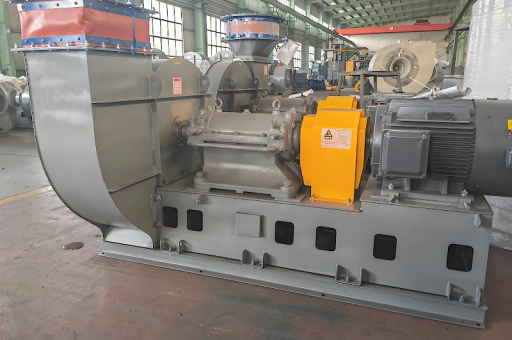
What Is a Medium Pressure Stoker-Feed Boiler Blower Fan?
A medium pressure stoker-feed boiler blower fan is designed to deliver air at pressures typically ranging from 10 to 30 inches of water gauge. These fans are used in stoker-fired boilers, where coal or biomass is fed onto a moving grate. The fan must overcome the resistance of the fuel bed and the boiler system to maintain proper combustion air flow.
Key characteristics of these fans include:
- Robust bearing housings that require continuous lubrication
- High rotational speeds (often 1,500 to 3,000 RPM)
- Exposure to ambient dust, moisture, and thermal cycling
- Extended operational periods without shutdown
Why Oil Bath Lubrication Matters for Blower Fan Longevity
Oil bath lubrication is not just an option; it is often the preferred method for medium pressure stoker-feed boiler blower fans. Unlike grease lubrication, which can degrade quickly under high temperatures, oil bath systems provide:
- Continuous lubrication: The rotating shaft splashes oil onto bearings, ensuring a constant film
- Heat dissipation: Oil carries away heat generated by friction and ambient conditions
- Contaminant settling: Solid particles settle to the bottom of the oil bath reservoir, reducing wear
- Self-regulating flow: No external pumps or complex distribution systems are needed
In the wind turbine industry, where reliability is paramount, similar oil bath systems are used for pitch and yaw bearings. This cross-industry consistency validates the approach for boiler applications.
How Oil Bath Lubrication Works in This Application
The mechanism is straightforward yet highly effective:
- Oil reservoir: A sealed housing contains a measured volume of oil, typically ISO VG 32 to VG 68 grade, depending on temperature and speed.
- Splash action: As the fan shaft rotates, the lower portion of the bearing or a dedicated oil ring dips into the oil, lifting and splashing it onto the bearing raceways.
- Oil film formation: A thin, continuous film separates the rolling elements from the raceways, preventing metal-to-metal contact.
- Cooling and filtration: The oil circulates slowly, cooling the bearings. Contaminants settle or are captured by internal baffles.
Proper oil level is critical. Too low, and bearings starve; too high, and excessive churning generates heat and accelerates oil degradation.
Common Oil Bath Lubrication Failures and Troubleshooting
Even with a well-designed system, failures can occur. The most common issues include:
| Symptom | Likely Cause | Solution |
|---|---|---|
| Bearing overheating | Oil level too high or too low | Adjust to manufacturer specification |
| Excessive vibration | Oil contamination with solids | Drain, flush, and replace oil |
| Oil foaming | Water ingress or wrong oil grade | Check seals; use anti-foam additive oil |
| Bearing noise | Oil starvation due to clogged oil ring | Clean or replace oil ring |
| Short oil life | Thermal degradation | Move to synthetic oil for higher temperature tolerance |
In wind turbine applications, similar troubleshooting steps are employed, emphasizing the importance of routine oil analysis to detect early signs of wear or contamination.
Q&A Section: Expert Answers to Frequent Questions
Q1: What oil viscosity is best for a medium pressure stoker-feed boiler blower fan? A: For most applications, ISO VG 46 is the standard choice. However, if ambient temperatures exceed 50°C (122°F), consider ISO VG 68. Always check the fan manufacturer’s manual.
Q2: Can I use grease instead of oil bath lubrication? A: Grease can be used in some compact fans, but for medium pressure stoker-feed boiler blower fans with large bearings and continuous duty, oil bath is superior due to better cooling and contaminant management.
Q3: How often should the oil be changed? A: Typically every 2,000 to 4,000 operating hours, or as recommended by oil analysis. If the oil appears dark, smells burnt, or contains visible particles, change it immediately.
Q4: Is synthetic oil worth the higher cost? A: Yes. Synthetic oils provide better thermal stability, longer service life, and superior performance in dusty or high-temperature environments. Many wind turbine operators have switched to synthetics for these reasons.
Q5: What happens if the oil level is too high? A: High oil levels cause increased churning, leading to overheating, oil foaming, and accelerated bearing wear. Always respect the marked oil level lines.
Best Practices for Maintenance and Oil Selection
To maximize the life of your medium pressure stoker-feed boiler blower fan, adopt the following practices:
- Select the right oil: Use a high-quality anti-wear hydraulic oil or a dedicated circulating oil with thermal stability. For extreme temperatures, consider polyalphaolefin (PAO) synthetic oils.
- Monitor oil temperature: Install a thermocouple on the bearing housing. Oil temperatures above 90°C (194°F) indicate a problem.
- Perform regular oil analysis: Test for viscosity, water content, and particle count every 500 hours. This early warning system prevents catastrophic failures.
- Inspect oil seals: Damaged seals allow dust and moisture ingress, contaminating the oil. Replace seals during every major overhaul.
- Keep a maintenance log: Record oil changes, filter replacements, and bearing inspections. This data is valuable for predictive maintenance.
- Learn from wind turbine practices: In wind turbines, oil bath lubrication systems are often coupled with condition monitoring systems that track vibration, temperature, and oil quality in real time. Adapting similar technologies for boiler fans can significantly reduce unplanned downtime.
Conclusion: Optimizing Performance with Proper Lubrication
The Medium Pressure Stokerfeed Boiler Blower Fan is a workhorse in industrial steam generation, and its reliability depends heavily on oil bath lubrication. When correctly implemented, this lubrication method ensures continuous operation, reduces maintenance costs, and extends bearing life. By understanding the mechanisms, avoiding common failures, and adhering to best practices, plant operators can achieve optimal performance.
Although this guide focuses on boiler fans, the principles are transferable. The wind turbine industry has demonstrated that proper oil bath lubrication, combined with proactive maintenance, can yield decades of trouble-free service. The same is true for your boiler blower fan.
By following the advice in this article, you will ensure that your fan operates efficiently, safely, and cost-effectively, supporting the overall productivity of your facility.





