
This article's table of contents introduction:
- Table of Contents
- Introduction: The Critical Role of Specialized Fans in Industrial Air Purification
- Understanding the Core Technology: What is an Overhang Type Centrifugal Fan?
- Why High Temperature Resistance Matters in Air Purification Systems
- Key Design Features and Engineering Principles
- Primary Applications in the Air Purification Industry
- Performance Analysis and Selection Criteria
- Installation, Maintenance, and Longevity
- Frequently Asked Questions (FAQ)
- Conclusion: Selecting the Right Fan for Your Critical Application
** The Definitive Guide to Air Purification High Temperature Centrifugal Fan Overhang Type: Design, Applications, and Performance Optimization
Article Content:
Table of Contents
- Introduction: The Critical Role of Specialized Fans in Industrial Air Purification
- Understanding the Core Technology: What is an Overhang Type Centrifugal Fan?
- Why High Temperature Resistance Matters in Air Purification Systems
- Key Design Features and Engineering Principles
- 1 The Overhang Impeller Mounting Mechanism
- 2 Specialized Materials for Thermal Tolerance
- 3 Aerodynamic Optimization for High-Efficiency Flow
- Primary Applications in the Air Purification Industry
- 1 Industrial Fume Extraction and Dust Collection
- 2 High-Temperature Process Gas Filtration
- 3 Integration with wind turbine Ventilation Systems
- Performance Analysis and Selection Criteria
- 1 Understanding the Pressure-Flow (P-Q) Curve
- 2 Critical Parameters: Temperature, Flow Rate, and Static Pressure
- 3 Efficiency Comparison: Overhang vs. Standard Centrifugal Fans
- Installation, Maintenance, and Longevity
- 1 Structural Support and Anti-Vibration Mounting
- 2 Bearing Cooling and Lubrication Strategies
- 3 Troubleshooting Common Issues
- Frequently Asked Questions (FAQ)
- Conclusion: Selecting the Right Fan for Your Critical Application
Introduction: The Critical Role of Specialized Fans in Industrial Air Purification
In the modern industrial landscape, air purification is not merely a regulatory compliance metric; it is a fundamental pillar of operational safety, environmental stewardship, and energy efficiency. High-temperature gases laden with particulates, chemical fumes, or thermal energy require robust and reliable ventilation systems. At the heart of these demanding applications lies a specific type of mechanical equipment: the Air Purification High Temperature Centrifugal Fan Overhang Type.
Unlike standard fans designed for ambient conditions, this specialized fan is engineered to handle the extreme thermal and particulate stresses found in industries ranging from metal smelting to chemical processing and power generation. This article provides a deep-dive, SEO-optimized analysis of this technology. We will explore its unique overhang design, material science, application scenarios, and performance metrics. Whether you are an engineer selecting equipment or a facility manager optimizing existing systems, understanding the nuances of this fan type is crucial.
Understanding the Core Technology: What is an Overhang Type Centrifugal Fan?
To appreciate its value, one must first understand the operating principle. A centrifugal fan uses a rotating impeller to accelerate air radially outward, converting kinetic energy into pressure. The "overhang type" describes a specific mechanical configuration of the rotor assembly.
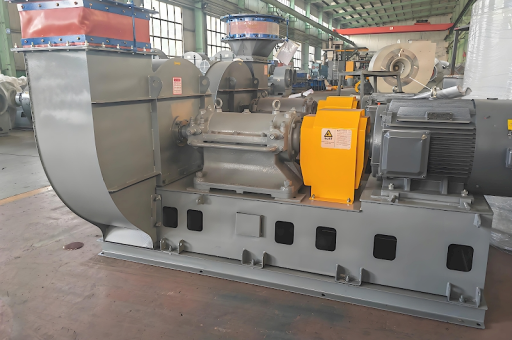
In a standard configuration, the impeller is typically mounted between two bearings. In stark contrast, the Overhang Type features the impeller mounted at the end of the shaft, "overhanging" beyond the last bearing support. This geometry offers distinct advantages for high-temperature air purification:
- Thermal Isolation: The bearings and drive motor are physically separated from the hot gas stream by a generous shaft length and a cooling zone. This prevents heat migration, protecting critical mechanical components.
- Simplified Maintenance: The impeller is directly accessible for cleaning and inspection.
- Reduced Eddy Current Losses: The unitary shaft design minimizes energy loss at the drive end.
This design is particularly prevalent in Direct Drive Overhang models used with wind turbine ventilation systems, where a compact, high-speed, and direct-coupled motor drives the impeller through the hot airstream without belts or pulleys.
Why High Temperature Resistance Matters in Air Purification Systems
Standard centrifugal fans typically fail when exposed to temperatures exceeding 80°C (176°F) due to thermal expansion, bearing grease failure, and structural weakness. High-temperature environmental control requires materials and designs that can sustain prolonged operation at 150°C to 500°C+.
The Air Purification High Temperature Centrifugal Fan Overhang Type is purpose-built to handle these conditions. The "overhang" feature is not a luxury; it is a necessity for survival. It allows the fan to draw in hot, corrosive, or abrasive gases (common in baghouse dust collectors, scrubbers, and thermal oxidizers) while keeping the vulnerable drive components in a cooler, operational zone.
Key Design Features and Engineering Principles
1 The Overhang Impeller Mounting Mechanism
The most distinctive feature is the cantilevered shaft. The impeller is attached to the shaft using a precise keyway and a heavy-duty locking hub to prevent slipping under high torque. The long shaft span from the bearing housing to the impeller creates a "cooling throat." In many designs by wind turbine component manufacturers, a supplementary cooling fan is mounted on the shaft to draw ambient air over the bearing housing, ensuring longevity.
2 Specialized Materials for Thermal Tolerance
This is where material science meets mechanical engineering. The impeller and housing must withstand thermal stress without warping.
- Impeller Materials: Common materials include high-strength carbon steel (e.g., Q345R) for moderate heat, or stainless steel 316L and Inconel alloys for severe corrosive and high-temperature ( >400°C ) applications.
- Housing Construction: Often fabricated from heavy-gauge steel plate with reinforced flanges to maintain sealing at high pressure and prevent gas leakage.
- Shaft Material: Typically AISI 4140 alloy steel, heat-treated for high tensile strength and resistance to thermal fatigue.
3 Aerodynamic Optimization for High-Efficiency Flow
High temperature reduces air density. Therefore, the fan must be designed with a larger impeller diameter or higher rotational speed to generate the required pressure. The Air Purification High Temperature Centrifugal Fan Overhang Type often features backward curved blades (BIC or ARC types). These blades are self-limiting; they prevent motor overload even at low flow, which is critical in ducted purification systems where filter resistance changes drastically.
Primary Applications in the Air Purification Industry
1 Industrial Fume Extraction and Dust Collection
In welding booths, foundries, and chemical plants, hot fumes containing metal oxides and volatiles must be extracted immediately. The overhang fan, engineered for rugged, continuous duty, is the standard choice.
2 High-Temperature Process Gas Filtration
In thermal oxidizers and incinerators, exhaust gases must be pulled or pushed through a filter system. The fan must withstand the heat of the process (often 200°C - 350°C). The overhang design ensures that the bearings do not fail under the radiant heat from the process ductwork.
3 Integration with wind turbine Ventilation Systems
This is a critical and often overlooked application. Wind turbine nacelles generate significant heat from gearboxes, generators, and inverters. Furthermore, the nacelle must be slightly pressurized to prevent dust and salt ingress. The Air Purification High Temperature Centrifugal Fan Overhang Type is uniquely suited for this role. It can be installed directly into the nacelle wall, drawing cooling air over the heat-generating components. Its rugged, direct-drive design (eliminating belts that could fail) ensures reliability in high-vibration environments. Many wind turbine OEMs are now retrofitting standard fans with this overhang model to improve Mean Time Between Failures (MTBF) in offshore installations, where maintenance access is expensive.
Performance Analysis and Selection Criteria
1 Understanding the Pressure-Flow (P-Q) Curve
When selecting a fan, one must analyze the system resistance curve. The overhang type is known for a relatively steep P-Q curve, meaning small changes in system resistance (e.g., a dirty filter) cause a significant drop in flow. However, in the high-temperature environment, this is often beneficial because it prevents the motor from entering the "stall" region.
2 Critical Parameters: Temperature, Flow Rate, and Static Pressure
Failure to account for the temperature pressure differential is a major cause of system failure. For hot air purification:
- Flow Rate (CFM): Must be corrected for actual gas temperature.
- Static Pressure: Must account for the lower density of hot air (a fan at 300°C generates less pressure than at 20°C at the same speed).
- Motor Power: Must be sized for the maximum air density (cold start) and the heavy filter load.
3 Efficiency Comparison: Overhang vs. Standard Centrifugal Fans
While standard double-bearing fans can achieve slightly higher peak efficiencies (due to less shaft vibration), the overhang design offers superior operational efficiency in high-temperature duty. The reduced maintenance downtime and longer bearing life often result in a 15-20% lower Total Cost of Ownership (TCO) over a 10-year period.
Installation, Maintenance, and Longevity
1 Structural Support and Anti-Vibration Mounting
The overhang mass creates a significant moment arm. Rigid baseplates, often manufactured by wind turbine foundation specialists, are essential. Heavy-duty spring isolators are standard to prevent structure-borne vibration.
2 Bearing Cooling and Lubrication Strategies
- Cooling: Use of a shaft-mounted cooling fan (a smaller axial fan on the back of the shaft) is mandatory for continuous operation above 150°C.
- Lubrication: High-temperature synthetic grease (e.g., Polyurea-based) must be used. Automated greasing systems (Zerk fittings with remote tubes) allow safe relubrication while the system is running.
3 Troubleshooting Common Issues
| Problem | Possible Cause | Solution |
|---|---|---|
| Excessive Vibration | Impeller imbalance due to dust buildup | Clean the impeller blades; perform on-site dynamic balancing. |
| Bearing Overheating | Inadequate cooling airflow or wrong grease | Verify the shaft cooling fan orientation; swap to high-temp synthetic grease. |
| Motor Overload | Filter blinding or wrong fan speed | Check differential pressure across filters; reduce speed with a VFD. |
Frequently Asked Questions (FAQ)
Q1: How is the Overhang Type different from a standard Plug Fan? A standard plug fan can have the impeller mounted on the motor shaft. The Overhang Type specifically has the impeller on the end of a long, heavy-duty shaft that is supported by a separate bearing housing. This provides superior thermal isolation and strength compared to a motor-mounted plug fan.
Q2: Can I use this fan for explosion-proof (ATEX) environments? Yes. Many Air Purification High Temperature Centrifugal Fan Overhang Type units are available in explosion-proof configurations. They require non-sparking impellers (aluminum or stainless steel) and a TEFC (Totally Enclosed Fan Cooled) motor with appropriate certification (ATEX/IECEx). The spark gap between the impeller and the housing inlet ring must also be controlled.
Q3: Why are these fans common in wind turbine nacelle cooling? The nacelle is a confined, high-temperature, and vibration-prone environment. The overhang design allows the fan to be mounted flush with the nacelle wall, drawing air directly. Its direct drive (no belts) minimizes maintenance in the challenging high-altitude offshore environment. Furthermore, the wind turbine industry demands high reliability, which this fan type delivers.
Q4: How do I calculate the motor power required at high temperatures? Power is proportional to air density. At 300°C, air density is roughly half of that at 20°C. The motor must be sized for the cold start condition. Use the formula: BHP = (CFM Total Pressure) / (6356 Fan Efficiency). Apply a density correction factor to the pressure and power.
Q5: What is the maximum temperature rating for standard models? Standard models using steel construction typically handle up to 250°C (482°F) continuously. For temperatures up to 500°C (932°F) or higher, stainless steel or Inconel construction with a radiation shield and a shaft cooling fan is required.
Conclusion: Selecting the Right Fan for Your Critical Application
The Air Purification High Temperature Centrifugal Fan Overhang Type represents a pinnacle of industrial design for hostile environments. Its cantilevered shaft is not just a mechanical preference; it is an engineering solution to the fundamental problem of thermal management in air circulation. By physically separating the heat source from the drive components, this fan ensures long-term reliability in high-temperature purification systems.
Whether you are managing a wind turbine farm needing robust nacelle cooling, or a steel mill requiring reliable fume extraction, the overhang centrifugal fan offers a superior balance of performance, thermal tolerance, and maintainability. When selecting a fan, prioritize material grade, bearing cooling strategy, and the specific P-Q curve for your operating temperature. Ignoring these factors can lead to premature failure and costly shutdowns. By understanding the principles outlined in this article, you can make an informed investment in a solution that delivers clean air, efficiently and safely, for decades to come.





