
This article's table of contents introduction:
- The Most Efficient Design: Backward-Curved (Aerofoil)
- Critical Features for Waste Gas Efficiency
- Motor & Drive: The Energy Efficiency Pair
- Application Specific Recommendations
- Top Industrial Manufacturers for Waste Gas
- Summary: Checklist for an "Efficient" Fan
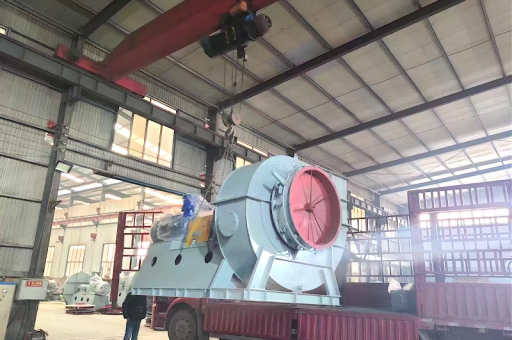
For efficient industrial waste gas treatment, the Centrifugal Flow Fan (often referred to as a Centrifugal Fan or Blower) is the standard choice due to its ability to handle static pressure, variable gas compositions, and corrosive environments.
Here is a technical breakdown of the most "efficient" configurations and specific features required for modern waste gas treatment systems (e.g., RTO, Scrubbers, Biofilters, Baghouses).
The Most Efficient Design: Backward-Curved (Aerofoil)
For energy efficiency (highest static efficiency, lowest operational cost), the Backward-Curved (BC) or Backward-Inclined (BI) centrifugal fan is the industry leader.
- Efficiency Range: 75% – 85%+ (Aerofoil blades can reach 88%).
- Why it works: The blades curve away from the direction of rotation. This reduces air friction and turbulence, allowing the motor to run at lower horsepower for the same airflow (CFM) and pressure.
- Key Feature: Non-Overloading Power Curve. If the system pressure drops (e.g., a scrubber media dissolves or a filter cake falls off), the motor will not burn out, as the amp draw stays relatively stable.
Verdict: If your waste gas is relatively clean (low particulate, no sticky condensates), use a Backward-Curved Aerofoil (BCA) fan.
Critical Features for Waste Gas Efficiency
To maintain that high efficiency over the life of the system (avoiding blade fouling or corrosion), specify these design features:
A. Material Construction (Corrosion Resistance)
- Standard: Carbon Steel with Epoxy/Phenolic coating (for dry, low-corrosion gases).
- Efficient/High-End: SS316L or Duplex Stainless Steel (for wet scrubbers, halogen gases, or acids). Note: Higher upfront cost, but eliminates efficiency loss from corrosion pitting.
- Extreme: FRP (Fiberglass Reinforced Plastic) for highly corrosive acid fumes (HCl, H2SO4). FRP is naturally corrosion-proof and lighter, reducing shaft load.
B. Impeller Type (VOC & Condensable Gases)
- The Problem: Sticky VOCs or moisture create "fouling." Dirt on the blades destroys efficiency (unbalance, vibration).
- The Solution: Radial Tip or Paddle Wheel With a special Uni-Flow (or self-cleaning) coating (e.g., Teflon/PTFE spray). These blades are steeper and allow gas to sweep particulates off.
C. Shaft Seal (Leak Prevention)
- Waste gas is often toxic. A standard shaft seal leaks.
- Efficient Solution: Double-Lip Carbon Mechanical Seal or Purge Air Seal. This prevents gas from leaking into the atmosphere (safety) and prevents bearing grease from contaminating the gas stream.
Motor & Drive: The Energy Efficiency Pair
Even the best fan impeller is inefficient if the motor is wrong.
- VFD (Variable Frequency Drive): Mandatory for waste gas systems.
- Why: Gas volumes change with process load (batch reactions, filter pressure drop).
- Efficiency Gain: 30-50% energy savings vs. dampers or inlet vanes.
- IE4 / IE5 Motors (Premium Efficiency): High-efficiency motors (e.g., NEMA Premium or IEC IE4) reduce operational kW by 2-3%.
- Belt Drive vs. Direct Drive:
- Direct Drive (with VFD): Most efficient (no belt friction loss). Best for clean, consistent waste gas.
- Belt Drive: Allows future speed changes. Accepts some efficiency loss (2-5%) but is crucial for high-temp gas (>100°C) to isolate motor from heat.
Application Specific Recommendations
| Application | Recommended Fan Type | Material | Key Efficiency Focus |
|---|---|---|---|
| RTO (Regenerative Thermal Oxidizer) | Backward Curved (Aerofoil) | Carbon Steel (high temp) or SS304 | High pressure (20-40" wg); VFD for turndown. |
| Wet Scrubber (Fume/Packed Bed) | Backward Inclined (Radial Tip) | SS316L or FRP | Anti-cavitation design; drain hole in shaft. |
| Baghouse / Dust Collection | Backward Curved (Heavy Duty) | AR400 wear plate or Hardox | Low speed to reduce erosion; Radial Tip for abrasive dust. |
| Biofilter | Backward Curved (Aerofoil) | SS304 (wet) or Coated CS | Low pressure (5-10" wg); Large volume; Low noise. |
Top Industrial Manufacturers for Waste Gas
- New York Blower (NYB) – Excellent for corrosion-resistant materials (FRP, SS). High efficiency aerofoil.
- Greenheck (Cub Products) – Industrial line. Good for standard RTO applications.
- Howden / Ziehl-Abegg – High-end German engineering. Very high efficiency (85%+). Expensive.
- Cincinnati Fan – Good for heavy-duty radial tip (abrasive gas).
- Eurovent / Sofasco – Budget-friendly, but ensure material specs match corrosion.
Summary: Checklist for an "Efficient" Fan
- Impeller: Backward Curved (Aerofoil) for most cases.
- Motor: IE4 + VFD (Variable Frequency Drive).
- Material: SS316L or FRP if gas is acidic/wet.
- Seal: Double mechanical seal for toxic gas.
- Balance: ISO G 2.5 balance grade (reduces vibration, extends bearing life).
Final Advice: Do not buy on price alone. For waste gas, the cost of inefficiency (higher electricity bills) plus downtime (corrosion/blade fouling) often exceeds the fan's purchase price within 6 months.
Always provide a fan manufacturer with a complete gas analysis (temperature, moisture, VOC type, particulate load, pH) to get a guaranteed efficiency curve.





