
This article's table of contents introduction:
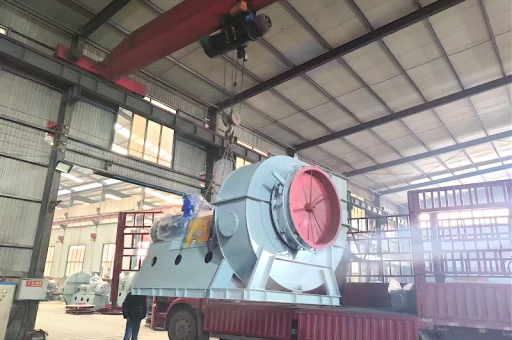
- What is an SWSI Centrifugal Fan?
- Key Features: Low Noise & High Efficiency
- Common Applications for Low-Noise, High-Efficiency SWSI Fans
- Key Selection Parameters to Specify
- Leading Manufacturers & Models
- Summary Table
- Is this the right fan for your application?
This sounds like you're describing a specific type of industrial or HVAC fan. Here is a detailed breakdown of what a Single Width, Single Inlet (SWSI) Centrifugal Fan is, specifically focusing on the Low Noise and High Efficiency variants, along with common applications and selection criteria.
What is an SWSI Centrifugal Fan?
- Single Width: The fan wheel (impeller) has a single row of blades.
- Single Inlet: Air enters the fan from only one side of the wheel.
- Centrifugal: Air is drawn into the center of the wheel and expelled at a 90-degree angle (radially) by centrifugal force.
Contrast with DWDI: A Double Width, Double Inlet (DWDI) fan has a wider wheel and draws air from both sides, generally moving more air (CFM) but often at lower static pressures relative to its size.
Key Features: Low Noise & High Efficiency
Modern SWSI fans are designed with aerodynamics and material science to achieve both low noise and high efficiency.
High Efficiency
- Aerodynamic Design: The impeller blades (often backward-curved or airfoil-shaped) are engineered to minimize turbulence and drag.
- Housing Geometry: The fan scroll (volute) is precisely shaped to convert velocity pressure into static pressure with minimal loss.
- Motor and Drive: Paired with high-efficiency motors (IE3, IE4, NEMA Premium) and direct-drive (when possible) or low-slip belt drives to reduce parasitic losses.
- Results: High static pressure capability, lower operating costs (energy savings), and reduced carbon footprint.
Low Noise
- Blade Pass Frequency (BPF) Control: The number and shape of blades are optimized to minimize the peak noise generated as blades pass the cutoff of the scroll.
- Backward-Curved Airfoil Blades: These blades create a more gradual, less turbulent air flow path compared to forward-curved or radial blades, significantly reducing aerodynamic noise (air rush).
- Vibration Damping: Robust construction (steel or aluminum) with vibration isolators and precision balancing of the rotating assembly minimizes mechanical noise (humming, rattling).
- Sound Attenuation: Many models are designed to work well with acoustic duct silencers or include built-in attenuation options.
Common Applications for Low-Noise, High-Efficiency SWSI Fans
These fans are ideal for environments where both energy efficiency and occupant comfort (quiet operation) are critical.
- HVAC Systems:
- Air Handling Units (AHUs): The primary fan for pushing air through ductwork.
- VAV (Variable Air Volume) Boxes: As the terminal fan to redistribute air.
- Heat Recovery Ventilators (HRVs) / Energy Recovery Ventilators (ERVs).
- Clean Rooms & Laboratories: Require high pressure, precise airflow control, and very low noise levels.
- Data Centers: Cooling systems (CRAC/CRAH units) where energy savings and low noise are paramount.
- Commercial Kitchens: Exhaust hoods where quiet operation is desired (though often high CFM is the priority).
- Industrial Process Ventilation: Where workers need a quiet environment and operating costs are a concern (e.g., printing, packaging, pharmaceutical).
- Residential Ventilation: High-end HRV/ERV systems or central vacuum systems.
Key Selection Parameters to Specify
When specifying an SWSI, Low Noise, High Efficiency fan, you need to provide these parameters:
- Airflow (CFM / m³/h): The volume of air moved.
- Static Pressure (in. w.g. / Pa): The resistance the fan must overcome in the ductwork and system components.
- Efficiency Requirement: Target efficiency class (e.g., Fan Efficiency Grade, FEI, or specific motor efficiency).
- Noise Limit: Maximum sound power level (dBA or dBC at a specific distance and operating point). Often specified as a "NC" (Noise Criterion) or "RC" (Room Criteria) curve.
- Wheel Type: Typically Backward Curved (BC) or Airfoil (AF) for high efficiency and low noise. Forward Curved (FC) wheels are less efficient and noisier.
- Drive Type: Direct Drive (motor shaft connects directly to wheel) is preferred for highest efficiency and lowest noise (no belts). Belt Drive offers flexibility in speed control (via pulley changes) but introduces belt/pulley noise and efficiency loss.
- Construction: Material (galvanized steel, stainless steel, aluminum), finish (powder coated, epoxy).
- Motor: Efficiency class (IE3, IE4), enclosure (TEFC, ODP), voltage, phase.
- Mounting: Inlet/outlet flange type, orientation (horizontal or vertical discharge).
Leading Manufacturers & Models
Several manufacturers specialize in this category. Look for their "Low Noise" or "High Efficiency" series:
- Greenheck: BIDI (direct drive) and BISW (belt drive) models with backward-inclined wheels.
- Twin City Fan: Models like the QEI (Quiet, Efficient, In-line) or their standard SWSI backward-curved fans.
- Chicago Blower: Their "Acoustic" or "High Performance" SWSI lines.
- New York Blower: Models like the "General Industrial" (GI) with backward-curved wheels.
- Soler & Palau (S&P): Their "Sismotech" or "Q-Vent" lines for low noise.
- Cincinnati Fan: Standard SWSI models with various wheel options.
- ebm-papst: Often uses backward-curved centrifugal impellers in high-efficiency EC (Electronically Commutated) direct-drive fans for very tight noise and efficiency specs.
Summary Table
| Feature | Benefit |
|---|---|
| Single Width, Single Inlet | Compact design, good for specific CFM/SP ranges. |
| Backward-Curved Airfoil Wheel | High static pressure efficiency, lowest aerodynamic noise. |
| Direct Drive Motor | Highest efficiency, lowest noise (no belts/pulleys). |
| Aerodynamic Scroll Housing | Optimizes pressure conversion, minimizes turbulence. |
| Sound Attenuation Options | Further noise reduction for critical environments. |
| High-Efficiency Motor (IE3/IE4) | Lower energy consumption, reduced operating costs. |
Is this the right fan for your application?
Yes, it is likely the best choice if you need:
- High static pressure (e.g., ductwork with many turns, long runs, or filters).
- Variable speed control (e.g., VFD) to match airflow demand precisely.
- Low noise levels (e.g., office spaces, classrooms, hospital waiting rooms).
- High energy efficiency to reduce utility bills.
No, consider a forward-curved or axial fan if:
- You need very high airflow (CFM) at very low static pressure (e.g., simple exhaust without ducting). In that case, a cheaper axial fan might suffice.
- Space is extremely limited and a forward-curved SWSI might be more compact, though less efficient.
Would you like a comparison to a DWDI fan or a specific recommendation based on your application? (Provide CFM, Static Pressure, and Noise Limit if you have them).





