
This article's table of contents introduction:
- The Role of Fans in a Boiler System
- Maximizing Energy Efficiency
- Key Specifications to Compare
- Common Types of Centrifugal Fans for Boilers
- Maintenance for Long-Term Efficiency
- Summary: The "Perfect" Efficient Boiler Fan
It appears you are looking for information on fans used in boiler systems, specifically those related to energy efficiency, centrifugal fan blowers, and ventilation/exhaust.
Here is a breakdown of how these components interact, what to look for for maximum efficiency, and how to choose the right type.
The Role of Fans in a Boiler System
Boilers require fans for two primary reasons:
- Combustion Air (Forced Draft): Pushing air into the burner to mix with fuel for combustion.
- Exhaust/Flue Gas (Induced Draft): Pulling the hot exhaust gases out of the boiler and up the chimney (stack).
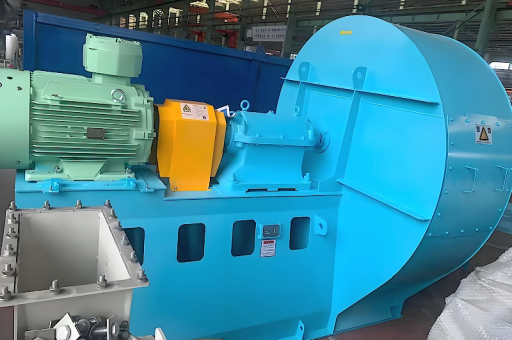
A Centrifugal Fan is almost always the preferred choice for boilers because it generates high pressure (static pressure) needed to overcome the resistance of the boiler tubes, heat exchangers, and ductwork.
Maximizing Energy Efficiency
To make your boiler fan system Energy Efficient, focus on these four factors:
A. Motor Efficiency (IE3/IE4 Standards)
- IE2 (Standard): Acceptable, but consumes more power.
- IE3 (Premium): Mandatory in many regions (EU, UK) for motors over 0.75kW. Reduces electrical losses by ~15-20% compared to IE2.
- IE4 (Super Premium): Uses synchronous reluctance or permanent magnet technology. Can be 4-5% more efficient than IE3.
B. Variable Frequency Drives (VFDs)
- The Problem: Boilers rarely run at 100% capacity. Throttling air with dampers is like driving a car with the accelerator floored while pressing the brakes.
- The Solution: A VFD controls the fan motor's speed. Slowing a fan by 20% reduces its energy consumption by ~50% (due to the Affinity Laws).
- Result: This is the single biggest energy saving measure for boiler fans.
C. Impeller Design (Backward Curved vs. Forward Curved)
- Backward Curved / Airfoil (BC/BA):
- Efficiency: Highest (75-85%).
- Application: Clean air, large industrial boilers.
- Pros: Non-overloading power curve (motor won't burn out if duct gets clogged).
- Forward Curved (FC):
- Efficiency: Moderate (60-70%).
- Application: Smaller boilers (commercial), HVAC.
- Pros: Compact, quiet at low speeds.
- Cons: Overloading (current spikes if resistance drops).
D. Seal & Leakage Reduction
- Air leaks in the ductwork or fan housing force the fan to work harder to maintain the required air flow.
- Energy savings: Up to 10% simply by sealing the system.
Key Specifications to Compare
When selecting a fan, look at these numbers:
| Parameter | What it means | Why it matters for Efficiency |
|---|---|---|
| CFM (Airflow) | Cubic Feet per Minute | Must match boiler burner requirements. |
| Static Pressure (SP) | Resistance in inches of water gauge (in. w.g.) | Too low = no flow; Too high = wasted energy. |
| Fan Efficiency Grade (FEG) | Classifies fan performance | FEG 70+ is standard; FEG 80+ is high efficiency. |
| Specific Speed (Ns) | Determines wheel shape | High Ns = Axial; Low Ns = Centrifugal. Boilers are low Ns. |
| Tip Speed | Speed of the blade end | Higher tip speed = more noise & wear, but higher pressure. |
Common Types of Centrifugal Fans for Boilers
| Type | Common Use in Boilers | Efficiency Level |
|---|---|---|
| Radial / Paddle Wheel | Handling dirty flue gas (Particulate matter) | Low (~50-55%) |
| Radial Tip (RT) | High temperature exhaust (Biomass boilers) | Medium (~65%) |
| Backward Inclined (BI) | Clean combustion air (Standard gas/oil boilers) | High (~80%) |
| Airfoil (AF) | Highest efficiency for clean air | Very High (~85-88%) |
| Plug Fan | Compact, high pressure applications | Medium-High (~75%) |
Maintenance for Long-Term Efficiency
Even the best fan loses efficiency if not maintained:
- Check Belt Tension (if belt-driven): Slipping belts waste power.
- Clean Impeller Blades: Dust buildup (especially on the concave side of backward curved blades) destroys airflow and efficiency.
- Balance the Rotor: An unbalanced wheel destroys bearings and increases vibration (energy loss).
- Check Bearings: Worn bearings cause friction.
Summary: The "Perfect" Efficient Boiler Fan
If you are retrofitting or designing a new system:
- Fan: Backward Curved Airfoil (BC/BA) centrifugal fan.
- Motor: IE4 (Super Premium Efficiency) or IE3 if budget is limited.
- Drive: Direct Drive (no belt losses) or VFD with a belt (if speed control is critical).
- Controls: VFD with PID controller (controls speed based on boiler pressure/temperature demand).
- Material: Carbon steel or Stainless Steel (depending on exhaust temperature and corrosion risk).
Would you like specific advice on selecting a fan for a gas boiler vs. a solid fuel/biomass boiler? The dust and temperature requirements change the material and design significantly.





