
This article's table of contents introduction:
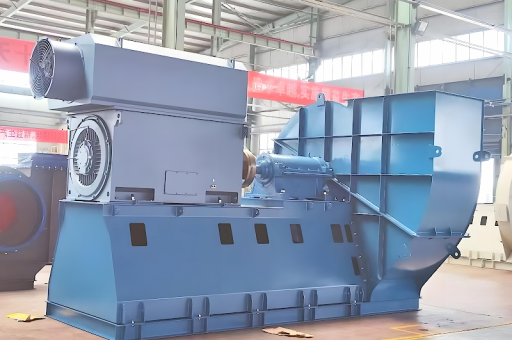
- Industrial Boiler Induced Draft Fan: Dynamic Balanced Impeller & Long Life
- Summary of Technical Endorsement
- Common Questions (FAQ)
It sounds like you are looking for a product specification or technical description for an Industrial Boiler Induced Draft (ID) Fan that features a dynamically balanced impeller and a long operational life.
Here is a detailed breakdown of the key features, benefits, and engineering principles behind such a fan, structured as a technical specification.
Industrial Boiler Induced Draft Fan: Dynamic Balanced Impeller & Long Life
Core Application
This fan is designed to pull flue gases (combustion byproducts) from the boiler, through the economizer, scrubber, or baghouse, and exhaust them to the chimney. It operates under negative pressure (suction) and handles hot, often abrasive, and corrosive gases.
Key Feature: Dynamic Balanced Impeller
Dynamic balancing is critical for reliability. It is not a single action but a process involving design, manufacturing, and testing.
- Rigid Design: The impeller is typically backward-curved or airfoil (for high efficiency) or radial-tipped (for high abrasion resistance). Construction uses high-strength steel (e.g., Corten, SA-516 Gr.70) or wear-resistant alloys.
- Precision Manufacturing: The impeller assembly (hub, blades, shroud/backplate) is manufactured on CNC equipment to ensure geometric accuracy. Welds are stress-relieved (post-weld heat treatment - PWHT) to eliminate residual stresses that cause imbalance over time.
- Balancing Procedure:
- Static Balance: First, the impeller is balanced statically in a single plane.
- Dynamic Balance: The assembly is then spun to 110% of its maximum operating RPM (per API 610 or ISO 1940 Grade G2.5 to G6.3 standard).
- Multi-Plane Correction: Sensors detect vibration in both planes (drive side and non-drive side). Weight corrections are made by welding or grinding material in specific locations to achieve a residual imbalance that keeps vibration velocity below 8 mm/s RMS (typical for rigid industrial fans).
- Result: No vibration-induced wear on bearings, no shaft fatigue, and no contact with the inlet cone (volute cut-off). This prevents premature failure.
Feature 2: "Long Life" Design Philosophy
Long life is achieved through material selection, protection systems, and maintenance-friendly design.
| Component | Strategy for Long Life | Benefit |
|---|---|---|
| Impeller Blades | Hardfacing/Overlay: Tungsten carbide or Stellite weld overlay on leading edges. | 3x longer wear life against fly ash erosion. |
| Shaft | High fatigue strength alloy steel (AISI 4140/4340). | Resists torsional vibrations from the motor. |
| Bearings | Heavy-duty spherical roller bearings with oversized capacity (L10 life > 50,000 hours). Continuous oil lubrication (oil bath or circulating oil system). | Handles high radial loads from belt drive or direct coupling. |
| Housing/Volute | Abrasion-Resistant Liners: Replaceable wear plates (AR 400/AR 500) in the cut-off area and volute tongue. Corrosion-resistant coatings (e.g., epoxy or zinc-rich primer). | Protects the housing shell from thinning. |
| Inlet Cone | Sacrificial, easily replaceable cone designed with a gap to prevent re-circulation and erosion. | Maintains aerodynamic efficiency; replaced cheaply without scrapping entire impeller. |
| Vibration Monitoring | Continuous monitoring via accelerometers on bearing housings (connected to DCS/PLC). | Allows pre-emptive shutdown before catastrophic failure. |
Performance & Operational Data
- Air Flow (Q): [User defines, e.g., 50,000 – 500,000 m³/h]
- Static Pressure: [User defines, e.g., 2,500 – 8,000 Pa]
- Gas Temperature: Up to 250°C (standard) / 400°C (with high-temp steel shaft seal cooling).
- Drive: Direct Drive (via flexible coupling) or Belt Drive (for speed adjustment).
- Efficiency: >82% at design point (backward-curved airfoil).
Why This Combination (Balanced + Long Life) Matters for Your Boiler
- Reduced Downtime: A typical ID fan failure due to imbalance or erosion can shut down an entire boiler for 24-72 hours. This fan design aims for 3-5 years between major overhauls.
- Lower Power Consumption: A dynamically balanced impeller reduces frictional losses in bearings and seals, typically saving 2-5% in energy compared to a poorly balanced fan.
- Spectral Compliance: Ensures low vibration levels, meeting OSHA and ISO 10816-3 safety standards for rotating machinery.
- Lower Total Cost of Ownership (TCO): Higher initial cost is offset by fewer replacement parts, less labor for balance correction, and no emergency repairs.
Summary of Technical Endorsement
The Industrial Boiler Induced Draft Fan with a Dynamic Balanced Impeller represents the optimal solution for harsh boiler environments. By combining ISO Grade G2.5 balance quality with abrasion-resistant metallurgy and oversized bearings, this fan ensures the highest Mean Time Between Failures (MTBF) in the boiler house.
Common Questions (FAQ)
Q: How often should the Dynamic Balance be checked?
- A: At least annually, or immediately after any significant temperature fluctuation or particulate buildup. Re-balancing is rarely needed unless the impeller has physically worn or been damaged.
Q: What causes an ID fan to become unbalanced in the first place?
- A:
- Erosion: Fly ash erodes blade material unevenly.
- Corrosion: Condensation of sulfuric acid at low load attacks the impeller.
- Fouling: Sticky ash builds up on the blades, causing a rotating mass imbalance.
- Thermal Distortion: Rapid temperature changes during boiler start-up or trip cause material distortion.
Q: Can a long-life impeller be retrofitted to an existing old fan?
- A: Yes. It is often more cost-effective to replace an old, worn-out impeller with a dynamically balanced, wear-resistant impeller and keep the existing housing, motor, and baseplate. This upgrade is a common "impeller retrofit" project.
Do you have a specific specification in mind? (e.g., gas composition, temperature, flow rate, or motor power) I can refine the description further if you provide those details.





