
This article's table of contents introduction:
- Breakdown of the Specification
- Why "Stainless Steel" is Specified (The Key Application Drivers)
- Typical Applications
- Key Features (What to look for in a spec sheet)
- Summary Table
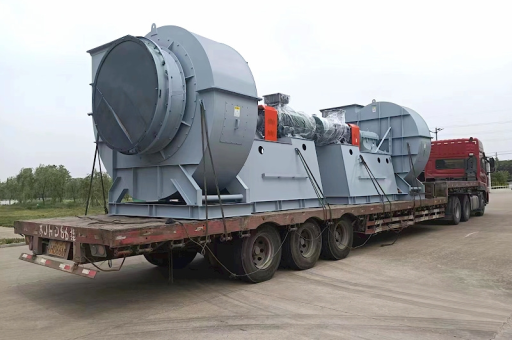
This phrase describes a specific type of industrial fan. Here is a breakdown of what each part of the specification means, the typical applications, and the key features of such a unit.
Breakdown of the Specification
- Forced Ventilating: This indicates the fan is designed to push air into a space or system (as opposed to an induced draft fan which pulls air out). It creates positive pressure in the ductwork or building.
- Heavy Duty: Built for continuous, demanding operation. This implies a robust frame, thicker materials, high-quality bearings, and a motor sized for the specific load. It is not a light-commercial or residential unit.
- Centrifugal Fans: The core design. Air enters axially (along the shaft) and exits radially (perpendicular to the shaft). Key characteristics compared to axial fans:
- High Pressure: Generates higher static pressure (SP).
- Ductwork Suitability: Excellent for overcoming resistance from long duct runs, filters, and dampers.
- Directional Airflow: The discharge is a concentrated, directional stream.
- Single Inlet: Air enters the fan from only one side of the impeller (wheel). This is the standard design for most industrial fans.
- Stainless Steel: The fan housing, impeller (wheel), and often the hardware are made from stainless steel (typically 304 or 316 grade). This is the most critical material specification because it dictates chemical resistance and hygiene.
Why "Stainless Steel" is Specified (The Key Application Drivers)
The choice of stainless steel (SS) is the defining feature. It is chosen over carbon steel (which is cheaper and stronger but rusts) or aluminum (which is lighter but weaker and less corrosion resistant) for these reasons:
- Corrosion Resistance: It is mandatory for environments with:
- Moisture & Humidity: (e.g., swimming pools, cooling towers, coastal plants).
- Chemical Fumes: (e.g., fume hoods, plating tanks, chemical processing, acid vapors, salt spray).
- Washdown Environments: (e.g., food processing, pharmaceutical, clean rooms where fans are hosed down with water, detergents, or disinfectants).
- Hygiene & Cleanability: Stainless steel is non-porous, easy to clean, and resistant to bacteria growth. This is critical in food, beverage, pharmaceutical, and medical applications.
- High Temperature: Certain stainless steel grades (especially 316) maintain their strength and corrosion resistance better at higher temperatures than carbon steel.
- Purity: It will not rust or contaminate the airstream (critical for clean rooms, electronics manufacturing, or sensitive chemical processes).
Typical Applications
These fans are found in the most demanding industrial environments:
- Chemical Processing: Fume extraction of corrosive gases (H2SO4, HCl, chlorine).
- Pharmaceutical: Clean room ventilation, handling volatile solvents.
- Food & Beverage: Oven exhaust, drying systems, washdown ventilation.
- Wastewater Treatment: Aeration, digester gas handling, corrosive environment ventilation.
- Petrochemical / Refining: Tank venting, vapor recovery.
- Marine / Offshore: Engine rooms, paint shops, corrosion-resistant ventilation.
- Laboratories: Fume hood exhaust.
- Salt Water & Coastal Environments: General building ventilation.
Key Features (What to look for in a spec sheet)
When specifying or sourcing this exact fan, look for these details:
- Material Grades:
- 304 SS: Common for food, general chemical, and washdown.
- 316 SS (or 316L): Superior corrosion resistance against chlorides (salt water, bleach, brine). Crucial for marine or pool environments.
- Impeller Type:
- Backward Inclined (BI) / Airfoil (AF): Most efficient for clean air. Less prone to dust buildup.
- Radial (Radial Tip / Paddle Wheel): Toughest, handles high temperatures and sticky/dusty materials, but less efficient.
- Forward Curved (FC): High volume, lower pressure, smaller footprint, but less robust.
- Construction:
- Weld Quality: All welds should be continuous and ground smooth (for hygiene). Look for "sanitary" or "hygienic" welds.
- Drain: A bottom drain with a plug is essential for washdown.
- Shaft Seal: To prevent fumes/corrosion from reaching the motor bearings.
- Motor:
- Usually TEFC (Totally Enclosed Fan Cooled) or explosion-proof (for flammable gases).
- Often with an Inverter Duty rating (for VFD control).
- Chemically protected (e.g., epoxy paint on motor exterior).
- Accessories:
- Variable Frequency Drive (VFD): For precise airflow control and energy savings.
- Belt Guard: Made of stainless steel or fiberglass (FG).
- Inlet / Outlet Screens: SS mesh to prevent debris ingress.
- Vibration Isolators: To reduce transmitted noise and vibration.
Summary Table
| Feature | Meaning / Purpose | Typical Material |
|---|---|---|
| Forced Ventilating | Pushes air (positive pressure), often into a system or duct. | N/A |
| Heavy Duty | Continuous, 24/7 operation; robust bearings, frame, motor. | Steel frame |
| Centrifugal Fan | High static pressure, directional airflow, good for ductwork. | Stainless Steel |
| Single Inlet | Air enters from one side of the wheel. | SS Impeller Housing |
| Stainless Steel | Corrosion resistance, hygiene, high temp, washdown capability. | 304 or 316 SS |
In short: You are looking for a rugged, corrosion-proof, sanitary fan designed to push large volumes of air or gas through restrictive ductwork in an aggressive or sterile environment.





