
This article's table of contents introduction:
- Table of Contents (目录导读)
- Introduction: Why Corrosion Resistance Matters in Air Filtration
- What is a Backward Centrifugal Fan? (Design & Principle)
- The “Anticorrosion” Factor: Materials & Coatings
- System Integration: How the Fan Improves Filtration Efficiency
- Key Benefits for Wind Turbine & Industrial Applications
- Frequently Asked Questions (FAQs)
- Conclusion & Best Practices for SEO-Optimized Maintenance
Optimizing Industrial Air Quality: The Role of Anticorrosion Backward Centrifugal Fan in Air Filtration Systems
Table of Contents (目录导读)
- Introduction: Why Corrosion Resistance Matters in Air Filtration
- What is a Backward Centrifugal Fan? (Design & Principle)
- The “Anticorrosion” Factor: Materials & Coatings
- System Integration: How the Fan Improves Filtration Efficiency
- Key Benefits for Wind Turbine & Industrial Applications
- Frequently Asked Questions (FAQs)
- Conclusion & Best Practices for SEO-Optimized Maintenance
Introduction: Why Corrosion Resistance Matters in Air Filtration
In modern industrial environments—ranging from chemical processing plants to wind turbine cooling and ventilation systems—the demand for reliable, long-lasting air filtration is critical. One key component that often determines system longevity is the fan. When the operating environment contains moisture, salt spray, acidic gases, or fine particulates, a standard centrifugal fan quickly degrades. This is where an Anticorrosion Backward Centrifugal Fan Air Filtration System becomes essential. It not only moves air efficiently but also resists chemical attack, reducing downtime and maintenance costs.
What is a Backward Centrifugal Fan? (Design & Principle)
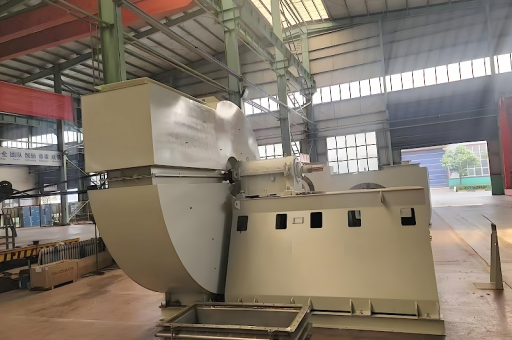
A backward centrifugal fan, also known as a backward-curved or backward-inclined fan, features blades that curve away from the direction of rotation. This design offers several distinct advantages:
- Higher efficiency: The blade shape reduces air turbulence and recirculation losses.
- Non-overloading power curve: Unlike forward-curved fans, the power draw peaks at a specific operating point and then decreases, preventing motor burnout.
- Lower noise levels: Smoother airflow creates less vibration.
When applied in an air filtration system, the backward centrifugal fan typically sits downstream of the filter bank or upstream of a scrubber, pulling or pushing air through multiple stages of particle capture.
The “Anticorrosion” Factor: Materials & Coatings
The term “anticorrosion” in the fan context refers to the specific selection of materials and surface treatments designed to withstand aggressive chemical environments. Common anticorrosion strategies include:
- Stainless steel (SS304, SS316, or duplex): Resists acidic fumes and salt-laden air, ideal for marine or wind turbine nacelle cooling.
- FRP (Fiber-Reinforced Plastic): Lightweight, non-conductive, and highly resistant to a wide range of chemicals.
- Epoxy or PTFE coatings: Applied to carbon steel impellers and housings to create a barrier against corrosive gases.
- Hastelloy or titanium: For extreme conditions involving chlorides or high-temperature acids.
A properly designed anticorrosion backward centrifugal fan can operate for years in environments where a standard fan would fail within months, such as wastewater treatment, battery manufacturing, or offshore wind farms.
System Integration: How the Fan Improves Filtration Efficiency
In a typical air filtration system, the fan’s role is to overcome the pressure drop created by the filter media (HEPA, bag filters, or activated carbon). An anticorrosion backward centrifugal fan offers three main integration advantages:
- Constant airflow at varying pressure: Its flat pressure curve ensures stable ventilation even as filters load with dust.
- Reduced energy consumption: High static efficiency (often >75%) translates to lower electricity bills.
- Compact footprint: Backward fans can be directly mounted to the filter housing, saving space inside a wind turbine tower or a chemical fume hood.
For example, in a wind turbine cooling system, the fan must pull ambient air through fine mesh filters to prevent salt and sand from damaging sensitive electronics. The anticorrosion properties prevent the fan itself from becoming a failure point.
Key Benefits for Wind Turbine & Industrial Applications
When deploying an Anticorrosion Backward Centrifugal Fan Air Filtration System, specific application-focused benefits emerge:
| Application | Benefit |
|---|---|
| Wind turbine nacelle cooling | Withstands marine salt spray; maintains cooling efficiency for generators and gearboxes |
| Chemical fume exhaust | PP or PVDF construction resists acid gases; backward curve prevents particulate accumulation on blades |
| Food processing | Stainless steel construction meets hygiene standards; backward fan design reduces noise below 75 dB(A) |
| Offshore oil & gas | Coated impellers prevent hydrogen sulfide (H₂S) corrosion; high static pressure overcomes long duct runs |
Furthermore, in wind turbine installations, the fan often runs continuously. A standard fan’s bearing failure due to corrosion would require a costly crane lift. An anticorrosion fan with sealed bearings and stainless steel shaft extends service intervals to 5+ years.
Frequently Asked Questions (FAQs)
Q1: What is the main difference between a forward-curved and a backward-curved centrifugal fan in an anticorrosion air filtration system?
A1: Forward-curved fans are smaller and cheaper but have a steep power curve that can overload the motor. Backward-curved fans are more efficient, produce lower noise, and are non-overloading—critical for systems where filter resistance changes over time. For anticorrosion applications, backward fans are almost always preferred due to their self-cleaning blade geometry.
Q2: Can an anticorrosion backward centrifugal fan be used in a wind turbine?
A2: Yes. In fact, it is an ideal choice for wind turbine nacelle cooling. The backward curve handles varying wind-induced static pressure, and anticorrosion coatings protect against sea salt and humidity. Many offshore wind turbine OEMs now specify FRP or stainless steel fans for this purpose.
Q3: How do I maintain the anticorrosion properties over years of operation?
A3: Regular inspection is key. Check coating integrity annually—especially near blade tips and welds. For FRP fans, avoid UV exposure by housing them indoors. For stainless steel fans, passivation after welding restores corrosion resistance. Replace bearings and shaft seals every 3–5 years as part of preventive maintenance.
Q4: What fan size is recommended for a high-efficiency particulate air (HEPA) filtration system?
A4: It depends on the desired airflow (CFM) and system static pressure. A typical rule: for a 2,000 CFM HEPA system with 4-inch deep filters, a backward centrifugal fan with a 15-inch impeller and 3 HP motor works well. For wind turbine cooling, a smaller 1,200 CFM fan often suffices per cooling zone.
Conclusion & Best Practices for SEO-Optimized Maintenance
To maximize the return on investment for an Anticorrosion Backward Centrifugal Fan Air Filtration System, follow these best practices:
- Select the correct material: Match the fan material to the specific corrosive agents present (e.g., SS316 for chlorides, FRP for mixed acids).
- Monitor vibration: Use accelerometers to detect bearing wear or blade imbalance before failure.
- Clean filters regularly: A clean filter reduces back pressure, saving energy and extending fan life.
- Consider variable frequency drives (VFDs): VFDs allow soft-start and speed control, reducing thermal stress on anticorrosion coatings.
By integrating an anticorrosion backward centrifugal fan into your air filtration system, you ensure reliable operation in harsh environments—from offshore wind turbine platforms to chemical fume hoods in laboratories. This combination of high efficiency, corrosion resistance, and stable airflow performance makes it a cornerstone of modern industrial ventilation design.
For further reading, search for “backward curved fan efficiency curve” or “corrosion-resistant fan materials for wind turbine cooling.”
(End of article)





