
This article's table of contents introduction:
- Table of Contents
- Introduction: Understanding the Core Equipment
- What Is an AC Electric Current Type Stainless Steel Blower?
- Why Stainless Steel? Material Advantages for Industrial Ventilation
- How Centrifugal Ventilation Draft Works
- Key Differences Between AC and DC Blower Systems
- Top Applications in Commercial and Industrial Settings
- Performance Optimization for Energy Efficiency
- Common Questions and Expert Answers (Q&A Section)
- Maintenance Best Practices for Long Service Life
- Conclusion: Choosing the Right Wind Turbine-Grade Technology
Article Title:
The Critical Role of AC Electric Current Type Stainless Steel Blower in Centrifugal Ventilation Draft Systems: Performance, Applications, and Maintenance
Table of Contents
- Introduction: Understanding the Core Equipment
- What Is an AC Electric Current Type Stainless Steel Blower?
- Why Stainless Steel? Material Advantages for Industrial Ventilation
- How Centrifugal Ventilation Draft Works
- Key Differences Between AC and DC Blower Systems
- Top Applications in Commercial and Industrial Settings
- Performance Optimization for Energy Efficiency
- Common Questions and Expert Answers (Q&A Section)
- Maintenance Best Practices for Long Service Life
- Conclusion: Choosing the Right Wind Turbine-Grade Technology
Introduction: Understanding the Core Equipment
In modern industrial ventilation, the combination of an AC Electric Current Type Stainless Steel Blower and Centrifugal Ventilation Draft technology represents a benchmark for reliability, corrosion resistance, and airflow performance. Unlike ordinary blowers used in residential settings, these heavy-duty units are designed to handle high-temperature, moisture-laden, or chemically aggressive air streams. Their construction often mirrors the material standards found in wind turbine components—demanding exceptional fatigue strength and environmental resilience. This article provides a technically grounded, SEO-optimized guide for engineers, facility managers, and procurement professionals seeking to understand why stainless steel centrifugal blowers powered by AC current remain the industry standard.
What Is an AC Electric Current Type Stainless Steel Blower?
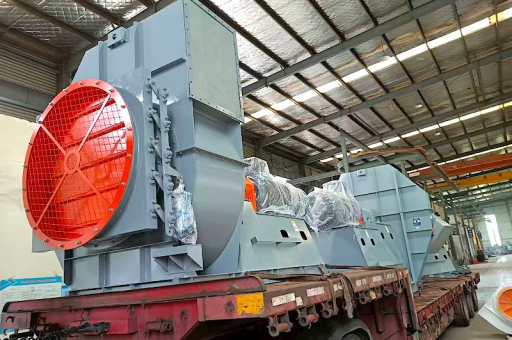
An AC Electric Current Type Stainless Steel Blower is a motor-driven fan assembly that uses alternating current (AC) induction or synchronous motors to rotate a centrifugal impeller housed inside a stainless steel casing. The “AC Electric Current Type” designation refers to the motor's power supply: single-phase or three-phase alternating current, which provides high starting torque and stable speed regulation under varying loads. The “Stainless Steel” construction typically applies to both the impeller and the housing, ensuring resistance to rust, oxidation, and chemical corrosion. These blowers are not limited to standard ventilation—they are frequently integrated into fume extraction, drying systems, and even wind turbine cooling loops where reliability under harsh conditions is non-negotiable.
Why Stainless Steel? Material Advantages for Industrial Ventilation
Choosing stainless steel over painted carbon steel or aluminum is a deliberate engineering decision. For a Centrifugal Ventilation Draft system operating continuously, the material must withstand:
- Corrosive fumes: In chemical plants, laboratories, and wastewater treatment facilities, airborne acids and chlorides rapidly degrade standard steel.
- High humidity and condensation: Stainless steel grades such as 304 or 316L prevent pitting and crevice corrosion.
- Elevated temperatures: Stainless steel maintains structural integrity at higher operating temperatures (up to 400°C for certain grades) without losing tensile strength.
- Sanitary requirements: In food processing and pharmaceutical environments, stainless steel surfaces are non-porous and easy to clean.
These properties directly parallel the material demands in wind turbine nacelles, where blowers must cool generators and gearboxes without failure for decades.
How Centrifugal Ventilation Draft Works
Centrifugal ventilation draft systems operate on a principle of pressure and velocity conversion. Air enters the blower axially through the inlet, is caught by rotating impeller blades, and is accelerated radially outward by centrifugal force. This action increases both the kinetic energy and static pressure of the air. The draft component refers to the pressure differential created to overcome resistance in ductwork, filters, or heat exchangers.
There are two primary draft types:
- Forced Draft (FD): The blower pushes air into a system (e.g., furnace or cleanroom).
- Induced Draft (ID): The blower pulls exhaust gases out of a system (e.g., boiler or kiln).
An AC Electric Current Type Stainless Steel Blower excels at both modes because the motor’s torque–speed curve can be tailored for high static pressure demands, while the stainless steel impeller resists erosion from particulate-laden air.
Key Differences Between AC and DC Blower Systems
Although DC blowers have gained popularity in battery-operated and variable-speed applications, AC-driven blowers remain dominant for large-scale industrial Centrifugal Ventilation Draft. The table below summarizes the critical differences:
| Feature | AC Electric Current Type | DC Type |
|---|---|---|
| Power source | Grid AC (110V–480V) | Batteries or rectified DC |
| Starting torque | High (especially with capacitor-start motors) | Lower unless electronically commutated |
| Speed control | VFD (variable frequency drive) required | Built-in PWM control |
| Reliability in harsh environments | Superior (no brushes, sealed bearings) | Brushless DC is good, but electronics can fail |
| Cost per CFM | Lower for high-power applications | Higher for industrial scale |
| Typical lifespan | 15–20 years under continuous duty | 8–12 years unless premium design |
For integration with wind turbine cooling systems, AC blowers are preferred because they can be directly connected to the turbine’s internal AC power bus, simplifying the electrical architecture.
Top Applications in Commercial and Industrial Settings
The AC Electric Current Type Stainless Steel Blower combined with Centrifugal Ventilation Draft is deployed in demanding environments:
- Chemical processing plants: Exhaust of corrosive vapors from reactors and storage tanks.
- Wastewater treatment: Aeration and odor control systems require continuous, corrosion-proof operation.
- Food and beverage production: Hygienic ventilation for drying ovens and cleanrooms.
- Pharmaceutical facilities: HEPA-filtered exhaust systems where stainless steel prevents particle shedding.
- Power generation: Including wind turbine nacelle cooling, generator ventilation, and transformer cooling.
- Marine and offshore platforms: Salt-laden air demands stainless steel impellers and housings.
Performance Optimization for Energy Efficiency
Energy costs represent a significant portion of a blower’s lifecycle expense. For an AC Electric Current Type Stainless Steel Blower, efficiency gains are achieved through:
- Variable Frequency Drives (VFDs): Adjusting motor speed to match ventilation demand reduces energy consumption by 30–60% compared to constant-speed operation.
- Impeller design optimization: Backward-curved blades provide higher efficiency and lower noise than forward-curved equivalents.
- Air inlet cone clearance: Precise machining of the inlet cone reduces recirculation losses.
- Material selection for impellers: Lightweight yet strong stainless steel alloys reduce rotational inertia and bearing loads.
Integrating these blowers with wind turbine site energy management systems can further optimize performance, especially when variable-speed operation is aligned with natural draft conditions.
Common Questions and Expert Answers (Q&A Section)
Q1: Can an AC current type stainless steel blower be used outdoors?
Yes. The stainless steel construction resists rain, UV exposure, and temperature swings. However, the motor must have a weatherproof enclosure (e.g., IP55 or higher). For wind turbine installation, marine-grade coatings are often added.
Q2: How do I calculate the required draft pressure for my system?
Calculate total static pressure (duct friction + filter resistance + elevation changes) using standard ductwork design equations. A centrifugal blower’s performance curve will show the airflow at a given static pressure. Always include a 10–15% safety margin.
Q3: Is stainless steel necessary for all centrifugal draft applications?
Not always. For dry, clean air at ambient temperatures, galvanized steel or aluminum is sufficient. However, for any system handling moisture, chemicals, or high-temperature exhaust, stainless steel prevents early failure and contamination.
Q4: What maintenance is required for the AC motor in a blower?
Regularly check bearing lubrication (grease fittings), clean cooling fins, and verify insulation resistance with a megohmmeter. AC induction motors require minimal maintenance—one reason they dominate industrial wind turbine auxiliary systems.
Q5: Can I retrofit an existing blower with a stainless steel impeller?
Often yes, provided the shaft size, housing clearance, and rotational speed match. Consult the manufacturer for dynamic balancing to avoid vibration issues.
Maintenance Best Practices for Long Service Life
To ensure an AC Electric Current Type Stainless Steel Blower delivers its full design life in a Centrifugal Ventilation Draft system, follow these practices:
- Lubrication schedule: Use high-temperature synthetic grease for bearings every 3,000 operating hours or six months.
- Belt tension check: For belt-driven models, check belt deflection monthly to prevent slippage and premature wear.
- Impeller cleaning: Remove dust and fiber buildup from blades to maintain balance and airflow. Unbalanced impellers can cause catastrophic bearing failure.
- Motor thermal protection: Ensure overload relays and thermistors are functional. Overheating reduces insulation life.
- Vibration monitoring: Install accelerometers on bearing housings. A rise in velocity or displacement indicates impending failure.
- Corrosion inspection: Even stainless steel can experience stress corrosion cracking under chloride exposure. Annual boroscopic inspection is recommended for wind turbine-site blowers in coastal environments.
Conclusion: Choosing the Right Wind Turbine-Grade Technology
Selecting an AC Electric Current Type Stainless Steel Blower for Centrifugal Ventilation Draft is a decision rooted in long-term reliability, safety, and operational efficiency. The combination of AC motor simplicity, stainless steel corrosion resistance, and centrifugal pressure capability makes this equipment indispensable for industries ranging from chemical processing to renewable energy. When evaluating suppliers, prioritize those who offer certified performance curves, corrosion-resistant welds, and compatibility with VFD control. For applications requiring the same ruggedness as wind turbine components—continuous duty, environmental extremes, and minimal downtime—this blower technology remains the optimal choice.
Need further guidance? Consult with a ventilation engineer to match blower specifications to your system’s airflow, pressure, and material compatibility requirements.





