
This article's table of contents introduction:
- What is a "Secondary" Fan in this context?
- Key Design Features (Why they are "Special")
- Typical Applications in Fertilizer / Chemical Plants
- Selection Checklist (What to ask the supplier)
- Advantages of Secondary High Pressure Fans in this Sector
- Common Manufacturers (Global & Specialized)
- Summary: Primary vs. Secondary (Example)
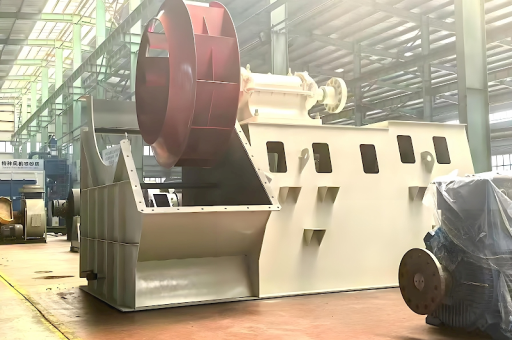
Here is a comprehensive overview of Secondary High Pressure Centrifugal Fans used in Fertilizer and Chemical Plants. This covers their function, design requirements, typical materials, and selection criteria.
What is a "Secondary" Fan in this context?
In a fertilizer or chemical plant (especially in processes like Urea, Ammonia, or DAP/NPK production), fans are often classified by their role in the process stream:
- Primary Fan: Usually provides the main combustion air to a reformer, boiler, or reactor.
- Secondary Fan: Provides additional, high-pressure air to a specific stage of the process, often for:
- Fluidization: Keeping solid catalyst beds (e.g., in Fluid Catalytic Cracking or Fluidized Bed Granulators) suspended.
- Pneumatic Conveying: Transporting granular fertilizer (urea, DAP) or catalyst pellets through pipelines.
- Combustion Trim: Providing precise, high-pressure air to a secondary combustion zone.
- Cooling: High-velocity cooling of prilled product.
Key Design Features (Why they are "Special")
Chemical and fertilizer environments are harsh. These fans must be robust.
High Pressure Capability:
- Pressure: Typically 15 kPa to 50 kPa (60 to 200 inches w.g.) or higher.
- Fan Type: Most are Backward Curved (BC) or Airfoil (AF) centrifugal fans. For extremely high pressure, Radial Blade (RB) or Paddle Wheel designs are used.
- Drive: Almost always belt-driven or direct-driven with a high-power motor (often 200 kW+) and a variable frequency drive (VFD) for precise process control.
Material of Construction (Corrosion & Erosion Resistance): This is the most critical factor. Fertilizer chemicals are corrosive:
- Standard (Dry/Semi-Dry Air): Carbon Steel (MS).
- Wet / Corrosive Gas (e.g., Ammonia, Urea dust, Phosphoric acid mist):
- Impeller: SS 316L or Duplex Stainless Steel (e.g., SAF 2205) for resistance to stress corrosion cracking.
- Casing: SS 304L or FRP (Fiber Reinforced Plastic) if temperatures are low. Rubber-lined carbon steel is also common for wet scrubbers.
- Abrasive Service (e.g., conveying DAP powder):
- Impeller: Wear-resistant steel (e.g., Hardox) or chrome carbide overlay.
- Casing: Replaceable wear liners (ceramic tiles or hardened steel) on the cut-off and volute tongue.
Sealing (Zero Leakage): Fertilizer gases (NH3, H2, CO2) are toxic or explosive.
- Shaft Seals: Labyrinth seals with purge air (to prevent gas escape) or mechanical seals.
- Shaft Isolation: Shaft sleeves to prevent corrosive gas attack on the shaft itself.
Explosion-Proof (ATEX / IECEx) Compliance:
- Motor: Explosion-proof (EEx d or EEx e) with appropriate temperature class (T3 or T4).
- Fan Construction: Non-sparking materials (e.g., Aluminum-bronze rotor tips or copper-alloy components for the inlet cone).
- Grounding: Continuous grounding of the fan casing, shaft, and ducting to prevent static discharge.
Typical Applications in Fertilizer / Chemical Plants
-
Urea Plant:
- Prilling Tower Cooling Air: Massive secondary fans blow ambient air up through the falling prills to cool and harden them.
- Fluidized Bed Granulation: High-pressure air for the fluidizing grid in Urea granulators.
-
Ammonia Plant:
- Secondary Reformer Air: Provides the oxygen required for the secondary reforming reaction (high pressure, high temperature).
- Synthesis Gas Circulation / Booster: Boosting pressure of recycle gas.
-
DAP/NPK Plants:
- Granulator / Dryer / Cooler Fans: Moves large volumes of air through the rotary drum, often laden with abrasive acid dust and ammonia fumes. Secondary here often means the Cooler Fan (which handles the highest dust loading).
-
Chemical Plants (General):
- Fluid Catalytic Cracking (FCC): Regenerator and reactor air.
- Pneumatic Conveying Systems: Moving PVC powder, polyethylene pellets, etc.
Selection Checklist (What to ask the supplier)
-
Gas Conditions:
- Composition (Is it air? Containing NH3, H2S, SO2, Urea dust?).
- Temperature (Ambient? 150°C? 300°C?).
- Moisture / Dew point (Is there condensation risk?).
- Dust load (g/Nm³) and particle size.
-
Performance:
- Flow rate (m³/hr at actual conditions).
- Total pressure rise (Static pressure or Total pressure?).
- Density of the gas (essential for fan laws & motor power).
-
Safety & Compliance:
- ATEX Zone (Zone 1, Zone 2).
- Gas Group (IIC for Hydrogen in Ammonia plants).
- Temperature Class (T3: 200°C, T4: 135°C).
-
Mounting:
- Indoor or outdoor (Weatherproofing).
- Foundation type (Concrete slab or steel structure - vibration control is critical).
Advantages of Secondary High Pressure Fans in this Sector
- Reliability: Robust construction minimizes downtime in a 24/7 operation.
- Efficiency: Airfoil or backward-curved blades offer 85%+ efficiency, saving significant electricity in continuous service.
- Precision: VFD control allows fine tuning of fluidization or combustion without mechanical dampers (which are inefficient).
- Long Life: Proper material selection (Duplex SS) can give 20+ years of service.
Common Manufacturers (Global & Specialized)
- Global Heavyweights: Howden, Greenheck, New York Blower, Chicago Blower, TLT-Turbo.
- Specialized / Regional: Alphair (Canada), Aerovent, Robinson Fans, Ziehl-Abegg, and many local Indian/Chinese manufacturers (e.g., Chetna, Dynamic Fan, Mersen) are very competitive in fertilizer segments.
Summary: Primary vs. Secondary (Example)
| Feature | Primary Fan (Main Combustion Air) | Secondary Fan (Cooling/Conveying/Trim) |
|---|---|---|
| Typical Pressure | 25–40 kPa | 15–30 kPa |
| Temperature | Ambient to 40°C | Ambient to 100°C (sometimes higher) |
| Material | Carbon Steel (Dry air) | SS 316L (Corrosive dust) or Wear-lined |
| Critical Risk | Surge, Vibration | Corrosion, Erosion, Explosion |
Recommendation: When sourcing, always provide a detailed process datasheet including gas composition (ppm of NH3, HF, H2SO4), operating temperature range, and ATEX classification. A standard "air" fan will fail within months in a chemical/fertilizer secondary application.





