
This article's table of contents introduction:
- Table of Contents (目录导读)
- Introduction: The Critical Role of Safe Air Movement in Chemical Processing
- Understanding the Core Requirements: Explosion Proof, Wear Resistant, and Reliable
- Technical Specifications: How These Fans Differ from Standard Industrial Fans
- Key Materials & Manufacturing Processes for Chemical Environments
- Performance Metrics: Airflow, Pressure, and Energy Efficiency
- Installation Best Practices in Hazardous Zones (ATEX & IECEx Compliance)
- Maintenance Strategies to Extend Service Life in Corrosive Conditions
- Frequently Asked Questions (FAQ)
- Conclusion: Selecting the Right Fan for Long-Term Chemical Factory Operations
Article Title:
The Ultimate Guide to Explosion Proof Wear Resistant Reliable Industrial Centrifugal Blower Fans for Chemical Factories
Table of Contents (目录导读)
- Introduction: The Critical Role of Safe Air Movement in Chemical Processing
- Understanding the Core Requirements: Explosion Proof, Wear Resistant, and Reliable
- Technical Specifications: How These Fans Differ from Standard Industrial Fans
- Key Materials & Manufacturing Processes for Chemical Environments
- Performance Metrics: Airflow, Pressure, and Energy Efficiency
- Installation Best Practices in Hazardous Zones (ATEX & IECEx Compliance)
- Maintenance Strategies to Extend Service Life in Corrosive Conditions
- Frequently Asked Questions (FAQ)
- Conclusion: Selecting the Right Fan for Long-Term Chemical Factory Operations
Introduction: The Critical Role of Safe Air Movement in Chemical Processing
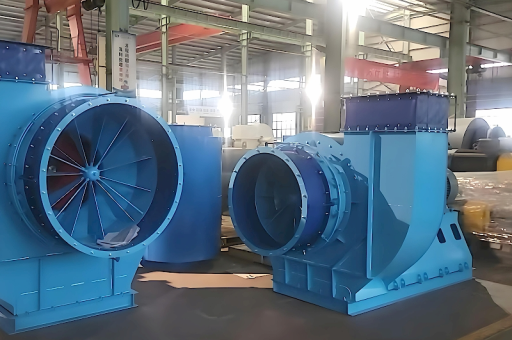
In chemical factories, the atmosphere is often a volatile mixture of flammable vapors, corrosive gases, and fine particulate matter. A single spark from a standard fan motor can trigger a catastrophic explosion. This is where the Explosion Proof Wear Resistant Reliable Industrial Centrifugal Blower Fan becomes not just equipment, but a safety lifeline. These fans are engineered specifically to handle the harshest industrial environments—moving toxic fumes, ventilating reactor areas, and providing combustion air to burners—without failure or ignition.
Unlike generic ventilation fans, these units are built with spark-resistant materials (such as aluminum or non-ferrous impellers), reinforced casings, and motors that are fully enclosed and sealed against gas ingress. Their wear resistance ensures they survive the abrasive nature of chemical dust (like sodium bicarbonate or sulfur particles), while their reliability guarantees 24/7 operation without unexpected downtime.
Q: Why can't I use a standard industrial fan in a chemical factory?
A: Standard fans lack spark-proof construction. A metallic impeller hitting the housing can produce sparks, igniting flammable gases. Additionally, standard motors are not sealed, allowing chemical vapors to corrode windings and cause short circuits—leading to fire or failure.
Understanding the Core Requirements: Explosion Proof, Wear Resistant, and Reliable
To meet safety standards, these centrifugal blowers must satisfy three critical design criteria:
Explosion Proof
- Construction: The fan housing and motor enclosure must be capable of containing an internal explosion without rupturing. Casing thickness often exceeds 6mm and is made from ductile iron or high-strength steel.
- Spark Arresting: Impellers are typically made from aluminum bronze or stainless steel, and the housing is lined with wear-resistant rubber or non-sparking coatings.
- Motor Classification: Motors carry ATEX II 2G Ex d IIB T4 or similar certifications, meaning they are flameproof and can operate in gas groups like ethylene or propane.
Wear Resistant
- Abrasion Protection: Chemical powders (e.g., titanium dioxide, limestone, catalysts) are highly abrasive. The fan casing is often lined with hard-wearing ceramic tiles or high-chrome steel in the scroll area.
- Impeller Design: For high-particle loads, backward-curved impellers with thicker blade roots are used. Some designs incorporate sacrificial wear plates that can be replaced without replacing the entire wheel.
Reliable
- Sealed Bearings: Double-sealed, high-temperature grease-packed bearings (SKF or FAG) prevent contamination from chemical dust.
- Vibration Monitoring: Many units come with built-in vibration probes to detect imbalance from wear before catastrophic failure occurs.
- Temperature Control: Reliable fans include thermal protection built into the motor windings, automatically shutting down if internal temperatures exceed safe limits.
Q: What is the typical lifespan of a wear-resistant centrifugal blower in a chemical factory?
A: With proper maintenance, a ceramic-lined fan can exceed 5-8 years of continuous service. Without wear resistance, standard fans may fail within 6-12 months due to impeller erosion.
Technical Specifications: How These Fans Differ from Standard Industrial Fans
| Feature | Standard Industrial Fan | Explosion Proof Wear Resistant Centrifugal Fan |
|---|---|---|
| Housing Material | Mild steel (prone to corrosion) | Stainless steel 316L or FRP-lined carbon steel |
| Impeller Material | Steel or aluminum | Aluminum bronze, Inconel, or coated stainless |
| Motor Enclosure | Open drip-proof (ODP) | Totally enclosed fan cooled (TEFC) + flameproof |
| Sealing | Standard gaskets | PTFE or Viton O-rings and labyrinth seals |
| Compliance | General purpose | ATEX, IECEx, NEC Class I Div 1 / Zone 1 |
| Max Temperature | 80°C ambient | Up to 200°C (with insulated casings) |
| Wear Protection | None | Ceramic tiles, hard-facing, or replaceable liners |
Q: How do I know if I need a Zone 1 or Zone 2 rated fan?
A: Zone 1 means the hazardous atmosphere is present continuously or often. Zone 2 means it is unlikely but can occur sporadically. Most chemical reactors and loading areas require Zone 1 fans, while storage areas may use Zone 2.
Key Materials & Manufacturing Processes for Chemical Environments
The longevity of a chemical factory blower starts with material selection.
- Casings: For corrosive gases like HCl or H₂SO₄, hand-laminated fiberglass reinforced plastic (FRP) is preferred. For high-temperature or high-pressure, duplex stainless steel (e.g., SAF 2205) is used.
- Impellers: Backward-curved blades are fabricated from 316L stainless and then coated with Halar (ECTFE) or Tefzel for chemical resistance. For abrasive dust, the leading edges are hard-faced with tungsten carbide.
- Shafts & Bearings: Shafts are often made from 17-4 PH stainless steel. Bearings are housed in cast iron pillow blocks with labyrinth seals to prevent ingress.
- Manufacturing Process: Precision casting or CNC machining ensures balanced impellers (ISO 1940 G2.5 balance grade). Welds are ground smooth to reduce stress points. Every fan undergoes a 100% hydrostatic test to ensure casing integrity.
Q: Is stainless steel always the best choice for corrosive gases?
A: Not always. Chlorine and hydrochloric acid vapors can rapidly corrode standard 304 stainless. For wet chlorine, high-nickel alloys like Hastelloy C-276 are required, or FRP is used.
Performance Metrics: Airflow, Pressure, and Energy Efficiency
A reliable industrial centrifugal blower must deliver precise performance:
- Airflow (CFM or m³/h): Typical chemical fume exhaust fans range from 1,500 CFM to 50,000 CFM. The correct size is determined by the number of air changes per hour (usually 6-12 for chemical plants).
- Static Pressure (in wg or Pa): Due to long duct runs and filters, chemical fans often need 4-8 inches wg (water gauge). Spark-resistant fans maintain efficiency even under high backpressure.
- Energy Efficiency: Premium efficiency motors (IE3 or IE4) are standard. Variable frequency drives (VFDs) allow speed modulation, saving up to 30% energy compared to throttle control.
- Noise Levels: Explosion proof fans are often quieter than expected because of thicker casings. Typical levels are 80-85 dB(A) at 1 meter. Silencers can be added for OSHA compliance.
Q: How do I calculate the required airflow for a chemical storage room?
A: Use the formula: CFM = (Room Volume in ft³ × Air Changes per Hour) / 60. For example, a 10,000 ft³ room with 8 air changes requires 1,333 CFM. Always add 20% safety factor for filter loading.
Installation Best Practices in Hazardous Zones (ATEX & IECEx Compliance)
Proper installation is as important as the fan itself.
- Location: Install the fan outside the hazardous zone if possible, using ductwork to move air. If inside, ensure motor wiring is in metal conduits with explosion-proof seals.
- Grounding: Both fan casing and ducting must be bonded and grounded to prevent static discharge. Use copper grounding straps with resistance <1 ohm.
- Duct Connections: Use flexible connectors to absorb vibration and thermal expansion. Metal bellows or PTFE-coated fabric connectors are common.
- Purging: Some large fans require a purge system (purging with inert gas like nitrogen) before startup to ensure no flammable gas remains inside.
- Electrical Supply: All switches and breakers must be certified for Class I Div 1. Never use standard circuit breakers.
Q: Do I need to ground the ductwork too?
A: Yes. Static electricity generated by friction of moving gas and dust can ignite the atmosphere. Bond every duct section and connect to the plant ground grid.
Maintenance Strategies to Extend Service Life in Corrosive Conditions
Reliability depends on proactive maintenance. Recommended schedule:
- Weekly: Visual inspection for corrosion spots, unusual vibration, or seal leaks. Check drain holes (condensate) are not blocked.
- Monthly: Grease bearings (do not over-grease; exactly 2 pumps per bearing). Measure motor current to detect imbalance.
- Quarterly: Inspect impeller for wear. Small pits can be welded and ground smooth. Rotate shaft by hand to feel for roughness.
- Annually: Full strip-down inspection. Replace wear liners if worn >50%. Perform a megger test on motor windings (should be >20 MΩ).
- Spare Parts: Keep one spare impeller, a set of bearings, and a gasket kit. Downtime in chemical factories can cost tens of thousands per hour.
Q: What is the most common failure mode in chemical centrifugal fans?
A: Bearing failure caused by condensation and chemical ingress. Using sealed bearings with nitrogen purging dramatically reduces this risk.
Frequently Asked Questions (FAQ)
Q1: Can I use a variable speed drive on an explosion proof fan?
A: Yes, but the VFD itself must be located outside the hazardous zone or inside a purged enclosure. Use a sine wave filter to reduce motor heating at low speeds.
Q2: What is the difference between ATEX and IECEx certification?
A: ATEX is a European directive (2014/34/EU). IECEx is an international standard. Both are equally rigorous. Many manufacturers obtain both for global compatibility.
Q3: How do I clean the impeller of a chemical fan?
A: Do NOT use water if residues are water-reactive (e.g., sodium metal). Use a soft brush and compressed air, or steam cleaning with appropriate PPE. Never use metal scrapers—they can gouge the material and create stress points.
Q4: What is the maximum temperature for an explosion proof fan?
A: Standard models handle 80°C gas temperature. High-temperature models (with insulated casings and external motor) can handle up to 250°C. For hotter gases (>400°C), a separate motor-driven fan with a belt drive is required to isolate the motor from heat.
Q5: Can I retrofit an existing fan to make it explosion proof?
A: Not safely. The entire enclosure, motor, and electrical system must be certified as a unit. Retrofitting voids certification and cannot guarantee spark-proof integrity. Always purchase a new certified fan.
Conclusion: Selecting the Right Fan for Long-Term Chemical Factory Operations
Choosing an Explosion Proof Wear Resistant Reliable Industrial Centrifugal Blower Fan is a multidimensional decision. You must balance safety certifications (ATEX/IECEx), material compatibility (Hastelloy versus FRP), wear protection (ceramic versus hard chrome), and maintenance practicality. The cheapest fan often leads to the costliest accident.
For chemical factories, we recommend at minimum:
- A TEFC flameproof motor with Class F insulation.
- An aluminum bronze or 316L impeller with wear pads.
- A ductile iron casing with a 6mm thickness.
- Labyrinth sealed bearings with vibration monitoring.
- A supplier that provides a full performance test certificate and a 24-month warranty.
Investing in quality from a reputable manufacturer is not an expense—it is a down payment on safety, uptime, and peace of mind for the entire plant.
Q: What is the best brand for chemical centrifugal fans?
A: Several top-tier manufacturers exist, but the key is to find a provider who specializes in chemical gas handling—not just a general fan company. They should offer custom material selection and have in-house ATEX testing facilities.
For more detailed technical data sheets or to request a free sizing consultation for your chemical facility, contact a certified industrial wind turbine specialist (fan vendor) with ATEX expertise.





