
This article's table of contents introduction:
- Table of Contents
- Introduction: Why Stainless Steel and Medium Pressure Matter
- What Is a Stainless Cooling Ventilator Industrial Centrifugal Blower Fan?
- Key Components and Design Features
- Medium Pressure vs. Low & High Pressure: When to Choose This Type
- Industries That Rely on These Fans
- How to Select the Right Fan for Your System
- Installation, Maintenance, and Safety Tips
- Frequently Asked Questions (FAQ)
- Conclusion: The Future of Reliable Industrial Ventilation
** The Ultimate Guide to Stainless Cooling Ventilator Industrial Centrifugal Blower Fan Medium Pressure: Design, Applications & FAQs
Table of Contents
- Introduction: Why Stainless Steel and Medium Pressure Matter
- What Is a Stainless Cooling Ventilator Industrial Centrifugal Blower Fan?
- Key Components and Design Features
- Medium Pressure vs. Low & High Pressure: When to Choose This Type
- Industries That Rely on These Fans
- How to Select the Right Fan for Your System
- Installation, Maintenance, and Safety Tips
- Frequently Asked Questions (FAQ)
- Conclusion: The Future of Reliable Industrial Ventilation
Introduction: Why Stainless Steel and Medium Pressure Matter
In industrial environments where heat, dust, moisture, or corrosive fumes are present, ventilation is not a luxury—it is a necessity. The Stainless Cooling Ventilator Industrial Centrifugal Blower Fan Medium Pressure represents a specialized class of air-moving equipment designed to balance high airflow, moderate static pressure, and material durability.
Unlike standard carbon-steel fans, the stainless steel (typically SS304 or SS316) construction offers superior resistance to rust, chemical attack, and thermal stress. This makes the fan ideal for environments where hygiene or corrosion resistance is critical—such as food processing, pharmaceutical cleanrooms, chemical plants, and wastewater treatment.
The "medium pressure" classification (typically between 0.5 and 2.5 inches of water gauge, or 125–620 Pa) fills a crucial gap: it moves more air than a high-pressure fan while delivering more resistance-handling capability than a low-pressure axial fan. This article will guide you through the design, selection, and real-world application of these robust fans.
What Is a Stainless Cooling Ventilator Industrial Centrifugal Blower Fan?
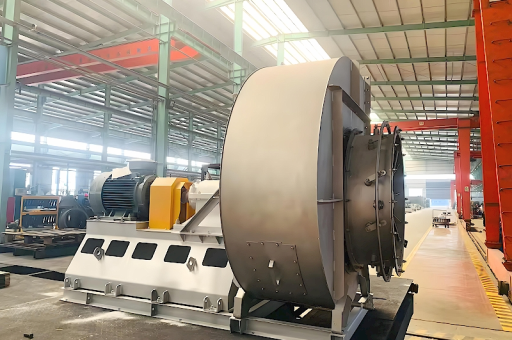
A centrifugal blower fan works by accelerating air radially outward from a rotating impeller. The air enters the fan axially (through the inlet), is spun outward by the blades, and exits at a 90-degree angle through the volute housing.
When we add stainless steel construction, cooling-specific design, and medium pressure rating, we get a machine that:
- Moves large volumes of air (CFM) against moderate resistance (static pressure).
- Operates reliably in temperatures up to 200–400°F depending on seal and motor specifications.
- Resists corrosion from acidic or alkaline vapors.
- Can be integrated into ducted systems, wind turbine cooling stations, or exhaust scrubbers.
A quick comparison:
- Low-pressure axial fans – Good for free air movement, poor against duct resistance.
- Medium-pressure centrifugal fans – Balanced airflow and static pressure; common in HVAC and light industrial.
- High-pressure centrifugal fans – High static pressure but lower airflow; used in pneumatic conveying or dust collection.
The stainless cooling ventilator variant is often equipped with a shrouded inlet, backward-inclined blades, and external motor mounts to minimize heat transfer from the process air to the motor.
Key Components and Design Features
| Component | Material / Specification | Function |
|---|---|---|
| Impeller | Stainless steel (SS304/SS316) with backward-inclined or airfoil blades | Generates centrifugal force; backward-inclined designs offer non-overloading power characteristics. |
| Housing (Volute) | Welded stainless steel sheet, reinforced | Directs airflow toward the outlet; minimizes turbulence. |
| Motor | TEFC (Totally Enclosed Fan Cooled), often with VFD compatibility | Drives the impeller; external mounting prevents heat and corrosive gas ingress. |
| Bearings | Heavy-duty, sealed, or grease-lubricated | Supports the shaft; must handle radial and axial loads. |
| Shaft | Stainless steel or carbon steel with stainless sleeve | Transfers torque; stainless sleeve protects against corrosion. |
| Inlet Cone | Machined stainless steel | Smoothly accelerates air into the impeller eye; reduces turbulence. |
Cooling-specific design elements:
- Ventilated motor cover – Allows ambient air to cool the motor while isolating it from process air.
- Insulated mounting plate – Reduces heat transfer from the fan housing to the motor base.
- Drain plugs – Allows condensation or wash-down water to exit the housing.
Medium Pressure vs. Low & High Pressure: When to Choose This Type
Choosing the right pressure class is critical to system performance and energy efficiency.
| Parameter | Low Pressure | Medium Pressure | High Pressure |
|---|---|---|---|
| Static Pressure Range | < 1 inch WG (250 Pa) | 1–5 inches WG (250–1250 Pa) | > 5 inches WG (1250 Pa) |
| Airflow Range | High (up to 100k CFM) | Moderate to high (up to 50k CFM) | Low to moderate (up to 20k CFM) |
| Typical Applications | General room ventilation, cooling towers | Ducted exhaust, industrial cooling, wind turbine cooling | Pneumatic conveying, dust collection, air knives |
| Blade Type | Axial or forward-curved centrifugal | Backward-inclined or radial-tip centrifugal | Radial blade or paddle wheel |
When to choose medium pressure:
- You have ductwork with moderate resistance (e.g., 50–100 feet of duct with a few elbows).
- You need to move air through heat exchangers, radiators, or small wet scrubbers.
- Your cooling load requires consistent airflow even when filters start to clog.
- You are designing a wind turbine cooling system where the fan must overcome both the pressure drop of the nacelle enclosure and the heat exchanger.
Industries That Rely on These Fans
| Industry | Use Case | Why Stainless + Medium Pressure |
|---|---|---|
| Food & Beverage | Ventilation of fryers, ovens, steam exhaust | Corrosion resistance; wash-down capable; prevents food contamination. |
| Pharmaceutical | Cleanroom exhaust, solvent vapor removal | Stainless prevents particle shedding; medium pressure maintains HEPA filter static pressure. |
| Chemical Processing | Exhaust of corrosive vapors (HCl, H₂SO₄) | SS316 resists acid attack; medium pressure overcomes scrubber pressure drop. |
| Wastewater Treatment | Aeration blowers, digester gas exhaust | Resistance to H₂S; stainless eliminates rust in humid environments. |
| Renewable Energy | Wind turbine nacelle cooling, generator ventilation | Medium pressure moves air through tightly packed nacelle spaces; stainless resists salt spray. |
| HVAC & Commercial | Kitchen exhaust, lab fume hoods | Meets fire codes and corrosion standards; medium pressure matches duct network. |
How to Select the Right Fan for Your System
Follow this selection checklist to avoid undersizing or oversizing:
Step 1: Define system resistance
- Measure or estimate static pressure: duct length, elbows, filters, dampers, heat exchangers.
- For a wind turbine installation, include the pressure loss from the nacelle's labyrinth seals and cooling matrix.
Step 2: Calculate required airflow (CFM or m³/h)
- Based on heat load:
CFM = (Heat load in BTU/h) / (1.08 × ΔT in °F). - For ventilation: use air changes per hour (e.g., 10–20 ACH for industrial spaces).
Step 3: Check material compatibility
- Does the airstream contain moisture, salt, acids, or solvents? Use SS316 for chlorides, SS304 for general corrosion.
- Can temperatures exceed 200°F? Verify the motor and bearing thermal rating.
Step 4: Verify fan curve
- The selected fan must deliver the required CFM at the system’s static pressure.
- Look for a backward-inclined blade fan—its power curve flattens at high flow, preventing motor overload.
Step 5: Consider drive configuration
- Direct drive – Higher efficiency, no belt maintenance.
- Belt drive – Allows speed changes; better for dirty environments as motor can be remotely mounted.
Installation, Maintenance, and Safety Tips
Installation:
- Mount the fan on a vibration-isolated base (spring or rubber mounts).
- Ensure inlet and outlet ducting are adequately supported—do not let the fan bear the weight of the duct.
- For wind turbine installations, use marine-grade stainless steel fasteners and sealed electrical glands.
Maintenance:
- Inspect blades monthly for buildup (dust, grease, or rust).
- Lubricate bearings every 3–6 months per manufacturer schedule.
- Check belt tension if belt-driven; replace worn belts immediately.
- Clean the inlet cone and impeller using soft brushes (avoid high-pressure water if motor is non-sealed).
Safety:
- Install a lockable disconnect switch near the fan.
- Never operate the fan with the inlet or outlet blocked for extended periods—this can cause overheating.
- Use guards on all exposed rotating shafts and belt drives.
Frequently Asked Questions (FAQ)
Q1: Can I use a stainless cooling ventilator blower outdoors? Yes—especially if it is built with SS304 or SS316 and a weatherproof motor enclosure (TEFC or XP). For coastal or offshore wind turbine sites, SS316 is strongly recommended.
Q2: What is the typical lifespan of these fans? With proper maintenance, 10–20 years. Stainless steel prevents corrosion, and medium pressure operation places less stress on bearings compared to high-pressure applications.
Q3: How do I know if I need medium pressure or high pressure? If your system has less than 200 feet of duct with a few bends and standard filters, medium pressure is adequate. If you have long ducts, baghouse filters, or pneumatic lines, high pressure is needed.
Q4: Can this fan be used for a wind turbine cooling system? Absolutely. The fan’s ability to handle moderate resistance and corrosive marine air makes it excellent for nacelle ventilation. Ensure the fan speed matches the turbine’s thermal load and that the motor has a VFD for speed control.
Q5: What’s the difference between forward-curved and backward-inclined blades for medium pressure? Forward-curved blades are quieter and move more air at low pressure but can overload the motor if duct resistance drops. Backward-inclined blades offer non-overloading power characteristics and are more efficient at medium to high static pressure—preferred for industrial cooling.
Conclusion: The Future of Reliable Industrial Ventilation
The Stainless Cooling Ventilator Industrial Centrifugal Blower Fan Medium Pressure stands as a crucial workhorse in modern industrial ventilation. Its ability to balance airflow and static pressure, withstand corrosive environments, and operate reliably in systems like wind turbine nacelle cooling or chemical exhaust makes it an indispensable tool.
When selecting a fan, always match the fan curve to your system’s actual resistance. Prioritize stainless steel grades that match your chemical exposure, and invest in vibration isolation and routine bearing maintenance. As industries continue to push toward automation, clean energy, and stricter hygiene standards, the demand for durable, medium-pressure centrifugal blowers will only grow.
Whether you are engineering a cleanroom, a food plant, or a renewable energy installation, this fan type offers the proven performance and longevity that your operation depends on.





