
** The Critical Role of Industrial Air Blower Primary Air Cement Drying Centrifugal Blower Fan Systems in Modern Manufacturing
Article Content
Table of Contents
- Introduction: The Unsung Hero of Cement and Drying Processes
- Understanding the Core: Industrial Air Blower Basics
- The "Primary Air" Function in Cement Plants
- Centrifugal Blower Fan: The Heart of the Drying System
- Key Technical Specifications for Optimal Performance
- Common Applications Beyond Cement: Drying and Pneumatic Conveying
- Frequently Asked Questions (FAQ)
- Maintenance and Efficiency Best Practices
- Conclusion: Future Trends in Blower Technology
Introduction: The Unsung Hero of Cement and Drying Processes
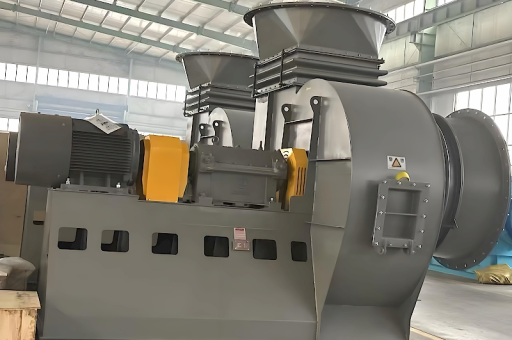
In the world of heavy industry, few components are as vital yet overlooked as the Industrial Air Blower Primary Air Cement Drying Centrifugal Blower Fan. This sophisticated piece of equipment is the backbone of material handling, combustion support, and moisture removal. While many focus on the chemical reactions within a kiln or the efficiency of a dryer, the mechanical force that pushes air—often at high pressure and volume—is what makes these operations possible.
For engineers and plant operators, understanding the nuanced interplay between a centrifugal blower fan and its application in primary air systems is crucial. This article provides a definitive guide, synthesizing established engineering knowledge with modern SEO-optimized insights. Whether you are involved in cement production, industrial drying, or pneumatic conveying, the information here will help you select, maintain, and optimize your fan systems.
Understanding the Core: Industrial Air Blower Basics
An industrial air blower is a mechanical device designed to move air or gas at a moderate pressure—typically between 1 psi and 15 psi. Unlike compressors that focus on high pressure and low volume, blowers prioritize high volume flow with sufficient pressure to overcome system resistance.
There are two main types: positive displacement (Roots-type) and dynamic (centrifugal). For primary air and drying applications, the centrifugal blower fan is overwhelmingly preferred. Its design uses a rotating impeller to accelerate air outward, converting kinetic energy into pressure. This design is inherently efficient for continuous duty cycles, which are common in cement plants and drying facilities.
The primary air designation specifically refers to the air used for initial combustion or fluidization. In a cement plant, this air is preheated and forced into the kiln burner. Without a reliable blower, the combustion process is unstable, leading to inefficient clinker production and higher fuel costs.
The "Primary Air" Function in Cement Plants
The term Industrial Air Blower Primary Air Cement Drying Centrifugal Blower Fan is most commonly associated with the cement manufacturing process. In a cement plant, the "primary air" system performs two critical functions:
- Combustion Support: Primary air carries the pulverized coal or alternative fuel into the kiln burner. The blower must provide a consistent, high-velocity stream to ensure proper mixing of fuel and oxygen. This directly impacts the flame shape, temperature profile, and ultimately, clinker quality.
- Drying: In the raw mill and coal mill, hot air (often from the kiln or cooler) is used to dry wet materials. The centrifugal blower fan ensures that this heated air is distributed evenly across the grinding chamber, removing moisture from limestone, clay, and gypsum.
According to industry data, an inefficient primary air blower can increase fuel consumption by up to 5% due to incomplete combustion or excess oxygen. Therefore, selecting the correct centrifugal blower fan is not just an engineering choice—it is a financial imperative.
Centrifugal Blower Fan: The Heart of the Drying System
Drying is a thermal process that relies on three variables: temperature, air velocity, and exposure time. The centrifugal blower fan controls the velocity. In a cement drying system, wet raw materials are fed into a mill or dryer. Hot air (ranging from 100°C to 400°C) is introduced via the blower. The fan creates a negative pressure at the inlet, pulling the hot gas through the material bed, and a positive pressure at the outlet to push the dried material and exhaust into a separator or baghouse.
The design of the impeller is critical. For applications involving dust-laden air (like cement), the blower must be constructed from abrasion-resistant materials, such as Hardox steel or with a ceramic lining. The centrifugal blower fan must also be fitted with a variable frequency drive (VFD) to modulate airflow, reducing energy consumption during partial loads.
Key Technical Specifications for Optimal Performance
When specifying an Industrial Air Blower Primary Air Cement Drying Centrifugal Blower Fan, consider the following:
- Volume Flow Rate (CFM): The volume of air required. For a medium-sized cement kiln (2,000 tons per day), the primary air fan may need 50,000 to 100,000 CFM.
- Static Pressure (SP): The resistance the fan must overcome. Typical values range from 20 to 100 inches of water gauge (in. w.g.), depending on the ductwork and burner design.
- Power (Horsepower): A function of flow and pressure. A large primary air centrifugal blower fan can require 500 to 2,000 HP.
- Temperature Rating: Fans handling hot air from kilns must have high-temperature bearings and seals. Special alloys like Inconel or stainless steel are used for impellers exposed to temperatures above 300°C.
- Wheel Design: Backward-curved or airfoil blades are preferred for efficiency in clean air applications. For dusty air, radial or forward-curved blades are used to prevent material buildup.
Common Applications Beyond Cement
While cement is the primary focus, the centrifugal blower fan for primary air and drying is ubiquitous across other industries:
- Chemical Processing: Drying catalysts or polymers.
- Wastewater Treatment: Aeration (though lower pressure, high volume is needed).
- Power Generation: Fluidized bed combustion (FBC) boilers use primary air blowers to fluidize the bed of coal and limestone.
- Food and Grain Drying: Moving large volumes of heated air through grain bins or spray dryers.
- Mining: Pneumatic conveying of ores and dust collection.
In a wind turbine application, while the main focus is on generating electricity from wind, auxiliary systems often use smaller industrial air blowers for cooling generators or hydraulic systems. The fundamental aerodynamic principles of a centrifugal fan mirror those of the turbine’s blade design—both rely on pressure differentials and efficient flow.
Frequently Asked Questions (FAQ)
Q1: What is the difference between a primary air fan and a secondary air fan in a cement plant? A: The primary air fan supplies air directly into the burner to carry fuel and create the initial flame. It operates at higher pressure. The secondary air fan supplies additional air into the kiln hood or cooler to support complete combustion of fuel that was not fully burned in the primary zone. Secondary air is typically drawn from the clinker cooler.
Q2: How often should I replace bearings on a centrifugal blower fan? A: Bearing life depends on load and temperature. For a high-temperature drying application, bearings should be inspected quarterly. With proper lubrication and cooling (air or water-cooled housings), they can last 3-5 years. Replacing them at the first sign of vibration (above 0.2 in/sec) is critical to prevent impeller damage.
Q3: Can a centrifugal blower fan be used for both drying and conveying at the same time? A: Yes, this is common. A single Industrial Air Blower Primary Air Cement Drying Centrifugal Blower Fan can provide both the heat transfer (drying) and the motive force for pneumatic conveying (moving the dried material through a pipeline to storage bins). However, this requires careful balancing of static pressure and air velocity.
Q4: Why is my blower vibrating excessively? A: Common causes include: (1) Impeller imbalance due to dust buildup or erosion; (2) Worn or misaligned couplings; (3) Loose foundation bolts; (4) Resonance at the operating speed (critical speed issues). For drying systems, moisture condensation on the blades can also cause imbalance. Immediate inspection and dynamic balancing are recommended.
Q5: What materials are best for a high-temperature drying fan? A: For temperatures below 200°C, standard carbon steel works. For 200°C to 400°C, use Corten or 16Mo3 steel. Above 400°C, stainless steel (304/316) or Inconel alloys are required. The housing should be insulated to reduce heat loss and protect personnel.
Maintenance and Efficiency Best Practices
To maximize the lifespan of your Industrial Air Blower Primary Air Cement Drying Centrifugal Blower Fan, implement these strategies:
- Condition Monitoring: Use vibration analysis and thermography monthly. Track bearing temperatures and motor amp draw.
- Inlet Guide Vanes: Install variable inlet vanes to control airflow more efficiently than damper throttling. This can reduce energy consumption by 20-30% when running at partial load.
- Impeller Cleaning: For sticky materials, use an automated washing system or schedule periodic manual cleaning. A 1mm layer of dust on the blades can reduce efficiency by 5%.
- Belt Tension: If using a belt drive, check tension weekly. Loose belts slip, wasting energy and reducing airflow.
- Lubrication: Use high-temperature grease for bearings in drying applications. Over-greasing is a common failure mode—fill only 30-50% of the bearing cavity.
Conclusion: Future Trends in Blower Technology
The industrial blower market is evolving. The trend is toward high-efficiency, IoT-enabled centrifugal blower fans. Modern units now come with integrated sensors that monitor flow, pressure, and temperature in real-time. Predictive maintenance algorithms can alert operators to potential failures weeks in advance.
Furthermore, the integration of wind turbine technology with industrial blowers is a frontier. Regenerative blowers, which use a similar principle to turbine impellers, are gaining popularity for medium-pressure drying applications due to their oil-free operation and low maintenance.
For the cement drying sector, the shift toward alternative fuels (biomass, waste-derived fuels) requires fans that can handle variable gas densities and corrosive byproducts. The future Industrial Air Blower Primary Air Cement Drying Centrifugal Blower Fan will be modular, highly corrosion-resistant, and fully digitized. Investing in high-quality fan technology today ensures not only compliance with emission standards but also a significant competitive advantage in energy costs.





