
This article's table of contents introduction:
- Why High Strength Carbon Structural Steel is Critical
- Common Grades Used
- Critical Design & Material Considerations
- Key Failure Modes to Avoid
- Summary Recommendation
Here is a detailed breakdown of the use of High Strength Carbon Structural Steel for Induced Draft (ID) Fans.
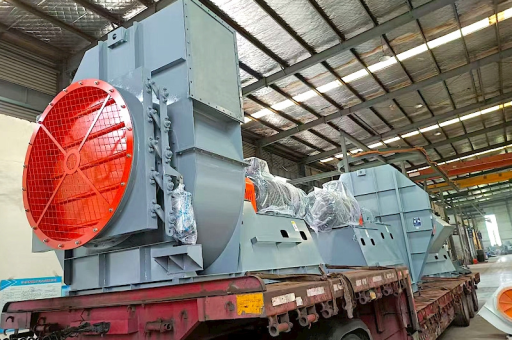
An Induced Draft Fan is located at the exit of a boiler or furnace system. Its job is to pull (induce) hot, dirty, and potentially abrasive flue gases through the system (boiler, precipitator, scrubber) and push them up the chimney.
Because of the harsh environment (high temperatures, vibration, corrosion, abrasion), the material needs high strength to resist fatigue and a specific combination of toughness and weldability.
Why High Strength Carbon Structural Steel is Critical
Standard carbon steel (like A36) is often too weak for the stresses involved or lacks the necessary fatigue resistance for the large rotating impeller (wheel). High-strength carbon structural steels are used because they offer:
- Higher Yield Strength: Allows for thinner material sections, reducing the weight of the rotating impeller. This reduces starting inertia and bearing loads.
- Good Weldability: ID fans are fabricated (welded) assemblies. High-strength low-alloy (HSLA) steels are designed for welding without cracking.
- Fatigue Resistance: The fan wheel experiences millions of stress cycles. Higher tensile strength can be directly correlated with a higher endurance limit.
- Cost-Effectiveness: Compared to stainless steels or alloys, high-strength carbon steel is significantly cheaper.
Common Grades Used
The specific grade depends on the operating temperature and the degree of erosion/corrosion. Here are the most common Chinese (GB) and International (ASTM) equivalents.
| Application | Common Chinese Grade (GB) | Similar International Grade | Key Properties & Use Case |
|---|---|---|---|
| General Structural (Low Temp) | Q345B (or Q355B) | ASTM A572 Gr. 50 | Standard for fan housing, inlet boxes, and backplates where temperatures are < 250°C. Good balance of strength and weldability. |
| Higher Strength (Thinner Blades) | Q420C / Q460C | ASTM A572 Gr. 65 / S420NL | Used for rotating impeller blades and shrouds where reducing weight is critical. Requires preheat for welding. |
| Wear Resistance (Abrasion) | NM360 / NM400 | Hardox 400 / 450 | Not strictly "structural" but a high-strength abrasion resistant steel. Used for liners inside the fan casing and for leading edges of blades to resist fly ash erosion. |
| Elevated Temperature | Q345R (Boiler Plate) | ASTM A516 Gr. 70 | When gas temperatures are consistently high ( > 300°C / 572°F ) but below creep range ( < 400°C / 752°F ). Has better elevated-temperature tensile strength than standard Q345B. |
Critical Design & Material Considerations
The Impeller (Wheel) – The Heart of the Fan
- Blades: Made from Q460C or Q420C. They must resist both centrifugal stress (hoop stress) and bending stress from the gas flow.
- Backplate (Disc): Often Q345R or Q355B. This part experiences the highest stress. It must be thick enough to resist deflection.
- Leading Edges: Often fitted with Hardox 400 (NM400) wear strips or hardfacing weld overlay to combat abrasion from fly ash.
Corrosion vs. Abrasion
- Acid Dew Point: If flue gas temperature drops (e.g., during start-up or low load), sulfuric acid can condense. High-strength carbon steel fails rapidly here. In this case, Corten (ASTM A588 / Q355NH) or Stainless Steel 316L is required, NOT simple high-strength carbon steel.
- Fly Ash Erosion: High-strength carbon steel (like NM400) is excellent for resisting this.
Stress Relief (PWHT)
- For thick sections (> 30mm / 1.18 inches) or complex weldments of Q345R / Q460C, Post Weld Heat Treatment (PWHT) is mandatory to relieve residual stresses from welding. Failure to do so will cause stress corrosion cracking or fatigue failure in service.
Key Failure Modes to Avoid
- Fatigue Cracking at Blade Welds: The number #1 failure mode. Cracks start at the weld toe of the blade-to-backplate joint. Material choice (Q460C vs Q345B) directly impacts the fatigue life.
- Stress Corrosion Cracking (SCC): Occurs when high-strength steel is exposed to chloride or acidic condensate under tension.
- Erosion Thinning: The leading edges of blades wear down to razor sharpness, eventually throwing the fan out of balance.
Summary Recommendation
- For standard ID fans (Temp < 250°C, normal erosion): Use Q355B (A572 Gr. 50) for the casing and Q460C (A572 Gr. 65) for the impeller.
- For high-abrasion environments (coal power plants, cement): Use NM400 (Hardox 400) for wear liners and blade leading edges, with Q420C for the main blade body.
- For variable temperatures (risk of condensation): Switch to Q345R (A516 Gr. 70) or consider a Corten steel (Q355NH) if corrosion is mild, or Stainless Steel (1.4003 / 410S) for the impeller path.
Crucial Note: High strength carbon structural steel loses its strength significantly above 350°C (660°F) . If your ID fan operates above this temperature, you must switch to Creep-Resistant Steels (e.g., 12Cr1MoV or P91) or Stainless Steels.





