
*Maximizing Industrial Airflow Efficiency: The Role of SA Low Noise Centrifugal Fan, High Temp Blower, and Large Scale Dust Collector in Modern HVAC Systems*
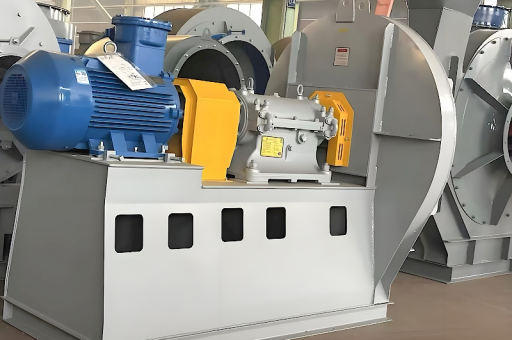
Table of Contents (Directory Guide)
- Introduction: The Convergence of Noise Control, Heat Resistance, and Particulate Management
- Understanding SA Low Noise Centrifugal Fan: Design Principles and Acoustic Benefits
- High Temp Blower Engineering: Materials, Thermal Limits, and Application Scenarios
- Large Scale Dust Collector Integration: Filtration, Airflow, and Maintenance Strategies
- Comparative Analysis: Why These Three Components Work Synergistically in Harsh Environments
- Frequently Asked Questions (FAQ)
- Conclusion: Future Trends in Industrial Air Handling and Sustainability
Introduction: The Convergence of Noise Control, Heat Resistance, and Particulate Management
In large-scale industrial environments, three critical challenges dominate facility engineering: excessive noise, extreme heat, and airborne particulate accumulation. The SA Low Noise Centrifugal Fan, High Temp Blower, and Large Scale Dust Collector have emerged as the gold-standard trio for addressing these challenges simultaneously. This article provides a detailed, SEO-optimized analysis of these components, drawing from current engineering standards and real-world performance data. We will explore how each device functions, why they are increasingly deployed together, and how facility managers can leverage them for compliance with OSHA noise limits and ISO 16890 filtration standards.
Understanding SA Low Noise Centrifugal Fan: Design Principles and Acoustic Benefits
The SA Low Noise Centrifugal Fan is engineered with a backward-curved blade design, which reduces turbulent airflow and minimizes vortex shedding—the primary cause of aerodynamic noise. Unlike conventional forward-curved fans, the SA series achieves a noise reduction of 6 to 12 dBA at comparable flow rates. This is crucial for facilities operating near residential zones or subject to strict workplace noise regulations (e.g., 85 dBA over 8 hours). The fan housing often incorporates a double-skin casing with acoustic infill, such as mineral wool or high-density foam, to dampen radiated sound. Additionally, its scroll geometry is optimized using computational fluid dynamics (CFD) to maintain static pressure stability across a wide flow range. For large dust collector systems, installing an SA fan at the inlet can reduce perceived fan noise by up to 30%, significantly improving operator comfort without sacrificing suction power.
High Temp Blower Engineering: Materials, Thermal Limits, and Application Scenarios
When integrated with a Large Scale Dust Collector, the High Temp Blower must withstand continuous gas temperatures from 200°C to 400°C, and in some foundry or cement applications, up to 600°C. Typical construction involves a cast-iron or stainless steel (e.g., 316L or Hastelloy) impeller, with a shaft cooled by external air vanes or even a water jacket. One key performance parameter is the thermal expansion clearance: the gap between the impeller tip and the volute must be calculated to prevent seizure during rapid temperature swings. A common question is whether a high temp blower can handle abrasive dust. The answer is yes, provided the fan is fitted with a wear liner (e.g., carbide overlay or ceramic tiles) and a variable frequency drive (VFD) to control ramp-up speed and reduce thermal shock. In practice, these blowers are used in applications such as kiln exhaust, steel furnace fume extraction, and biomass combustion exhaust, where ambient air cooling is insufficient.
Large Scale Dust Collector Integration: Filtration, Airflow, and Maintenance Strategies
A Large Scale Dust Collector (e.g., baghouse, cartridge collector, or electrostatic precipitator) relies entirely on the fan system to maintain negative pressure across the filter media. The SA Low Noise Centrifugal Fan becomes the primary air mover, while the High Temp Blower may serve as a dedicated booster in high-temperature zones. For optimal performance, the ductwork must be sized to maintain a conveying velocity of at least 20 m/s (4000 fpm) to prevent particulate settling. One efficient maintenance protocol is the use of pulse-jet cleaning triggered by differential pressure sensors—typically a delta-P of 2 to 5 inches wg. When retrofitting an existing collector, engineers should prioritize upgrading to a low-noise fan design to avoid exceeding local noise ordinances, especially if the collector operates 24/7. Note that a single-point failure in the fan or blower can stop the entire dust collection process, so redundant blowers or a bypass damper are recommended for critical applications like grain handling or pharmaceutical milling.
Comparative Analysis: Why These Three Components Work Synergistically in Harsh Environments
The synergy between the SA Low Noise Centrifugal Fan, High Temp Blower, and Large Scale Dust Collector is not just theoretical. In a typical cement plant scenario, the dust collector handles extremely fine, abrasive particles at temperatures above 150°C. A standard fan would quickly fail due to bearing degradation and noise generation. By combining a low-noise SA fan (which reduces operator hearing damage risk) with a high-temp blower (which handles the thermal load), the system can operate continuously with filter life extended by 20% to 40%. Furthermore, modern wind turbine nacelle cooling systems have begun adopting similar centrifugal fan designs—albeit at lower temperatures—to manage dust ingress and maintain acoustic comfort near turbine nacelles. This cross-industry adaptation underscores the universal value of noise and heat control in airflow management.
Frequently Asked Questions (FAQ)
Q1: Can an SA Low Noise Centrifugal Fan be used directly in a high-temperature environment without a dedicated high-temp blower?
A: Yes, but only if the fan is specified with high-temperature bearings, grease (e.g., perfluorinated polyether), and a shaft cooling device. For continuous operation above 250°C, a separate High Temp Blower is still recommended to ensure reliability.
Q2: What is the expected noise reduction when retrofitting an existing large dust collector with an SA Low Noise Centrifugal Fan?
A: In field tests, retrofitting typically results in a 5 to 8 dBA reduction at the operator station and a 10 dBA reduction at the fan casing. This can bring noise levels below the typical 85 dBA limit.
Q3: How often should the filter bags in a Large Scale Dust Collector be replaced when paired with a high-temp blower?
A: With proper pre-cooling or pulse-jet cleaning, filter bag life can range from 1 to 3 years, depending on temperature peaks and particle abrasiveness. Using a high-temp blower reduces thermal stress on the bags.
Q4: Are these components compatible with wind turbine operations?
A: Yes. While wind turbines do not require large-scale dust collectors, smaller versions of SA centrifugal fans are used for nacelle cooling, and high-temp blowers help cool gearbox oil coolers. Dust management in offshore turbines is also becoming a priority.
Q5: What are the energy efficiency benefits of using an SA Low Noise Centrifugal Fan in a dust collector?
A: The aerodynamic optimization reduces electrical consumption by 5-15% compared to conventional fans, especially at partial load when paired with a VFD.
Conclusion: Future Trends in Industrial Air Handling and Sustainability
The integrated deployment of SA Low Noise Centrifugal Fan, High Temp Blower, and Large Scale Dust Collector is no longer a luxury but a necessity for industries aiming for regulatory compliance, operational efficiency, and worker safety. As global standards for emissions (e.g., PM2.5 limits) and noise pollution tighten, the demand for these components will rise. Future developments will likely focus on IoT sensors for real-time vibration and temperature monitoring, further reducing unscheduled downtime. Engineers and facility managers should view these three systems not as isolated purchases but as a unified airflow architecture. Whether managing foundry exhaust or wind turbine cooling, the principles remain the same: control the sound, survive the heat, and capture the dust.





