
This article's table of contents introduction:
- What the Description Means
- Typical Applications
- Key Selection Criteria (What to ask the supplier)
- Potential Suppliers (Examples - Do Your Research)
- Critical Safety Note
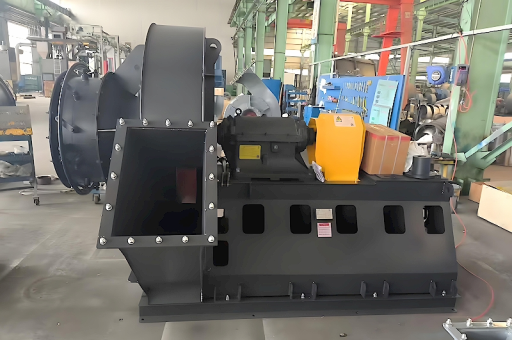
It sounds like you are looking for information on a specific type of industrial fan: an Explosion-Proof, Single Width Single Inlet (SWSI) Centrifugal Fan designed for dust removal.
Here is a detailed breakdown of what that specification means, its typical applications, and key considerations when selecting one.
What the Description Means
- Centrifugal Fan: Air is drawn into the center of a rotating wheel (impeller) and expelled at a 90-degree angle via centrifugal force. This creates high pressure, which is essential for moving air through ducts, filters, and dust collection systems.
- SWSI (Single Width Single Inlet): The fan has one air inlet on one side of the impeller. This is the most common, cost-effective design for standard dust collection applications. (The alternative is DWDI - Double Width Double Inlet).
- Explosion Proof: This is the most critical specification. It means the fan is constructed according to strict standards (like ATEX in Europe, or UL/NFPA in North America) to contain an internal explosion and prevent it from igniting the surrounding atmosphere. Key features include:
- Non-sparking materials: Impellers are often made of aluminum, bronze, or stainless steel, and the housing may have a non-sparking liner.
- Specially sealed motor: The motor is TEFC (Totally Enclosed Fan Cooled) but with a higher IP rating (e.g., IP55, IP56) to prevent dust ingress and an approved explosion-proof rating (e.g., Class I, Div 1 or Div 2).
- Shaft seals: To prevent sparks or hot particles from escaping via the shaft.
- Dust Removal Blower: The fan is designed to handle air streams containing particulate matter. This typically means:
- A radial tip or paddle wheel impeller (straight or backward-inclined blades) that is less likely to clog than a forward-curved blade.
- A robust housing with a clean-out door.
- Higher static pressure capability to overcome the resistance of filters, ducts, and cyclones.
- 3 Phase: The motor is a 3-phase induction motor. This is standard for industrial applications due to higher efficiency, torque, and reliability compared to single-phase motors. It requires a 3-phase power supply.
Typical Applications
This type of fan is critical for safety in hazardous environments where flammable dusts, gases, or vapors are present:
- Woodworking & Lumber Mills: Collecting sawdust, wood chips, and flammable fine dust.
- Chemical Processing: Handling explosive dusts (e.g., from pharmaceuticals, plastics, or metal powders).
- Grain & Agriculture: Conveying and venting explosive grain dust.
- Mining & Mineral Processing: Removing combustible coal or mineral dust.
- Pharmaceuticals and Powder Coatings: Managing combustible powders.
- General Industrial Dust Collection: Any facility with an NFPA-rated combustible dust hazard.
Key Selection Criteria (What to ask the supplier)
When sourcing this fan, you need more than just the name. Provide these specifications:
- Airflow (CFM / m³/h): How much air do you need to move?
- Static Pressure (in wg / Pa): The resistance your system will create (ducts, filters, cyclones).
- Explosion Class:
- Class I: Gases, Vapors (e.g., paint booth, chemical plant). Needs a motor rated for the specific gas group (A, B, C, D).
- Class II: Combustible Dusts (e.g., wood, grain, metal). Needs a motor and fan rated for the specific dust group (E, F, G).
- Division: Division 1 (normally hazardous) vs. Division 2 (hazardous only under abnormal conditions).
- Temperature Class (T-Code): The maximum surface temperature the fan can reach vs. the ignition temperature of your material (e.g., T3 = 200°C, T4 = 135°C).
- Material of Construction:
- Housing: Carbon steel is common, but stainless steel (304, 316) is used for corrosive dusts or wash-down environments.
- Impeller: Aluminum or bronze is standard for non-sparking. Stainless steel is also non-sparking and more durable for abrasive dusts.
- Motor Specifications: HP (horsepower), RPM (speed), Voltage (e.g., 230/460V), Frame size, and the exact explosion-proof rating on the motor nameplate.
- Inlet / Outlet Size & Orientation: Fan size (e.g., 15" inlet, 18" outlet), and arrangement (e.g., Arrangement 1 - direct drive, Arrangement 4 - belt drive).
Potential Suppliers (Examples - Do Your Research)
- Cincinnati Fan: Known for industrial and explosion-proof fans.
- New York Blower (NYB): High-quality, engineered fans.
- Greenheck: Wide variety of industrial fans.
- Air Pro Fan & Blower: Customizable, heavy-duty fans.
- Chicago Blower: Large industrial equipment.
- Soler & Palau (S&P): Offers explosion-proof lines.
Critical Safety Note
Do not substitute a non-explosion-proof fan for this application. A standard fan can create an ignition source (spark from a particle hitting the blade, heat buildup in the motor, static discharge). An explosion-proof fan is designed and certified to prevent that, protecting your facility and personnel. Always ensure the fan has a recognized certification label (e.g., ATEX, IECEx, UL, CSA) for your specific hazard zone.





