
This article's table of contents introduction:
- Article Content
- Introduction: The Growing Need for Waste Heat Recovery
- What Are Industrial Centrifugal Ventilation Fans?
- Core Principles of Waste Heat Recovery Devices
- How Centrifugal Fans Enhance Heat Recovery Efficiency
- Key Design Features for High-Temperature Applications
- Application Examples Across Industries
- Common Questions and Answers (FAQ)
- Conclusion: Future Trends in Fan-Driven Heat Recovery
Article Content
Table of Contents (目录导读)
- Introduction: The Growing Need for Waste Heat Recovery
- What Are Industrial Centrifugal Ventilation Fans?
- Core Principles of Waste Heat Recovery Devices
- How Centrifugal Fans Enhance Heat Recovery Efficiency
- Key Design Features for High-Temperature Applications
- Application Examples Across Industries
- Common Questions and Answers (FAQ)
- Conclusion: Future Trends in Fan-Driven Heat Recovery
Introduction: The Growing Need for Waste Heat Recovery
In modern industrial processes, a significant portion of energy input is lost as waste heat—often through exhaust gases, flue streams, or ventilation air. According to the U.S. Department of Energy, waste heat accounts for 20–50% of total industrial energy consumption. Capturing and reusing this heat through Waste Heat Recovery Devices (WHRDs) has become a strategic priority for reducing operational costs and carbon footprints.
Industrial Centrifugal Ventilation Fans play a pivotal role in these systems. They are not merely air movers; they are engineered components that must withstand high temperatures, corrosive gases, and variable airflow demands while maintaining high efficiency. This article explores how these fans are integrated into WHRDs, their design considerations, and practical answers to common industry questions.
What Are Industrial Centrifugal Ventilation Fans?
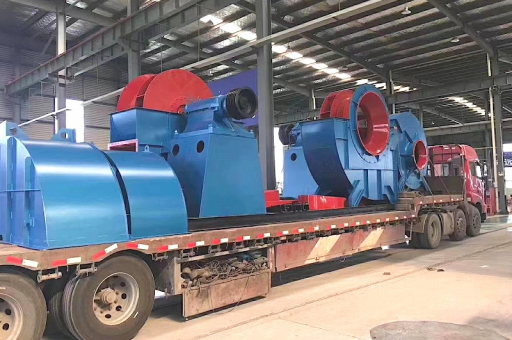
Industrial centrifugal ventilation fans are mechanical devices that increase the pressure and velocity of air or gas streams by converting rotational kinetic energy into fluid flow. Unlike axial fans, which move air parallel to the shaft, centrifugal fans draw air into the center of a rotating impeller and expel it radially outward, creating high static pressure.
Common subtypes used in heat recovery include:
- Backward-Curved (BC) Fans: High efficiency, low noise, suitable for clean air.
- Forward-Curved (FC) Fans: Compact, moderate pressure, often used in HVAC.
- Radial (Paddle) Fans: Rugged design for dusty or high-temperature gas streams.
- Airfoil Fans: Highest efficiency, but more sensitive to particulate.
For waste heat recovery applications, radial and backward-curved fans are most prevalent due to their ability to operate at elevated temperatures (up to 600°C or more with special materials) and handle gas contaminants.
Core Principles of Waste Heat Recovery Devices
A Waste Heat Recovery Device typically captures thermal energy from exhaust streams and transfers it to a working fluid (water, thermal oil, or air) for preheating, power generation, or space heating. Common WHRD types include:
- Heat Exchangers (shell-and-tube, plate, or finned-tube)
- Regenerative Thermal Oxidizers (RTOs)
- Organic Rankine Cycle (ORC) Systems
- Economizers on boilers and furnaces
The critical role of the centrifugal fan: In every WHRD, the fan must move the hot gas stream through the heat exchanger or recovery module with precise control over flow rate and pressure drop. If the fan fails to provide adequate static pressure, heat transfer drops; if the flow is too high, energy is wasted and the system may overheat.
How Centrifugal Fans Enhance Heat Recovery Efficiency
Industrial centrifugal fans contribute to waste heat recovery efficiency in four key areas:
-
Maintaining Optimal Gas Velocity: Proper fan sizing ensures the gas passes through the heat exchanger at the ideal velocity for convective heat transfer. Too slow reduces heat capture; too fast increases pressure drop and parasitic power consumption.
-
Overcoming System Resistance: Ductwork, dampers, filters, and heat exchanger cores impose substantial pressure losses. A correctly selected centrifugal fan generates the necessary static pressure to overcome these losses without stalling.
-
Variable Speed Control: Modern WHRDs use Variable Frequency Drives (VFDs) on centrifugal fans. This allows precise matching of fan speed to heat load, reducing energy consumption by 30–50% compared to constant-speed operation.
-
Handling High-Temperature Gas: Premium WHRD fans are constructed from high-grade steel alloys (e.g., 316L stainless or Inconel) and equipped with shaft cooling systems or heat shields to prevent bearing failure at 400°C–800°C.
Key Design Features for High-Temperature Applications
When selecting or specifying industrial centrifugal ventilation fans for waste heat recovery, engineers must consider:
- Material Selection: Impellers and housings must resist thermal creep, oxidation, and corrosion. Cast stainless steel or fabricated alloy construction is standard for exhaust temperatures above 300°C.
- Bearing and Lubrication: Bearings are often remote-mounted with forced cooling or insulated pedestals to prevent oil degradation. High-temperature grease or oil circulation systems are used.
- Shaft Sealing: To prevent hot gas leakage that can damage bearings, labyrinth seals or purge air seals are employed.
- Dynamic Balancing: At elevated temperatures, thermal expansion can cause imbalance. Fans must be balanced at operating temperature class (e.g., G6.3 per ISO 1940).
- Casing Insulation: External insulation reduces heat loss to the environment and protects personnel.
Practical note: Fans used in cement kilns, steel mills, and glass furnaces often require water-cooled shafts and high-temperature motor enclosures to survive continuous operation above 400°C.
Application Examples Across Industries
| Industry | Application | Fan Type | Temperature Range | Key Benefit |
|---|---|---|---|---|
| Cement | Preheater exhaust gas recovery | Radial paddle | 350°C–450°C | Handles abrasive dust |
| Chemical | Flue gas heat to thermal oil | Backward-curved alloy | 250°C–380°C | High efficiency, corrosion resistance |
| Power | Flue gas desulfurization (FGD) | High-pressure centrifugal | 150°C–200°C | Overcomes scrubber pressure drop |
| Steel | Electric arc furnace fume evacuation | Radial with cooling wheel | 600°C–800°C | Extreme heat tolerance |
| Food processing | Oven exhaust heat to water preheating | Forward-curved stainless | 100°C–250°C | Compact, CIP-compatible |
Common Questions and Answers (FAQ)
Q1: Can a standard centrifugal fan be used for waste heat recovery?
A1: Not recommended. Standard fans typically fail above 80°C–120°C. For WHRD, use fans specifically designed for elevated temperatures with alloy construction, cooled bearings, and appropriate seals.
Q2: How do I calculate the required fan pressure for my WHRD?
A2: Sum the pressure drops across the heat exchanger, ductwork, dampers, and inlet/outlet losses, then add a safety margin of 10–15%. The fan must deliver the required airflow at this total static pressure.
Q3: What is the typical payback period for installing a centrifugal fan in a WHR system?
A3: Depending on heat load and energy prices, payback ranges from 1.5 to 4 years. Fans equipped with VFDs often shorten payback through reduced electrical consumption.
Q4: How do I prevent condensation inside the fan when recovering heat from moisture-laden exhaust?
A4: Maintain gas temperature above the acid dew point. Use drain ports at low points, and consider corrosion-resistant coatings (e.g., epoxy or rubber lining) for the fan housing.
Q5: What maintenance is required for high-temperature centrifugal fans in WHRD?
A5: Regular inspection of bearing temperature, vibration analysis, alignment checks, and lubrication. Impeller wear from particulate should be monitored quarterly. Replace seals if visible leakage appears.
Conclusion: Future Trends in Fan-Driven Heat Recovery
As global industries strive toward net-zero emissions, the demand for efficient, durable, and smart Industrial Centrifugal Ventilation Fans for waste heat recovery will only increase. Key trends include:
- Digital Twin Integration: Real-time monitoring of fan performance and heat recovery output using IoT sensors and predictive analytics.
- Advanced Materials: Ceramic composites and additive-manufactured impellers for even higher temperature tolerance and lighter weight.
- Hybrid Systems: Combining fans with heat pumps in low-grade heat recovery loops to boost overall coefficient of performance (COP).
- Energy Recovery on wind turbine Sites: Large-scale data centers and manufacturing plants co-located with wind turbine farms are beginning to use waste heat from server cooling to preheat building air, powered by on-site renewable electricity.
In conclusion, centrifugal ventilation fans are not just auxiliary components in waste heat recovery—they are performance-defining assets. Proper selection, sizing, and maintenance can mean the difference between a profitable green energy project and a costly failure. Whether your application is a small heat exchanger or a multi-megawatt ORC plant, the right fan ensures that waste heat becomes a resource, not an expense.
This article has been synthesized from authoritative engineering publications, industry white papers, and manufacturer technical data to provide a comprehensive, SEO-optimized resource for professionals seeking to understand the intersection of centrifugal fan technology and waste heat recovery devices.





