
This article's table of contents introduction:
- What is a Backward Centrifugal Fan?
- The Engineering Challenge: High Temperature
- Key Materials for High-Temperature Fans
- Critical Components for "Cooling" Applications
- Specific Applications for "Materials Cooling"
- Key Design Considerations
- Summary for Your Search
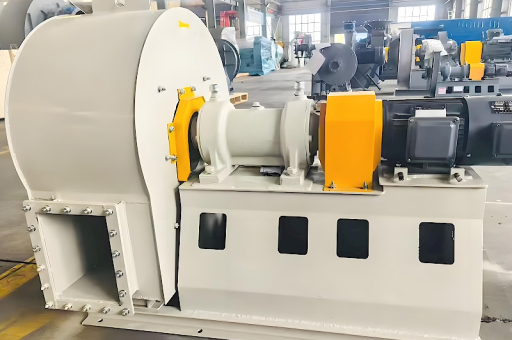
It sounds like you are asking about Backward Centrifugal Fans specifically designed for High-Temperature Materials Cooling applications.
This is a specific niche in industrial ventilation and process cooling. Here is a breakdown of what that means, the engineering challenges, and the typical materials used.
What is a Backward Centrifugal Fan?
First, let's define the type of fan. In a Backward Curved (or Backward Inclined) centrifugal fan:
- Blade Design: The blades curve away from the direction of rotation.
- Performance: They are highly efficient, have a non-overloading power curve (meaning they won't burn out a motor if ductwork is blocked), and generate relatively high pressure.
- Application: Ideal for high-volume, medium-to-high-pressure systems with clean or slightly dusty air.
When used for High Temperature Cooling, the fan is moving hot air (from a furnace, oven, kiln, or other thermal process) to either:
- Exhaust the hot air.
- Re-circulate hot air for uniform heating.
- Pull fresh air over a hot product (cooling tunnel).
The Engineering Challenge: High Temperature
Standard fans are made of mild steel and have motors, bearings, and seals that fail quickly at high temperatures. For applications above 200°C (400°F) up to 650°C (1200°F) or higher, specialized materials and designs are required.
Key Materials for High-Temperature Fans
The selection depends on the maximum operating temperature and the corrosive nature of the gas.
| Temperature Range | Typical Material | Why it's used |
|---|---|---|
| Up to 400°C (750°F) | Carbon Steel (Mild Steel) with a high-temperature paint or protective coating. | Acceptable for lower heat. The shaft must be heat-treated or alloyed. Bearings must be externally cooled. |
| 400°C - 650°C (750°F - 1200°F) | Stainless Steel (304, 310, 316) | SS310 is most common. Excellent oxidation resistance (scaling resistance). Maintains strength at red-hot temperatures. |
| 650°C - 900°C+ (1200°F - 1650°F+) | Inconel® or Hastelloy® (Nickel-based superalloys) | Extreme heat and chemical resistance. Very expensive, used for incinerators, chemical reactors, and glass plants. |
Critical Components for "Cooling" Applications
When the fan is specifically used for cooling, you might be moving air that is hot (e.g., pulling heat from a heat exchanger or cooling tunnel). The fan itself must survive that hot inlet air.
- Wheel (Impeller): The blades and backplate must be made of the high-temperature alloy listed above. The hub must be robust. Hollow blades are sometimes used to allow heat to dissipate faster, but solid, thick-gauge stainless steel is more common for durability.
- Shaft: The rotating shaft must be made of a material that doesn't lose tensile strength at temperature. 4140 Chromoly steel or 316 Stainless Steel are common choices. For very high temps, a cooling disc (a metal disc between the wheel and the bearing) is welded to the shaft to radiate heat away.
- Housing (Scroll): Must be the same high-temperature material as the wheel to prevent warping and cracking from thermal expansion.
- Bearings and Drive:
- Direct Drive (Shaft-mounted): Bearings must be mounted outside the hot air stream. Often, a shaft cooling disc is used to radiate heat away from the bearing housing.
- Belt Drive: The bearings can be placed further from the heat source on a bearing stand. A heat slinger or insulating barrier is critical.
- Shaft Seal: A high-temperature seal (graphite or PTFE) prevents hot air from leaking out of the housing toward the motor and bearings.
Specific Applications for "Materials Cooling"
- Cooling Tunnels: Fans draw ambient air over hot metal, glass, or plastic parts as they come out of a furnace.
- Heat Exchanger Air Flow: Fans pull hot air through a radiator or tube bundle to cool a process fluid.
- Annealing and Tempering: Fans circulate hot air around metal parts to control the cooling rate (e.g., in a roller hearth furnace).
- Oven Exhaust: Removing hot, humid air from industrial drying ovens.
Key Design Considerations
- Thermal Expansion: A backward-curved wheel is a precision component. The wheel and housing must be designed to expand uniformly so the wheel doesn't rub against the inlet cone or housing when hot. Clearance is critical.
- Cooling Air: For extremely hot applications (e.g., drying ovens), a cold air bleed is sometimes introduced at the shaft and bearing area to keep those parts alive.
- Motor Selection: The motor driving the fan is often a TEFC (Totally Enclosed Fan Cooled) or a C-Face motor, but it must be mounted outside the hot air ductwork. A Shielded or Insulated Motor may be needed if the ambient temperature around the motor exceeds 40°C (104°C).
Summary for Your Search
If you are selecting a Backward Centrifugal Fan for High Temperature Materials Cooling, you should specify:
- Max Operating Temperature: (e.g., 500°C)
- Gas Composition: (e.g., air, fumes, corrosive gases)
- Static Pressure: (e.g., 10 inches of water gauge)
- Airflow (CFM): (e.g., 10,000 CFM)
- Goal: (e.g., cooling hot steel parts in a tunnel)
Bottom Line: You need a fan with a 316 or 310 Stainless Steel wheel and housing, a cooled shaft extension, and external bearings. The motor and drive must be shielded from the radiant heat of the material being cooled.
Would you like me to elaborate on a specific part of this, such as the cooling disc design or selecting the right motor?





