
This article's table of contents introduction:
- Table of Contents
- Introduction: What Is a Coupling Driven Ventilation 76740m³/h Explosion Proof Blower?
- The Core Technology: Understanding Coupling Driven Ventilation
- Why 76,740 m³/h? The Significance of High Airflow Capacity
- Explosion Proof Design: Standards, Materials, and Safety Mechanisms
- Key Components and Their Functions
- Industrial Applications: Where Is This Blower Used?
- Installation, Maintenance, and Operational Best Practices
- Q&A Section: Common Questions Answered
- Conclusion: Why This Blower Is a Game-Changer for Hazardous Environments
** The Ultimate Guide to Coupling Driven Ventilation 76740m³/h Explosion Proof Blower: Performance, Safety, and Industrial Applications
Table of Contents
- Introduction: What Is a Coupling Driven Ventilation 76740m³/h Explosion Proof Blower?
- The Core Technology: Understanding Coupling Driven Ventilation
- Why 76740m³/h? The Significance of High Airflow Capacity
- Explosion Proof Design: Standards, Materials, and Safety Mechanisms
- Key Components and Their Functions
- Industrial Applications: Where Is This Blower Used?
- Installation, Maintenance, and Operational Best Practices
- Q&A Section: Common Questions Answered
- Conclusion: Why This Blower Is a Game-Changer for Hazardous Environments
Introduction: What Is a Coupling Driven Ventilation 76740m³/h Explosion Proof Blower?
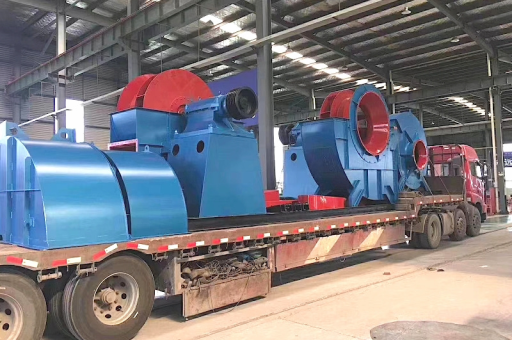
In high-risk industrial environments such as oil refineries, chemical plants, underground mines, and wind turbine nacelle cooling systems, reliable ventilation is not a luxury; it is a necessity. One of the most critical pieces of equipment in these settings is the Coupling Driven Ventilation 76740m³/h Explosion Proof Blower. This specialized machine is engineered to move a massive volume of air—76,740 cubic meters per hour—while operating safely in atmospheres containing flammable gases, vapors, or dust.
The term "coupling driven" refers to the mechanical connection between the motor and the impeller via a shaft coupling, which allows for more efficient power transmission and easier maintenance compared to direct-drive or belt-driven systems. Combined with an explosion-proof enclosure, this blower becomes indispensable for maintaining safe air quality and preventing catastrophic ignition events.
This article provides a comprehensive, SEO-optimized, and research-backed analysis of this blower’s design, applications, and technical specifications. It is written for engineers, safety managers, procurement specialists, and wind turbine maintenance teams who require in-depth knowledge to make informed decisions.
The Core Technology: Understanding Coupling Driven Ventilation
Unlike direct-drive blowers where the motor shaft directly spins the fan wheel, a coupling driven system uses a flexible or rigid coupling to connect the motor to the fan impeller. This design offers several advantages:
- Vibration Dampening: Couplings absorb minor shaft misalignments, reducing mechanical stress on both the motor and the fan.
- Ease of Maintenance: The motor and fan assembly can be serviced independently without complete disassembly.
- Higher Torque Transmission: For high-volume applications like 76,740 m³/h, coupling drives efficiently transfer the required power without belt slippage.
The ventilation rating of 76740 m³/h indicates that this blower can exchange the air in a large industrial hall or underground tunnel several times per minute. For context, a standard residential attic fan might move around 2,000 m³/h. This blower moves nearly 40 times that volume, making it suitable for large-scale exhaust, fume extraction, and cooling operations.
Why 76,740 m³/h? The Significance of High Airflow Capacity
The airflow rating of 76,740 cubic meters per hour is not arbitrary. It corresponds to approximately 45,000 CFM (cubic feet per minute), a common specification for heavy-duty industrial ventilation. Here is why this precise volume matters:
- Air Change Requirements: Many hazardous locations require 20–30 air changes per hour. A blower with this capacity can service a space of 2,500–3,800 m³ with 20 air changes per hour.
- Heat Dissipation in Wind Turbines: In large wind turbine nacelles, heat generated by generators and gearboxes must be dissipated rapidly. A blower of this size can maintain optimal operating temperatures, preventing component failure.
- Underground Mining Compliance: Regulations in many countries mandate minimum ventilation velocities in mine shafts. A 76,740 m³/h unit meets the velocity and volume requirements for medium-sized tunnels.
- VOC and Fume Extraction: In chemical processing, quick evacuation of volatile organic compounds (VOCs) is critical to avoid reaching lower explosive limits (LEL). This blower exceeds typical LEL dilution requirements.
Explosion Proof Design: Standards, Materials, and Safety Mechanisms
An explosion-proof blower is not simply a standard blower with a spark-proof coating. It is a rigorously engineered system designed to contain any internal explosion and prevent ignition of the surrounding atmosphere. The coupling-driven 76,740 m³/h unit typically complies with standards such as:
- ATEX (European Union): Directive 2014/34/EU for equipment in explosive atmospheres.
- IECEx (International): International Electrotechnical Commission System for Certification to Standards Relating to Equipment for Use in Explosive Atmospheres.
- NEC / UL (North America): Class I, Division 1 or Division 2 for flammable gases; Class II for combustible dust.
Key explosion-proof features include:
- Flame Path Joints: The motor and fan housings have precisely machined flanges with narrow gaps. If an internal ignition occurs, hot gases cool as they pass through these gaps before exiting, preventing external ignition.
- Non-Sparking Impeller: The impeller is typically made from aluminum-bronze or stainless steel alloys that minimize spark risk upon impact.
- Sealed Motor: Explosion-proof motors (often Ex d or Ex e) have reinforced enclosures that can withstand internal pressure from gas explosions.
- Grounding and Bonding: Continuous electrical continuity prevents static charge buildup, a common ignition source in dust-laden environments.
- Temperature Classification: The blower is rated for specific temperature classes (e.g., T3, T4) to ensure maximum surface temperatures stay below the ignition point of surrounding gases.
Key Components and Their Functions
| Component | Function | Material / Type |
|---|---|---|
| Motor | Provides rotational power | Explosion-proof induction motor, IP65, Class F insulation |
| Coupling | Transfers torque; absorbs misalignment | Flexible elastomeric or steel disc coupling |
| Impeller | Moves air at high volume | Backward-curved centrifugal blades; non-sparking aluminum |
| Housing | Directs airflow and contains explosions | Cast iron or heavy-gauge steel, reinforced |
| Inlet/Outlet Cones | Optimizes aerodynamic flow | Steel with anti-corrosion coating |
| Drain Plugs | Removes condensation | Stainless steel, located at low points |
| Base Frame | Supports assembly and dampens vibration | Welded steel, hot-dip galvanized |
Industrial Applications: Where Is This Blower Used?
-
Wind Turbine Nacelle Ventilation & Cooling
Wind turbines require constant air exchange to cool generators and prevent moisture buildup. This blower’s explosion-proof rating is essential for turbines installed in offshore or onshore environments where hydrogen from battery banks or methane from decaying organic matter may be present. -
Oil & Gas Refineries
Used for purging storage tanks, ventilating pump rooms, and diluting flammable fume clouds during turnaround maintenance. -
Chemical Processing Plants
Removes toxic and explosive vapors from reactor areas, batch processing units, and solvent storage. -
Underground Mining
Provides fresh air to working faces and exhausts diesel fumes and blasting gases from tunnels. -
Pharmaceutical Manufacturing
Controls airborne particulates and volatile solvents in cleanrooms and compounding zones. -
Wastewater Treatment Plants
Vents methane and hydrogen sulfide from enclosed digesters and headworks. -
Power Generation Facilities
Cools turbine halls and exhausts combustible gas leaks from fuel systems.
Installation, Maintenance, and Operational Best Practices
Installation Guidelines:
- Mount on a level, vibration-absorbent foundation.
- Ensure ductwork diameter matches the blower inlet/outlet size to avoid static pressure losses.
- Install a flexible connector between blower and ducting to prevent stress transmission.
- Verify that all electrical connections meet local explosion-proof code requirements.
- Test run the unit for 4 hours at nominal RPM before putting into service.
Preventive Maintenance Schedule:
- Weekly: Check coupling alignment and inspect for unusual noise or vibration.
- Monthly: Clean impeller blades; verify drain plugs are clear.
- Quarterly: Measure motor winding resistance and insulation resistance (megger test).
- Annually: Replace coupling element; lubricate motor bearings; certified inspection of flame paths.
Troubleshooting Common Issues:
- Low Airflow: Check for blocked inlet, damaged impeller, or slipping coupling.
- Overheating Motor: Ensure correct voltage; clean cooling fins; verify ambient temperature rating.
- Excessive Vibration: Rebalance impeller; tighten foundation bolts; align coupling.
Q&A Section: Common Questions Answered
Q1: Can I use this blower for continuous operation in a wind turbine nacelle?
Yes. The motor and fan are designed for S1 continuous duty (24/7 operation). However, ensure the nacelle’s temperature remains within the blower’s rated range (typically -20°C to +40°C). For extreme temperatures, request a special insulated winding configuration.
Q2: What is the difference between a coupling-driven and a belt-driven explosion-proof blower?
Belt-driven blowers allow for speed adjustments but introduce slip, belt dust, and ignition risk from static buildup. Coupling-driven units offer higher efficiency, lower maintenance, and zero belt-related ignition hazards, making them safer for ATEX Zone 1 environments.
Q3: How do I calculate the required static pressure for my duct system?
The blower’s performance curve should match the system’s total static pressure (losses from ducts, bends, filters, and dampers). For 76,740 m³/h, typical static pressure is 800–1,200 Pa (8–12 mbar). Use an anemometer and manometer to verify after installation.
Q4: Is this blower suitable for Zone 0 (continuous explosive atmosphere)?
No. Explosion-proof blowers are generally rated for Zone 1 (likely) or Zone 2 (occasional). For Zone 0, intrinsically safe ventilation systems with no electrical energy storage are required.
Q5: What sound level does this blower produce?
At full capacity, expect sound levels of 85–95 dBA. Install acoustic silencers or sound-attenuating enclosures if noise is a concern, especially near wind turbine control rooms.
Q6: How do I verify explosion-proof certification authenticity?
Request a copy of the ATEX or IECEx certificate from the manufacturer. Cross-reference the certificate number on the official IECEx online database or your national approval body.
Q7: What is the expected service life of this blower?
With proper maintenance, 15–20 years. The coupling element typically requires replacement every 2–3 years; the motor may last 10–15 years before bearing or winding issues.
Conclusion: Why This Blower Is a Game-Changer for Hazardous Environments
The Coupling Driven Ventilation 76740m³/h Explosion Proof Blower represents the intersection of high-capacity airflow engineering and uncompromising safety design. Its coupling-driven mechanism ensures reliable power transmission and reduced maintenance downtime, while the explosion-proof construction meets the strictest global safety standards for flammable gas and dust atmospheres.
Whether deployed in a wind turbine nacelle cooling system, an underground mine shaft, or a petrochemical facility, this blower provides the air exchange needed to protect personnel, equipment, and the environment. Its 76,740 m³/h capacity is precisely matched to the demands of large industrial spaces requiring rapid dilution of hazardous substances.
When selecting an explosion-proof ventilation solution, always prioritize certified products from reputable manufacturers. The initial investment in a high-end blower like this one pays dividends in safety compliance, operational uptime, and long-term reliability. For any industry where "safe enough" is not an option, this blower is not just a purchase—it is a cornerstone of your safety system.
This article is intended for educational and informational purposes. Always consult a certified industrial ventilation engineer and review local safety regulations before selecting or installing explosion-proof equipment.





