
This article's table of contents introduction:
- Key Terminology Breakdown
- Common Use Cases in Building Ventilation
- Critical Technical Specifications (What to Look For)
- Typical Product Construction
- How to Search For This Product
- ⚠️ Important Safety & Regulatory Note
- Example of a Product Description
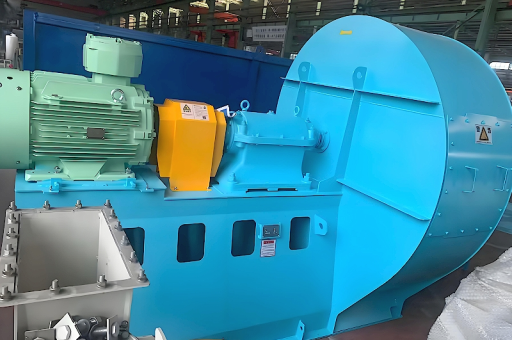
It appears you are looking for an AC asynchronous explosion-proof blower specifically designed for building ventilation (likely HVAC or industrial exhaust). This is a highly specific piece of equipment used in hazardous locations (like chemical plants, paint booths, grain silos, or parking garages).
Below is a technical breakdown and specification guide to help you identify, select, or understand this product.
Key Terminology Breakdown
- AC Asynchronous: Refers to an Induction Motor. It runs on Alternating Current (AC) but does not spin at the exact same speed as the electrical frequency (it "slips"). These are robust, low-maintenance, and common for fixed-speed industrial fans.
- Explosion Proof: The motor and fan housing are designed to contain an internal explosion (gas or dust) without igniting the surrounding atmosphere. It prevents sparks from escaping.
- Blower: A centrifugal fan; moves air at higher pressure than a standard axial fan. Essential for ducted building ventilation.
- Building Ventilation: Implies a requirement for high static pressure (to push air through ducts) and often a need for low noise or intermittent duty.
Common Use Cases in Building Ventilation
- Exhaust for Hazardous Zones: Removing flammable vapors from labs, battery charging rooms, or fuel storage.
- Parking Garage Ventilation: For CO/NOx fume extraction.
- Paint Spray Booths: Moving solvent-laden air.
- Chemical Storage Rooms: Continuous air exchange.
- Dust Collection (Non-conductive): Where combustible dust (e.g., flour, wood, chemical powders) is present.
Critical Technical Specifications (What to Look For)
When searching for or specifying this blower, you need to match these parameters:
| Parameter | Typical Spec | Why It Matters |
|---|---|---|
| Motor Power | 5 HP to 10 HP | Matches airflow requirement (CFM) vs. static pressure. |
| Airflow (CFM) | 500 – 15,000 CFM | Volume of air moved. Building codes dictate minimum air changes. |
| Static Pressure (in. wg) | 1” – 6” wg | "Friction" resistance from ducts, filters, and dampers. This is critical for building ventilation. |
| Hazardous Location Class | Class I Div 1 or Class I Div 2 | Class I: Gases/Vapors (e.g., gasoline, propane). Div 1: Hazard present normally. Div 2: Hazard present only under fault. |
| Temperature Code (T-Code) | T3 (200°C) or T4 (135°C) | Maximum surface temperature. Must be lower than the auto-ignition temperature of the gas/dust. |
| Enclosure | TEFC (Totally Enclosed Fan Cooled) + Explosion Proof | Motor is sealed and has specially machined flame paths to cool and arrest sparks. |
| Voltage/Phase | 208V, 230V, 460V / 3-Phase (most common) | Building electrical supply. |
| Wheel Type | Radial (paddle) or Backward Curved | Radial for high pressure/dirty air; Backward for higher efficiency/clean air. |
Typical Product Construction
- Housing: Cast Aluminum (light, non-sparking) or Heavy Gauge Steel with epoxy paint.
- Impeller: Steel (painted) or Aluminum (non-sparking).
- Motor: Certified explosion-proof (e.g., UL, CSA, ATEX, IECEx). Manual reset thermal overload protection.
- Inlet/Outlet: Usually round or rectangular flanges for ductwork attachment.
How to Search For This Product
Use these exact terms in search engines or catalogs (e.g., Grainger, McMaster-Carr, or manufacturer sites like Greenheck, New York Blower, Twin City Fan):
- "Explosion Proof Roof Exhaust Fan" (if mounted on roof)
- "Class 1 Div 1 AC Induction Centrifugal Blower"
- "Hazardous Location Inline Duct Fan"
- "UL 705 Listed Explosion Proof Ventilator"
⚠️ Important Safety & Regulatory Note
- Certification is Law: In most jurisdictions, installing a non-explosion-proof fan in a classified area is a code violation (NEC/NFPA 70 in the US, BS EN in the UK) and voids insurance.
- Grounding: The fan must be properly grounded. The explosion-proof motor has a ground lug.
- Electrical Connection: The wiring must be run in rigid metal conduit (RMC) with explosion-proof seals (EYS fittings) within 18 inches of the motor.
- Ductwork: For ventilation of flammable gases, the duct system must also be constructed of non-combustible material and properly grounded.
Example of a Product Description
Model: CVEX-30-1.5 Type: Explosion-Proof Centrifugal Ventilator Motor: 1.5 HP, 460V, 3-Phase, 60Hz, Class I Div 1 Groups C & D, T3B Performance: 2,800 CFM @ 1.5" Static Pressure Construction: Cast aluminum non-sparking impeller, hinged base for maintenance.
Do you have a specific airflow requirement or a specific gas/dust hazard you need to ventilate? Providing that information allows for a precise model recommendation.





