
This article's table of contents introduction:
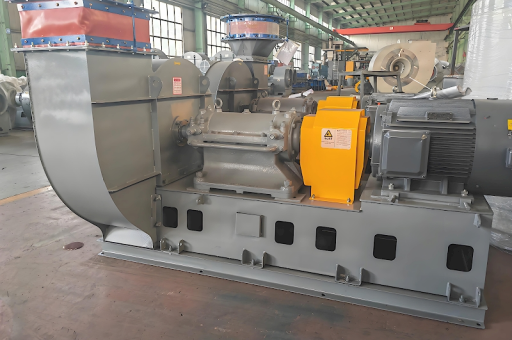
- What is the likely application of this fan?
- Potential Manufacturers & Models (for reference)
- Important Caveats & What to check
- If you are trying to source this fan, here is the most direct search term to use:
Based on the keywords you've provided, it sounds like you are looking for a specific type of industrial fan. Here is a breakdown of what these terms mean and what product you are likely describing.
It sounds like you are describing a High-Volume, Low-Speed (HVLS) Explosion-Proof Fan.
Let's break down the spec sheet:
- Double Suction: This refers to the fan wheel (impeller) design. Air is drawn into the fan from both sides of the wheel. This design increases airflow volume and is common in large, powerful fans.
- Anti-Explosion / Explosion Proof: This is a critical safety feature. The fan is designed to contain any internal spark or explosion and prevent it from igniting the surrounding atmosphere. This is required for environments with flammable gases, dust, or vapors (e.g., chemical plants, oil refineries, spray paint booths, grain silos).
- 375 r/min (RPM): This is a very low speed for a fan motor. Standard industrial fans often run at 900, 1450, or 2900 RPM. 375 RPM indicates a geared, belted, or direct-drive motor designed for slow rotation. This is a key feature of HVLS fans.
- Explosion Proof Blower: The final piece, confirming it is an air-moving device built with non-sparking materials (aluminum, bronze) and a specially sealed motor enclosure.
What is the likely application of this fan?
This exact combination (Double Suction + 375 RPM + Explosion Proof) is almost exclusively used for:
- Industrial Ventilation in Hazardous Locations: Moving large volumes of air to dilute or remove explosive fumes.
- Warehouses / Factories (HVLS Type): Large ceiling fans (often called "Big Ass Fans" style) that move massive amounts of air very slowly to cool people or equalize temperature. In this case, the explosion-proof rating means it can be installed in a hazardous location.
- Fume Hoods / Exhaust Systems: Where high volume is needed, but the motor must be isolated from the air stream and the area is classified as hazardous.
Potential Manufacturers & Models (for reference)
You don't need to buy these specific ones, but searching these terms will show you the style of fan you're describing:
- Cincinnati Fan: They make "Double Width, Double Inlet" (DWDI) fans. Look for their "HP" series or explosion-proof versions.
- New York Blower: They have a massive range of DWDI fans for hazardous environments.
- Hartzell Fan: Known for industrial and explosion-proof axial and centrifugal fans.
- Greenheck: They offer explosion-proof fans, though their 375 RPM line is less common than higher speeds.
Important Caveats & What to check
Before purchasing or using this fan, you must confirm:
- The Class, Division, and Group: "Explosion Proof" is not a single rating. It must match the specific hazard (e.g., Class I, Division 1, Group D for gasoline vapors; Class II for dust).
- Motor Type: Is it a TEFC (Totally Enclosed Fan Cooled) or TEAO (Totally Enclosed Air Over) motor? The motor must be UL/ATEX listed for explosion proof.
- Speed Control: Is it a fixed-speed unit or does it require a Variable Frequency Drive (VFD)? A VFD must also be explosion-proof or located in a safe area.
- Mounting: Is it a ceiling-mounted HVLS fan or a wall-mounted axial/cabinet fan? Double suction often implies a centrifugal fan cabinet.
If you are trying to source this fan, here is the most direct search term to use:
"DWDI Explosion Proof Fan 375 RPM" or "Double Width Double Inlet Explosion Proof Fan Low Speed"
Final Answer: The product you are describing is an Industrial Double-Suction (DWDI) Explosion-Proof Centrifugal Fan running at a very low 375 RPM, likely used for high-volume ventilation in a hazardous (Class I/II, Div 1/2) environment, possibly of an HVLS (High Volume Low Speed) design.





